“Anything is better than suicide”
Smilla's Sense of Snow“Anything is better than suicide” is a message delivered on a long strip of gray cardboard, an apparent reassurance whose certainty is undercut by the sender’s spelling mistakes. Its force lies in the tension between an absolute claim and a visibly imperfect attempt to communicate it.
The message at the threshold
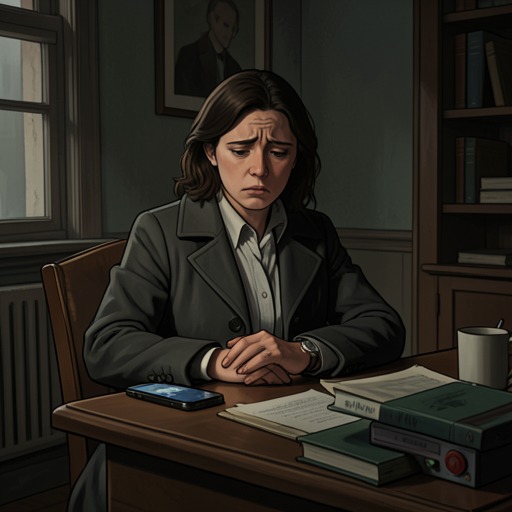
From the narrator’s chair, the mail slot is in view. It is described as the last entrance the world has not tried to force its way through, making the message’s arrival an intrusion into a space that has otherwise resisted entry. A long strip of cardboard is pushed through the slot; the narrator leaves it lying there for a while, though its nearly yard-long length makes it difficult to ignore.
Wording and delivery
The strip is meant to say, “Anything is better than suicide.” The maxim presents itself as an unqualified judgment, but the narrator immediately qualifies confidence in its execution: the sender has included two or three spelling mistakes in the brief text. The errors do not erase the message; instead, they place its force beside the clumsy, limited means by which it has been conveyed.
Significance
The expression is both direct and unsettled. Its words oppose suicide with the promise that any alternative is preferable, yet the scene supplies no explanation of who sent it or what prompted it. The delay before the narrator attends to the cardboard, and the protected threshold through which it arrives, keep the phrase from functioning as a simple maxim: it is an appeal delivered from outside, received by someone who has not immediately chosen to answer it.