Bernard Jakkelsen
Smilla's Sense of SnowBernard Jakkelsen is a young sailor aboard the Kronos whose influence rests less on rank than on his ability to unsettle and direct those around him. He intimidates Smilla, hides small drug vials inside magnetic chess pieces, and later takes her through the ship’s reinforced cargo passage. Yet his knowledge also exposes a contradiction at the heart of the voyage: a locked container supposedly connected to secret cargo contains only cement. His mixture of menace, vulnerability, and partial disclosure makes him an uneasy guide to the ship’s concealed business.
Identity and Place aboard the Kronos
Jakkelsen is introduced by surname alone. Smilla notes that he may have a first name, but aboard the Kronos the crew uses surnames, following the captain’s orders. The convention offers a glimpse of the ship’s disciplined hierarchy, while Jakkelsen’s conduct immediately sets him apart from it.
He is a conspicuously young and gaunt crew member, perhaps seventeen, with curly red hair and freckles. When Smilla first encounters him, he is smoking in a cargo corridor, dressed in work clothes and positioned as if he has been waiting for her. He claims that she should stick with him because he can do things for her, establishing himself early as someone who expects to broker access and favors.
Jakkelsen has more than one function on board. The first mate identifies him as a deck worker, but Jakkelsen also presumes to assign Smilla the task of cleaning the cabins of eleven sailors and four officers. He speaks as though he can make her workload unpleasant at will, and the others’ laughter gives his taunt a social force beyond the words themselves. Although he has no stated officer’s rank, he exercises informal power through intimidation and through his ability to shape the atmosphere among the crew.
Intimidation and Conflict with Smilla
Jakkelsen’s first sustained confrontation with Smilla comes when he humiliates her over the cabin-cleaning work. Smilla is already tired and frightened, and her oversized boots have let her socks slip down around her heels. His mockery and the crew’s response turn that practical discomfort into an assertion of dominance. Smilla retaliates physically, and Jakkelsen is forced to his knees. The encounter establishes that she will not simply accept the subordinate position he is trying to impose, but it does not end their contest.
Later, Jakkelsen’s behavior becomes more threatening. He waits outside Smilla’s cabin and enters when she makes a sound, having brought a marline spike. Rather than relying on his own strength, he uses the tool as leverage. The episode shows that his earlier claims of usefulness did not signal dependable protection: his relationship with Smilla is shaped by opportunism, and he is willing to menace her when he believes he can gain control.
Despite this conflict, Jakkelsen becomes an unwilling source of practical information about the ship. Smilla follows him through an internal passage, partly to learn what lies inside the Kronos. His tour therefore emerges from a relationship marked by coercion and distrust rather than alliance. Jakkelsen knows the ship well enough to explain its construction, but his knowledge does not make his intentions trustworthy.
Hidden Drugs and Physical Vulnerability
Smilla later finds Jakkelsen asleep in his cabin, dressed in silk pajamas. He appears extremely ill and barely responsive; she interprets him as a sick child. The contrast between his earlier swagger and this helpless state makes his authority look fragile. His room, however, is orderly: the ashtray is empty and nothing is scattered across the table.
A pocketknife and a close inspection of his belongings lead Smilla to a concealed supply. She examines a magnetic chess piece, removes its base, and discovers that the hollow piece contains a small cylinder. Beneath putty are clear plastic tubes, including three immediately visible and four more shaken out from underneath. She replaces them and restores the piece, leaving the hiding place intact. The discovery establishes that Jakkelsen has used the chess set to conceal drugs in small, easily overlooked containers.
The arrangement suggests concealment and preparation, but the evidence does not establish how long the supply is meant to last or how much Jakkelsen uses. Smilla considers searching the other chess pieces and calculating how many vials they could hold, then leaves without doing so. The precise extent of his stash therefore remains unknown. What is clear is that the drugs and his evident illness coexist with a capacity for calculated intimidation.
Knowledge of the Ship and Its Cargo
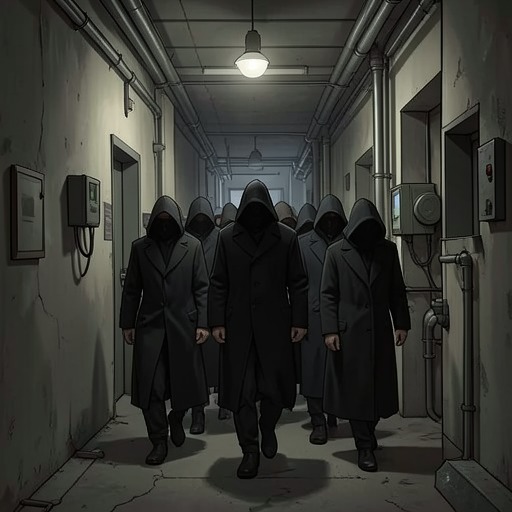
When Jakkelsen leads Smilla through the ship, he describes an eighty-foot passage running along its length toward the foredeck. Above it are two cargo holds, measuring 34,500 and 23,000 cubic feet. These measurements make the scale of the ship’s internal spaces concrete and give Smilla a route into areas not ordinarily visible from the crew’s public routines.
He also explains the Kronos’s unusually reinforced construction. The ribs are spaced twenty inches apart, half the normal distance on a four-thousand-ton vessel, and the bow plates are an inch and a half thick. He says this produces localized strength twenty times greater than the requirements imposed by insurers and ship inspectors for sailing in ice. These details reveal why he recognized that the ship was headed toward the ice: its structure is not merely ordinary cargo-vessel construction but a practical preparation for Arctic conditions.
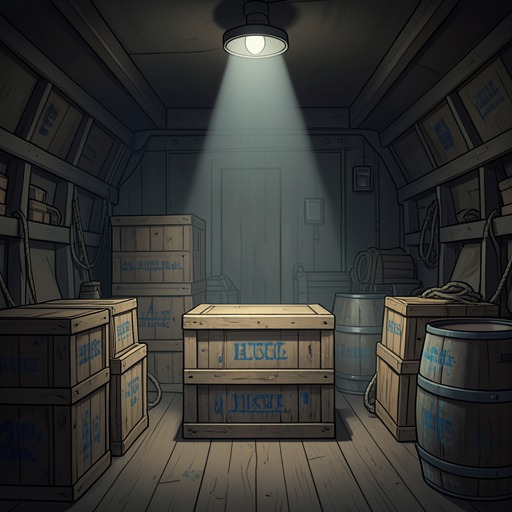
Jakkelsen’s account of the cement container complicates the apparent logic of the voyage. The ship came from a shipyard in Hamburg, had spent two weeks in Danish waters, and had docked in Copenhagen. Given those circumstances, he finds it difficult to explain why goods would be dropped five hundred miles out in the Atlantic. He says he investigated the locked container himself, borrowing the cargo-area keys from the bridge while on watch.
His search was extensive but fruitless. The container held hundreds of one-hundred-pound sacks of Portland cement. Jakkelsen moved the sacks and used a barbecue skewer to probe for something hidden beneath them, spending two hours inside and scraping his hands while cement dust aggravated the work. He found nothing. The discovery defeats his own expectation that the secret cargo must be drugs: the ship’s secrecy, extra pay, and unexplained destination had led him to suspect contraband, but the container itself contained no concealed goods.
Narrative Significance
Jakkelsen serves as a compromised informant within the Kronos. He can explain the vessel’s dimensions, reinforced bow, and internal routes because he works aboard it, yet his information arrives in a context of intimidation and self-interest. Smilla must distinguish what his practical knowledge can establish from what his suspicions merely imagine.
His concealed vials and his search of the cement container also place secrecy at two different scales. In his cabin, drugs fit inside a chess piece, hidden behind a magnetic base; in the cargo hold, a container large enough for hundreds of cement sacks yields no secret beneath its contents. The contrast does not solve the mystery of the voyage, but it undermines the simplest explanation and redirects attention from what Jakkelsen hoped to find to the ship’s purpose and destination.
The character’s contradictions remain unresolved in the available account. He can dominate a room and threaten Smilla, yet is later found gravely unwell; he suspects a drug shipment, yet his own search finds only cement; he is an insider with detailed knowledge, yet cannot explain why the vessel’s mission is so secret. That gap between access and understanding makes him useful to Smilla without making him an ally she can safely trust.