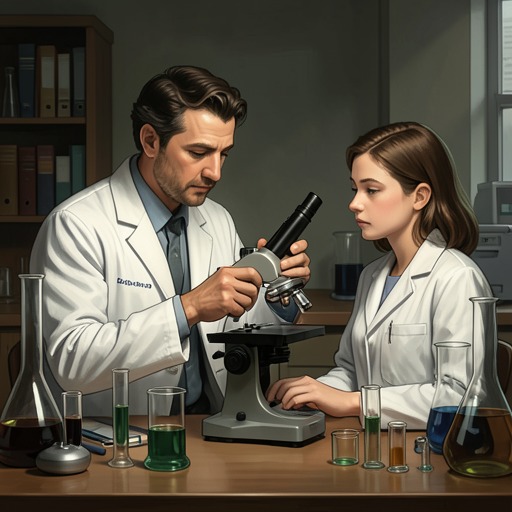
Isaiah's medical report
Smilla's Sense of SnowIsaiah's medical report is the documentary hinge between the investigation of Isaiah’s death and the concealed history of the Greenland expeditions. Its account of a postmortem tissue sample exposes an unexplained intervention in Isaiah’s body; its signature later places Johannes Loyen at the 1966 expedition, connecting the boy’s case to a much older chain of events.
The autopsy and the unexplained sample
The report describes the examination conducted the morning after Isaiah was brought in. Because the case initially appeared routine, the police were not present. During the examination, the pathologist noticed a perforation near the thigh of Isaiah’s Helly Hansen rain pants. A light-bulb test revealed the hole in the sturdy fabric, and a matching puncture was found on the body.
The absence of bleeding and tissue contraction indicated that the puncture had been made after Isaiah’s heart stopped. A small indentation around the hole suggested that someone had pressed an instrument through the clothing. The pathologist then tested the mark with a biopsy needle, the kind used to remove a tissue sample, and found that it fit. The report therefore records more than an autopsy finding: it establishes that tissue was taken from Isaiah after his death, an act not explained by the routine examination.
The signature and the 1966 expedition
Years later, Smilla puts the medical report in front of her father and points to its signature. He spells out the name, Loyen, and recognizes that Loyen had also been in Greenland in 1966. The discovery turns a name on a document into a link between two investigations: the unexplained postmortem sample and the expedition whose surviving history Smilla is tracing.
The report’s evidentiary force depends on its two kinds of information. The autopsy account establishes the timing and physical circumstances of the sample; the signature identifies a person whose earlier presence in Greenland matters to the larger inquiry. Neither detail alone explains the purpose of the biopsy, but together they provide a concrete connection that prompts further investigation.
From medical record to investigative evidence
The report is not merely a record of Isaiah’s death. It makes an irregularity legible through ordinary professional procedures: examining the clothing, comparing the puncture with the mark on the body, and testing the opening with a biopsy needle. That sequence converts a small hole into evidence that the sampling happened after death.
Smilla’s later use of the signed report gives it a second function. What began as forensic documentation becomes a bridge to the 1966 expedition and to Loyen’s role in it. The document does not resolve why the sample was taken, but it narrows the field of inquiry and connects Isaiah’s case to the novel’s wider history of scientific investigation in Greenland.