Rahlstedt
Smilla's Sense of SnowRahlstedt, a district of Hamburg, is the site of Benedicte Clahn’s postwar work for the British authorities. In her recollection, a former Hitler Youth barracks became a home and workplace for Danish women assigned to read correspondence, turning the ordinary routines of a crowded communal setting into part of the Allies’ search for Nazi underground activity.
The barracks and its residents
After traveling by special train to Hamburg, Clahn and the other Danish workers were housed in Count Goltz Barracks in Rahlstedt. They slept in double rooms across from the buildings where they worked. Their working hall had twelve people at each table, with a table monitor, or Tischsortierer, overseeing each group; at Clahn’s table, that supervisor was a British female captain.
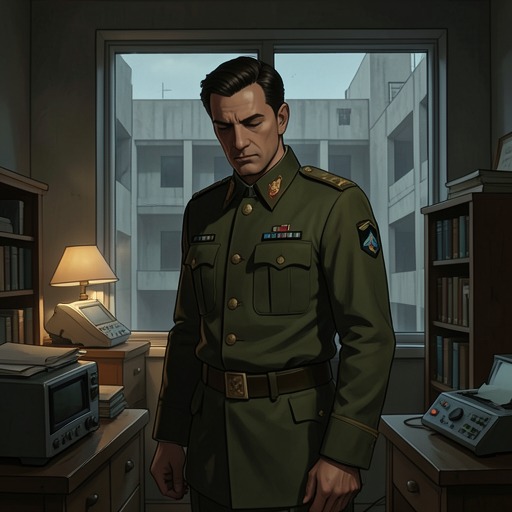
The women wore khaki battle dress with skirts, shoes, stockings, and capes, and held the rank of sergeant in the British Army. The combination of uniforms, military rank, and communal accommodation situates Rahlstedt as both a residence and a workplace within the British-run postwar operation.
Censorship work and the Edelweiss search
The workers opened letters arriving from and leaving the country, read them, stamped them censored, and resealed the envelopes with tape. Photographs and drawings were to be removed and destroyed. They were also instructed to report correspondence gossiping about former Nazis who had taken positions in Germany’s reconstruction, including letters noting that a former SS officer had become a manager.
The operation’s central concern, however, was Edelweiss, the German underground organization. Clahn explains that the retreating Germans had burned many of their archives, leaving the Allies in urgent need of information; she understood this need as the reason the Danish workers had been recruited. A reference to Edelweiss could appear as a word in a letter, a pressed flower, or even underlining that might form the organization’s name. Such clues were to be stamped and passed to the table monitor.
Rahlstedt in Clahn’s recollection
Clahn’s account gives the district its significance through specific procedures rather than a general description of its streets or buildings. The former barracks, double rooms, shared tables, uniforms, and monitored correspondence together show the setting as an organized apparatus for information gathering. Her recollection also places Danish women in a position of military responsibility within an Allied effort to reconstruct knowledge lost with the destruction of German archives.
The narrative presents Rahlstedt retrospectively, through Clahn’s testimony to Smilla Jaspersen. Its focus is therefore the work carried out there and the way that work connected daily censorship to the larger search for Edelweiss, not a comprehensive account of the district itself.