
Crime’s Promise and Its Self-Deception
Sonne und BetonThis thread traces how the prospect of quick money transforms a hesitant group into thieves, then exposes the false assumptions that keep them taking greater risks.
increasing Bearing strength in each event
 decreasing
Bearing strength in each eventdecreasingMoney as an Exit Plan

Money as an Exit Plan
The fantasy of a quick transformation
After hearing that the school will receive new computers, Sanchez proposes breaking in and selling them. He imagines each computer as a large sum of cash and quickly calculates what the boys might earn; Julius and Gino are attracted by the promise of clothes, shoes, and money.
Lukas objects that the plan is reckless, but the lure is personal as well as financial. The boys have little money, and the possibility of buying things they cannot normally afford makes theft feel like a way to escape their daily limits.
A decision made under pressure
Gino explains that his father takes his money and that he is tired of having nothing. His distress gives the plan an emotional force that a simple calculation cannot capture; Lukas backs down partly because he does not want to dismiss his friend’s desperation.
The boys treat the opportunity as a short route to independence, even though they have no credible plan for transporting or selling the computers. Their confidence begins with the desired reward, not with an understanding of the risks.
A Plan Built on Omissions
A Plan Built on Omissions
The appearance of competence
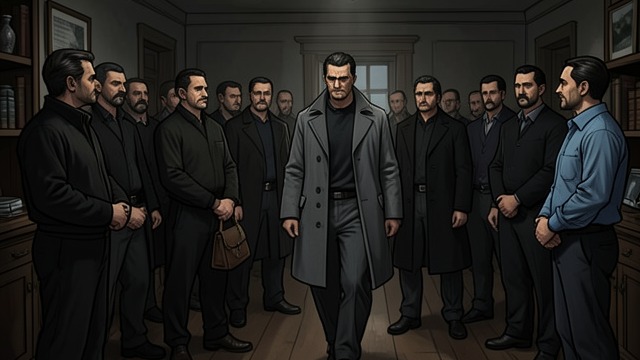
Sanchez produces a key ring, Julius brings a lock pick, and the boys arrive with a shopping cart. These practical details make the break-in feel organized, though Lukas has not checked his flashlight and his phone battery is nearly dead.
Once inside, the familiar school becomes unfamiliar in the dark. The boys search the storage room, find the computers on high shelves, and begin moving them without knowing whether the equipment is marked, who might be watching, or how they will get it over the fence.
Improvisation mistaken for control
Their repeated improvisations keep the scheme moving: Julius identifies a key, Lukas proposes a human ladder, and the group loads what fits. Each minor success encourages the belief that the next obstacle can also be solved on the spot.
The missing pieces are not small. The boys have no safe transport, no confirmed buyer, and no shared judgment about how many computers to take. The plan’s apparent momentum conceals how little they understand about what follows the theft.
The First Reward
The First Reward
Suspicion meets opportunity
After several shops reject the computers, the boys find a buyer who recognizes the connection to a recent school burglary. Instead of calling the police, he offers 800 euros for three computers and monitors, warning them to leave and never return.
Lukas and Sanchez want to accept the money, while Julius pushes for a higher price. They ultimately sell, divide the cash, and reserve a share for Gino. A risky criminal act has produced an immediate reward, making the boys’ original fantasy seem briefly justified.
A lesson that reinforces the wrong belief
The sale does not make the remaining computers safe or solve the problem of the police investigation. Still, the cash gives the group a powerful emotional confirmation: they have made money quickly and avoided immediate arrest.
Lukas feels both excitement and unease, aware that the equipment may be identifiable and that the transaction could expose them. The reward encourages the exact self-deception that will sustain the scheme: that a successful outcome once means the danger has passed.
The Reassurance of One More Day
The Reassurance of One More Day
Evidence closes in
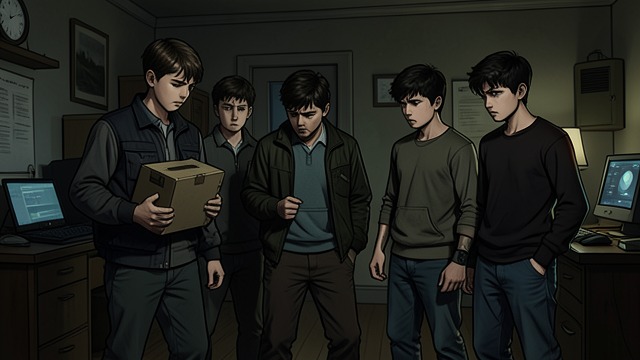
Momo tells Lukas that Taner has linked him to the stolen computers after seeing him at his uncle’s shop. Lukas panics and argues that the remaining computers should be discarded before the police can find them.
Sanchez answers with a different calculation: wait one more day, see what happens at school, and try to sell the rest for a much larger return. He promises they can abandon the plan if the situation worsens, turning delay into something that sounds cautious rather than greedy.
Denial as group strategy
The boys know the police have investigated and that students are talking, yet Sanchez insists that they have no direct evidence against them. Julius agrees, emphasizing how much money they would lose by throwing the computers away.
Lukas recognizes the logic as dangerous but is repeatedly drawn into it. Their self-deception becomes collective: each boy’s certainty props up the others’ willingness to keep going.
The Price of Continuing
The Price of Continuing
A last apparent solution
With the computers moved to Sanchez’s home, the group keeps searching for a buyer. Marco arranges a meeting in Moabit, promising that the transaction will be quick and controlled if they follow his instructions.
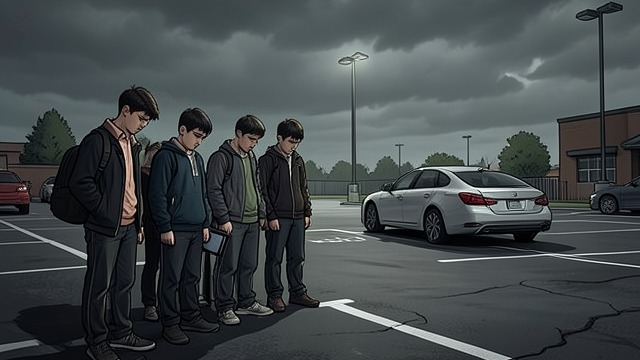
The friends arrive with the remaining computers, but the men take the bags and drive away. Their attempt to turn stolen goods into lasting money ends with them robbed, without the computers and without the expected payment.
The cost beyond the cash
The loss does not erase the earlier danger. Lukas and his friends have exposed themselves to police investigation, school rumor, family conflict, and increasingly volatile choices, all for a reward that never became secure.
Lukas had argued that discarding the computers would be safer, but the group’s desire for a larger payoff repeatedly overruled that judgment. The failed deal reveals the central deception of the theft: quick money offered no real escape from insecurity, only a more dangerous way to inhabit it.
When Sanchez proposes stealing the new school computers
Late Saturday night, inside the school
The Monday after the burglary, in the resale shop
After Taner spreads the theft rumor
After the final attempted sale and its aftermath
