Gesamtschule in der Gropiusstadt
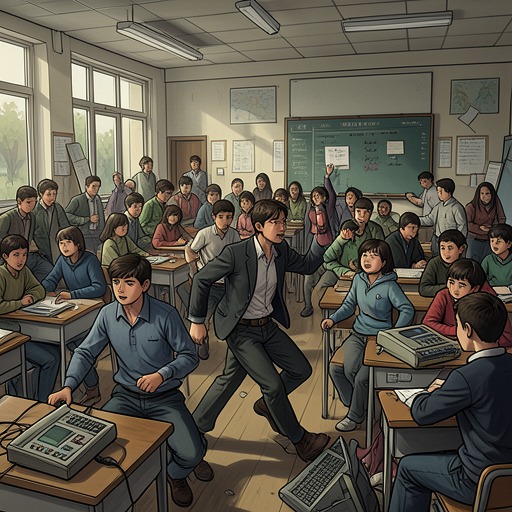
Sonne und BetonThe Gesamtschule in der Gropiusstadt is the setting where the stolen-computer case becomes immediate and personal for Lukas: a newspaper identifies his school as the burglary site, and a teacher later questions him about the theft. The school is more than a backdrop to the investigation. Its damaged entrance, missing equipment, and contested sense of belonging shape how suspicion is directed at its pupils.
The School and the Burglary
A newspaper headline describes a break-in at the Gesamtschule in der Gropiusstadt, reporting that teaching computers worth 15,000 euros were stolen and the school was vandalized. A photograph of the main entrance makes the location unmistakable to Lukas. He is with Julius and Sanchez when a shopkeeper throws them the newspaper; the three stare at the report, and Lukas immediately considers leaving before the man calls the police. The printed account turns the school into visible evidence linking their attempted sale of computers to the crime.
The report also places the burglary within a wider investigation. Herr Reinicke later tells Lukas that the stolen key was taken from a teacher during a lesson in Lukas’s class, which is why he believes the perpetrators must have been pupils from that class. The school’s ordinary classroom routines thus become part of the chain of suspicion: a missing key connects the theft to a specific group of students.
Herr Reinicke’s Approach to Lukas
At school, Herr Reinicke seeks out Lukas and asks to speak with him after the first lesson. In the office, he directly asks what Lukas knows about the stolen computers. Lukas denies knowing anything beyond what appeared in the newspaper and what police told the students, but begins to tremble and sits down. The meeting shifts the school from the setting of a crime into an institution where its students are questioned and monitored.
Herr Reinicke presents his request as a private appeal, stressing that he and Lukas are alone and asking him to listen for information among classmates. He singles Lukas out as the only German in the class and urges him to report anything he hears. The request is therefore not based only on Lukas’s possible access to information: Reinicke recruits him through an assumed national allegiance, turning a teacher-student conversation into an effort to enlist a pupil against his peers.
Stigma and Belonging
Reinicke frames the school’s high proportion of students with immigrant backgrounds as evidence of disorder. He calls the area Klein-Istanbul, links the school’s diversity to the frequency of trouble, and uses racist language about the students he suspects. These are Reinicke’s prejudiced claims, not established explanations for the burglary. His speech exposes how the investigation can be used to reinforce an exclusionary account of the school and its pupils.
The episode sets the damaged school and the teacher’s rhetoric in sharp contrast. The burglary is a concrete crime, connected in Reinicke’s account to a stolen classroom key; his response expands that specific clue into a sweeping judgment about the school’s community. By asking Lukas to listen and report, he makes belonging itself part of the pressure surrounding the case.