Lukas and Gino’s Friendship
Sonne und BetonLukas and Gino’s Friendship is one of Lukas’s deepest attachments and a measure of how loyalty operates under pressure. They have known each other since childhood, and Lukas regards Gino as his best friend; their bond brings practical care and shared plans, but also fear, unequal knowledge, and painful moments when protection turns into argument. As Gino’s home life worsens and crime offers the promise of money and escape, friendship becomes both a refuge and a test of what help can actually accomplish.
Childhood Intimacy and Everyday Companionship
When a school security guard refuses Lukas entry because he has forgotten his student ID, Lukas gives up trying to persuade the guard and texts Gino. Gino answers with a meeting place and time: Wutzkyallee, by the video rental shop, in half an hour. Their quick arrangement shows the ease of a friendship that is already part of Lukas’s ordinary routine. Gino is himself uneasy about being caught skipping school, glancing anxiously around the busy square, but he meets Lukas anyway. Lukas greets him with a handshake, and the two agree to walk around and later go to Lukas’s home.
The ease of that reunion stands against the hardship Lukas sees around Gino. Gino’s mother is working, shopping, and helping care for his ill brother, while his father is an alcoholic who spends his time drinking and gambling on a slot machine. These circumstances are not incidental background to the boys’ companionship: they shape what Lukas knows about his friend, what he fears for him, and how he tries to intervene. At one point Lukas recalls having seen Gino’s father drunk and lying in his own vomit outside the family home. Lukas says he has not visited Gino’s household for at least three years, as the situation there worsened, though Julius apparently continued to visit. The memory reveals how Gino’s home life has pushed even a close friend away from the family’s doorstep.
Care, Fear, and the Limits of Protection
Lukas’s care for Gino is expressed through concrete offers of help. He says that when trouble happens to Gino, he offers assistance; he has even stolen money from his own father to give Gino something to eat, buy cannabis, or meet another need. This is how Lukas understands reciprocity: if he has a problem, he tells Gino, and he expects to be available when Gino needs him. The friendship is not simply companionship but an obligation Lukas has repeatedly tried to fulfill with the resources he has.
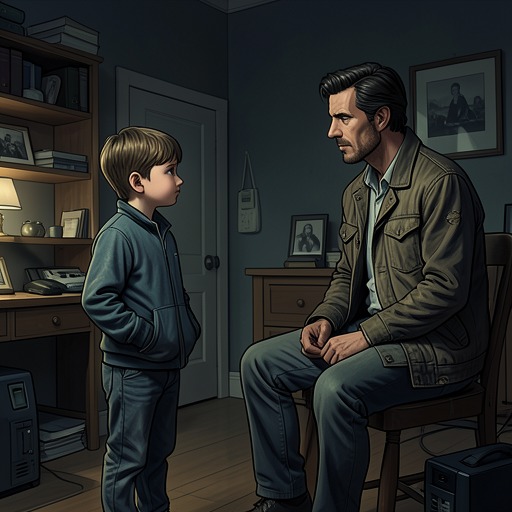
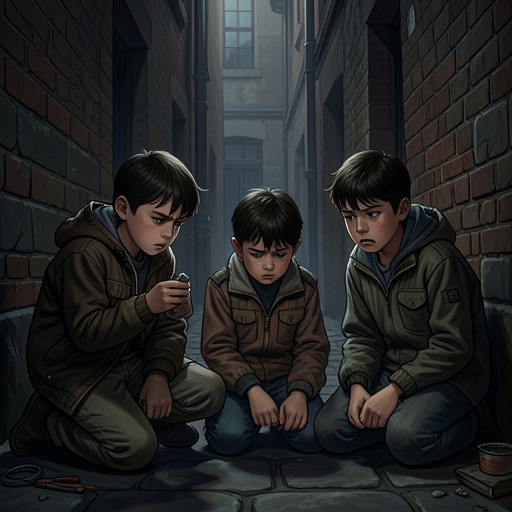
That protective instinct also makes Lukas fear the consequences of Gino’s choices. When Sanchez proposes breaking into their school to steal computers, Lukas turns to Gino and warns him to consider what his father might do if the police brought him home. The warning is meant as concern, but it touches the very wound Lukas is trying to account for. Gino angrily insists that his father beats him regardless, and that he is tired of having no money and wearing shabby clothes. He decides to join the plan, hoping the stolen computers will bring cash and some relief. Lukas recognizes that he should not have invoked Gino’s father in that way and is left unable to look at him. The scene makes the friendship’s limits plain: knowing that a friend is in danger does not mean knowing how to speak to him without deepening the hurt.
Loyalty, Secrecy, and a Breach in Trust
Gino’s decision to participate in the theft also puts the friends’ shared loyalty under pressure. Lukas is afraid of the police and of what could happen to Gino at home, while Gino sees the money as a way to endure a life in which he expects to be beaten anyway. The same facts produce opposite responses: Lukas tries to prevent the risk, and Gino sees risk as inseparable from his existing circumstances. Julius then declares that he will help Gino even if Lukas refuses, making clear that the group’s loyalty will not wait for Lukas’s agreement.
Later, Lukas discovers messages from Gino on Julius’s phone. The texts indicate that Gino is asking Julius to bring something and that he has had enough, but Lukas initially cannot make sense of them. What hurts most is the discovery that Gino has been communicating privately with Julius. Lukas thinks of Gino as his best friend and remembers how readily he has shared his own problems and helped with Gino’s. The revelation does not erase their closeness, but it exposes an imbalance in what Lukas knows: the person he believes he is helping has entrusted some of his most urgent disclosures to someone else. When a voice behind Lukas orders him to raise his hands during the school break-in, the messages remain unresolved; danger interrupts his attempt to understand them.
Gino’s Home and Lukas’s Understanding
Lukas’s knowledge of Gino’s family is partial and painful. When he meets Giovanna Ebert after years without speaking to her, he remembers the earlier visit to Gino’s home and sees how much has changed. He notices her tired appearance and full shopping cart, offers to carry the groceries, and asks about Gino. When he cautiously mentions that Gino is not allowed out, she asks what he means. The exchange shows Lukas trying to approach a sensitive subject without making Gino’s home life harder for his mother, while also revealing how little direct contact he has had with the family in recent years.
A later conversation with Julius gives Lukas more of the story. Julius says that Gino’s father beats Gino and his mother, has taken the 200 euros Gino received from the computers, and keeps the family from leaving. He reports that Gino wants to escape with his mother and brother but feels unable to intervene when his father attacks her. Julius has suggested that Gino strike his father with a bottle so the family can get away; he has also obtained Tilidin, believing it might remove Gino’s inhibitions. Lukas challenges that plan, asking how the drug will help and why they are not calling the police. His questions reveal a different form of loyalty from Julius’s: Lukas is alarmed by the prospect of enabling a violent confrontation and wants protection to involve help beyond the boys themselves. Julius, by contrast, describes his intervention as an attempt to help his best friend act when fear has stopped him.
Friendship as a Reason to Keep Searching
Even after learning that Gino has confided in Julius, Lukas does not withdraw from him. On the way toward Klinikum Neukölln, he worries about Gino’s safety and remembers that they have been friends since childhood. He recalls their plan to move in together at eighteen, leave Gropiusstadt, and find somewhere in the city with more going on. The future they imagined gives their bond a shared horizon beyond immediate school, money, and family troubles.
At the hospital stop, the friends still do not know what will happen to Gino. Lukas says he hopes Gino is all right and that he will not face serious trouble; he also hopes his father is alive, despite believing the man deserves what has happened. The contradiction registers the distance between anger at Gino’s abuse and care about the consequences of a violent act. Julius proposes that they search for Gino, and Lukas agrees; he and Sanchez set off with him. The friendship’s decisive expression is therefore not a simple resolution or a promise that Lukas can rescue Gino. It is his continued presence: despite fear, secrecy, and disagreement over what help should look like, he joins the search for the friend he has loved since they were children.