Sell Three Computers for 800 Euros
Sonne und BetonThe sale of three stolen school computers turns the group’s nighttime break-in into immediate cash, but also brings their crime into sharp focus: a shopkeeper recognizes the suspicious goods at once, and the boys must choose between abandoning the deal and taking far less than they hoped. They accept 800 euros, then divide it equally among four friends, including Gino, who could not take part because he was under house arrest.
From Break-In to Merchandise
The sale follows the group’s entry into their school. Julius first boasts that a lockpick can open almost anything, but Sanchez produces a large key ring and Julius puts the pick away, impressed. At the school on a Saturday night, the empty residential surroundings make the boys feel conspicuous; Sanchez has kicked out a streetlamp by the gate, leaving them in darkness as they prepare to enter. Julius also reveals that he has brought a silver blank-firing gun, a risk Lukas immediately understands could make an arrest much more serious.
Inside, the boys search for the computers they expect the school to have received. Their certainty falters when the first rooms yield nothing, but Sanchez spots unopened cartons high on shelves: computers and monitors, perhaps forty in all. Lukas retrieves a step stool and passes the machines down while Sanchez and Julius take them. The group’s excitement rests on a sudden reversal: what had seemed an uncertain break-in now appears to offer a quick route to substantial money. The three computers eventually brought to the shop are part of this stolen stock; the sale converts the hoped-for windfall into a real, if much smaller, sum.
The Shopkeeper Recognizes the Risk
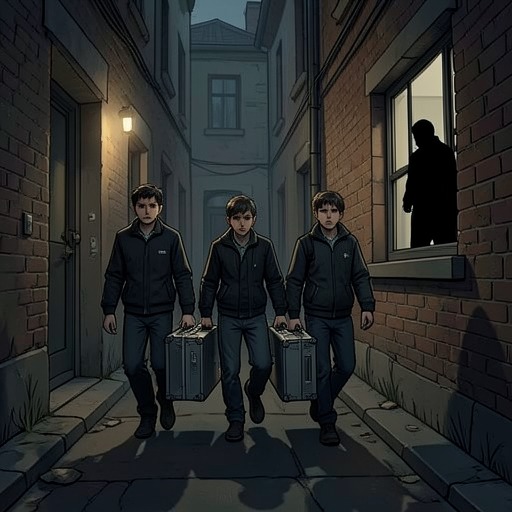
On the way to a pawnshop near Pannierstraße, the boys carry three computers with flat-screen monitors. Sanchez offers a cover story: his brother works for an office-supply wholesaler, ordered too many machines, and asked him to sell them. The explanation does not persuade the shopkeeper. He asks how old the boys are; Lukas claims they are twenty, reasoning that saying they were sixteen would probably get them sent away. The lie only sharpens the mismatch between their youth and the brand-new equipment they are trying to sell.
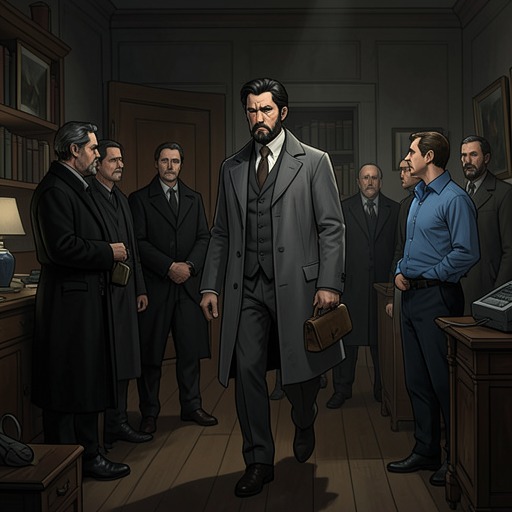
The shopkeeper identifies the central problem plainly: a large number of computers had recently been stolen from a school, and now three students have appeared with new computers for sale. His recognition changes the terms of the encounter. The boys insist the machines are not stolen and repeat Sanchez’s story, but neither their denials nor their confidence can make the transaction look ordinary. When the shopkeeper asks their price, Sanchez names 1,500 euros for all three computers and monitors. A man elsewhere in the shop openly calls them stolen and mocks the asking price.
The Bargain
The shopkeeper counters with 800 euros for everything, paid in cash without a pawn receipt. He also makes the arrangement conditional: the boys must leave and never come back. Sanchez, Lukas, and Julius step outside to confer. Julius hesitates, but Sanchez presses the value of the offer: 800 euros is more than he says he earned in two months selling drugs in Hellersdorf. Faced with the gap between their hoped-for price and the shopkeeper’s offer, they decide to take the money rather than risk losing the deal altogether.
Back inside, Sanchez confirms their acceptance. The shopkeeper takes a thick bundle of notes from his pocket, counts out eight green bills, and warns them that he will remember their faces and that the transaction never happened. Julius counts the money and grins. Sanchez and Lukas leave the computers on the counter. Julius then asks whether the shopkeepers want five more computers they have at home, offering them at a good price; the response is an emphatic demand that the boys leave the machines and get out. The quick sale has worked, but the attempt to extend it meets a firm limit.
Dividing the Proceeds
Outside, the money passes from Julius to Lukas and then to Sanchez. Sanchez exults in the contrast between this sudden payment and what he says he could earn by selling drugs: the cash has arrived all at once, like a jackpot. Julius interrupts that excitement by insisting the money does not belong to Sanchez alone. He sets each share at 200 euros and explicitly includes Gino, who is absent because house arrest kept him from joining the others.
Lukas agrees, and Sanchez nods. Julius proposes taking Gino’s 200 euros with him because he expects to visit him later. The division turns the sale into a test of the group’s shared claim on the proceeds: Gino did not help carry out this transaction, yet the friends treat his equal share as settled. The cash is therefore not simply a reward for the three boys present. It also records their continuing inclusion of the friend whose confinement excluded him from the break-in and sale.
Significance
The episode’s movement is from apparent opportunity to exposed risk, then from compromise to distribution. The boys first see the computers as an easy way to get more money than ordinary work could provide; at the shop, their ages, the fresh equipment, and the recent school theft make that fantasy difficult to sustain. The shopkeeper’s willingness to pay 800 euros does not erase the danger: he recognizes what the machines probably are and insists on secrecy and separation afterward.
The sale also gives the theft a concrete measure. The group had hoped to profit from a much larger haul, but the first completed transaction is limited to three computers, sold for less than their initial demand. Even so, the notes feel powerful to the boys because they arrive immediately and can be divided among friends. Their equal allocation to Gino emphasizes loyalty, while Julius’s attempt to offer five more machines shows how quickly a successful sale encourages them to push beyond the limits the buyer has set.