Exile from Hell
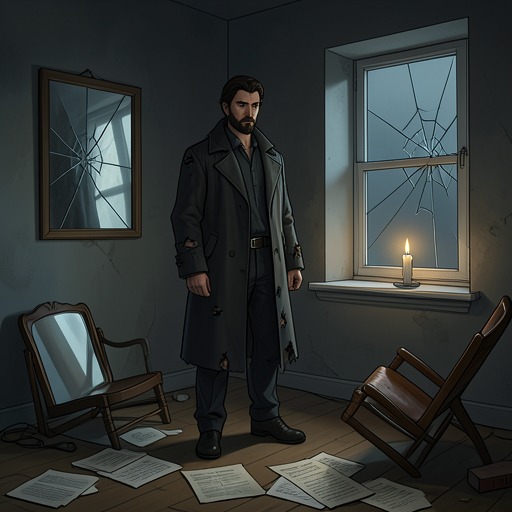
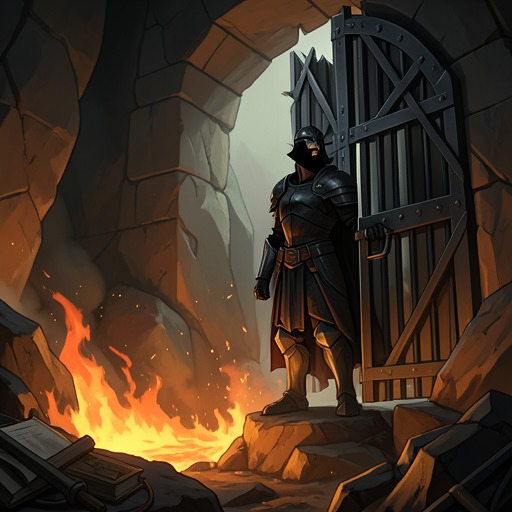
Soul Guardian: A Hellishly Cozy FantasyExile from Hell is the state of being barred from the infernal realm and its associated territories, most often with Earth serving as the enforced destination. It is not merely a change of address: it severs a demon or fallen angel from the jurisdiction, resources, and protections that define infernal existence. The book presents exile both as a coercive sentence and as a desperate form of self-determination, exposing how Hell’s laws can make belonging conditional while turning exclusion into a weapon.
Definition and Conditions
The clearest formal version of Exile from Hell arises in Maharet Flameheart’s wager with Bael-Sharoth. She challenges him to find Six a suitable human family by the first day of the new year. If he fails, he must step down as a baron of Hell and remain on Earth forever, never returning to the infernal realm. The wager therefore links exile to rank, time, and public failure: Bael-Sharoth would lose not only his home but also his barony and the institutional identity attached to it.
Maharet adds a condition that makes the proposed punishment more immediate. Until the adoption task is complete, Bael-Sharoth may not return to Hell even for a moment. The restriction converts an eventual sentence into a present confinement. When Maharet assumes that she can leave once the bargain is made, Bael-Sharoth exploits the rules of summoning: because they were summoned together, they must return together. After he breaks the protective circle with a broom, Maharet discovers that she cannot teleport back to her apartment, bed, or hellcats. Bael-Sharoth has effectively made her share the earthly restriction, turning technical knowledge into a trap.
The wager also demonstrates that exile is negotiable only within a hierarchy of power. Maharet attempts to protect herself by threatening Bael-Sharoth’s position, while Bael-Sharoth counters by requiring her never to harm Six or permit anyone else to harm her as long as she remains on Earth. The condition binds Maharet’s future conduct to the child’s safety and makes the bargain an instrument of guardianship as well as punishment. Exile is thus presented as a legalistic state whose consequences depend on carefully worded terms and on the superior ability to interpret them.
Exile as Loss of Status and Protection
The condition becomes especially severe when a supernatural being is cut off from the networks that normally sustain power. Lucy Morningstar, after Bael-Sharoth confines her with a metal collar and chain, has no funds, identification, or friends in the mortal realm. Her treasures remain behind wards, and any demon she might approach for help would turn against her once it recognized that she was powerless. The loss is not abstract: exile leaves her unable to access property, establish a legal identity, or rely on her former faction.
Lucy’s predicament is intensified by the distribution of her power among Hell’s leadership. She cannot simply kill Bael-Sharoth to recover what she has lost, because the power is no longer concentrated in him. Her captivity therefore combines territorial exclusion with political dispossession. She remains a formidable former authority in memory, but on Earth she is exposed to the ordinary requirements of money, documentation, and social support without the supernatural means that once made those requirements irrelevant.
Bael-Sharoth’s proposed solution is to help her establish herself in the mortal realm, even suggesting that she adopt the role of a relative within a human family. Lucy asks why he does not send her back to Hell or have Lou confine her to the void. His answer is deliberately conditional: death would be permanent, whereas keeping her alive allows him to change his mind if she misbehaves. The offer of earthly assistance is consequently neither forgiveness nor restoration. It is a reversible arrangement controlled by the person who holds power over her fate.
Voluntary and Involuntary Exclusion
Not every departure from Hell is imposed by an enemy. Ganon-Sharoth, living through possession of a priest’s body, tells Bael-Sharoth that he has forsaken Hell. He has left everything behind because he did not want his brother to be corrupted as well, rejecting the assumption that demons must remain within the realm to which they were assigned. His position challenges Hell’s inherited moral order: he argues that it is irrational to reside there for eternity and be damned for crimes the demons never committed.
Ganon-Sharoth’s self-exile is therefore an act of moral refusal rather than a defeat in battle. Yet the possessed state also reveals its cost. A demon possessing a human body is essentially powerless, and Ganon-Sharoth must confront the fact that the priest may die while he remains unable to return to a conventional infernal existence. Exile offers distance from corruption but not freedom from vulnerability. It replaces one form of confinement with another, leaving him caught between an abandoned homeland and an unsuitable earthly vessel.
Maharet Flameheart occupies another unstable position in relation to exile. She eventually reveals to Bael-Sharoth that she is a fallen angel. Her confession confirms that her presence outside Heaven is not simply an individual preference but part of a larger history of expulsion and altered allegiance. Bael-Sharoth already knows her history, which makes the disclosure less a revelation to him than a test of whether their shared life can be built without concealment. Her status shows that exclusion from one supernatural order can become the basis for a new alliance rather than the end of belonging.
Punishment, Violence, and the Exception to Law
Gabriel’s death provides the most extreme judicial form of Exile from Hell. Bael-Sharoth declares that, as a baron of Hell, he has the right to banish Gabriel from the infernal realm and all associated territories. He then kills him with a sword through the heart. Gabriel’s soul is dragged toward Hell but stops at its threshold: it cannot return to Heaven, cannot enter Hell, and cannot even reach purgatory because purgatory lies on the outer fringes of the infernal realm. Exile becomes a condition of ontological suspension, leaving Gabriel trapped between dimensions while his soul begins to unravel from contact with the void.
This punishment expands the meaning of banishment beyond physical relocation. Gabriel is not merely sent away from a court or territory; he is denied every recognized destination in the afterlife. The sentence removes the protections normally supplied by cosmic classification. Heaven will not receive him, Hell rejects him, and the intermediate space offers no refuge. The result is an example of sovereign power operating by exclusion: the law defines its authority by deciding who may belong to any realm at all.
Bael-Sharoth’s confrontation with Michael and Uriel reveals the political force behind this authority. He insists that he was made for war, fought upward from the front lines and pits, and bears scars from that ascent. More importantly, he frames his demand to return to his family as stronger than the opposing side’s faith. He has already defeated Gabriel, Metatron, and Lucy Morningstar, and he threatens to break Michael as well if necessary. Uriel withdraws rather than challenge him, while Michael allows him to live another day. Exile and battlefield power are therefore intertwined: the right to remove an enemy from a realm is credible because Bael-Sharoth can enforce it against even major celestial opponents.
Narrative Significance
Across these cases, Exile from Hell exposes the instability of supernatural identity. Bael-Sharoth is a baron whose position can be forfeited through a failed promise, Maharet Flameheart is a fallen angel living beyond her original order, Ganon-Sharoth rejects the realm that claims him, Lucy Morningstar is stripped of power and forced to negotiate survival on Earth, and Gabriel is denied every afterlife territory. Their differences matter, but each case makes belonging appear administrative, conditional, and vulnerable to a stronger will.
The state also connects cosmic politics to intimate loyalty. Bael-Sharoth accepts the risk of earthly confinement because Six’s safety becomes a condition of the bargain, and later presents his desire to return to his family as a motive powerful enough to confront Heaven. The same structure that punishes separation can therefore produce new attachments. Exile is painful because it removes a person from an inherited community, but it can also compel a redefinition of family, service, and moral allegiance outside the old realm.
Finally, the recurring pattern gives the book’s cosmology a bureaucratic and legalistic horror. Summoning rules, adoption records, baronial authority, collars, wards, and territorial boundaries all determine who may move, who may be protected, and who may be destroyed. Six’s false death record already places her in an administrative exception: she drowned two years earlier on paper despite remaining alive, apparently so Mike could sacrifice her at will. Against that background, Exile from Hell is one expression of a broader system in which identity can be rewritten by institutions and survival depends on finding a loophole before the ruling power closes it.