Fate, Choice, and Limited Freedom
Soul Guardian: A Hellishly Cozy FantasyFate, Choice, and Limited Freedom names the tension between a universe apparently organized by prophecy and hidden divine purposes and the smaller, stubborn freedom of choosing how to live within it. The concept reaches its clearest expression through Six’s unexplained survival, Bael-Sharoth’s uncertainty about why he was summoned, his fear of an apocalypse prophecy, and his eventual insistence that even a rigged cosmic game leaves room for personal conduct, care, and change.
A World Governed by Hidden Design
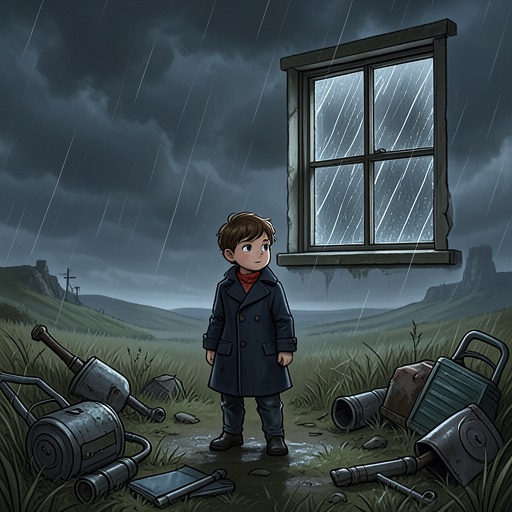
The possibility of an overarching design first appears through Six’s encounter with Lou, the cosmic repair creature. Lou warns her that Bael-Sharoth is not what he seems and offers two incompatible readings of his guardianship: Bael-Sharoth may genuinely be protecting her, or his role may be part of a larger scheme so vast that no one can help her. Lou returns Six to her bedroom with a flash of light, leaving the furniture sucked into the void while the room itself remains intact and strangely enlarged. The physical restoration does not resolve the metaphysical question; it intensifies it. Six is safe, but safety now looks like evidence that someone or something may be directing events around her.
Bael-Sharoth’s awkward entrance immediately afterward sharpens the contrast between cosmic power and ordinary behavior. He apologizes for his failure at mathematics, notices that Lou has repaired the room, and proposes taking Six to buy new furnishings. She follows him uncertainly to the large black SUV, unable to determine whether his actions express genuine care or serve a hidden game. The same scene therefore gives fate a domestic form: the void, the inexplicable rescue, and the shopping trip coexist without being reconciled.
Six’s survival supplies the strongest concrete sign that ordinary causality is failing around her. She should have been destroyed instantly when the void pulled her from the room, disintegrating on the subatomic level, yet she returned unharmed. Bael-Sharoth also remembers that she survived the car crash that killed her parents. Two escapes from death make coincidence difficult to sustain, although the narrative withholds a definitive explanation. Bael-Sharoth wonders whether a greater power is protecting her, whether Six is more extraordinary than she realizes, or whether another game is being played beyond both their understanding.
Prophecy, Summoning, and Uncertain Agency
Bael-Sharoth confronts the same uncertainty when he investigates the book connected to his summoning. He tells Maharet Flameheart that someone certainly wanted him summoned, but he cannot see how that person could have predicted everything that followed. His answer is deliberately divided: the initial event appears intentional, while its consequences remain open and potentially uncontrollable. Fate in this sense is not a perfectly legible script. It may establish conditions without determining every later movement.
The search for the book also shows how characters respond to uncertainty through choice. Maharet Flameheart suggests asking Mike how he obtained it, and Bael-Sharoth responds with sudden enthusiasm, embracing and kissing her before deciding to involve Titan and retrieve Vlad as well. The affection and practical action do not defeat the mystery, but they convert confusion into investigation. Rather than waiting passively for the design to reveal itself, the characters choose a next step, even though the value of that step depends on information they do not yet possess.
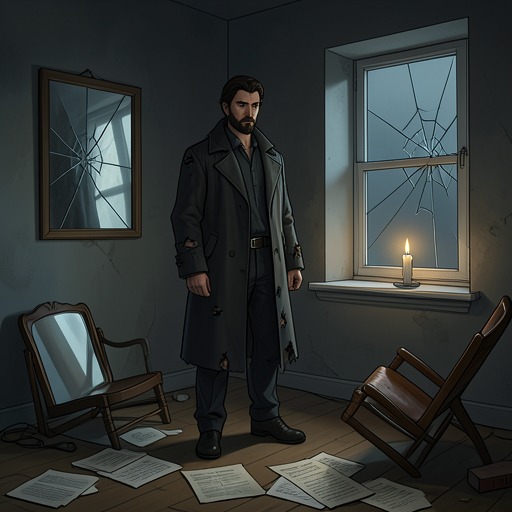
Prophecy makes the limits of choice more explicit. Maharet Flameheart reminds Bael-Sharoth that at least one prophecy says he is supposed to initiate the apocalypse, and she connects that warning with his dream about the old house. Bael-Sharoth reacts by saying that he hates prophecies; Maharet Flameheart identifies the deeper issue as his hatred of being out of control. His objection is therefore not merely fear of a predicted catastrophe. It is resistance to the possibility that his identity and actions have already been assigned a meaning he cannot revise.
Bael-Sharoth suspects divine intervention because an event of such magnitude should have produced visible preparations in Hell. Yet Hell appears to be conducting business as usual, and its notorious inability to keep secrets makes the silence difficult to interpret. Maharet Flameheart considers contacting her connections in Heaven to discover whether Gabriel and the other angels are preparing for battle. Even the investigation of fate becomes a choice among incomplete signs: the absence of mobilization may disprove the prophecy, conceal its timing, or reveal that the responsible power operates outside the institutions expected to recognize it.
The Mountain the Butterflies Still Avoid
The concept acquires an inward and symbolic dimension while Bael-Sharoth watches a butterfly in the garden with Ryan. Monarch butterflies follow a migration route established thousands of years before their birth, and their descendants repeat it. Yet the route sometimes bends around a mountain that no longer exists. Time, wind, and rain have erased the obstacle, but the inherited pattern survives its disappearance.
Bael-Sharoth applies that image to his relationship with Lucifer, now called Lucy. He asks whether his continuing resentment toward her resembles the butterflies’ avoidance of an absent mountain. His hatred once had a practical function: anger and spite sustained him when he was a nameless demon struggling to rise through Hell’s ranks. The old emotional route helped him survive, but the condition that created it has vanished. Continuing to circle it would preserve an obsolete response rather than defend him against a present danger.
This reflection turns freedom into the capacity to interrupt repetition. Bael-Sharoth recognizes that demons are not known for forgiveness and may be incapable of letting go, but he also sees that eternity makes inherited resentment especially destructive. If the mountain has been reduced to nothing, hatred no longer protects him; it merely keeps the old landscape alive. The brief sensation that an unknown force acknowledges his presence before moving on leaves the moment open to interpretation, but it coincides with his decision to watch the butterfly depart rather than remain trapped in the path of the vanished obstacle.
The Rigged Game and Personal Freedom
Bael-Sharoth gives the concept its most direct formulation in his conversation with Zephyr about the adoption papers. Zephyr remembers that Bael-Sharoth once tried to trap Maharet Flameheart and prevent Six from being adopted, and he cannot understand why the demon is now helping her. Bael-Sharoth has no complete explanation beyond instinct and the suspicion that God may have brought him and Six together for a reason. He acknowledges the contradiction rather than resolving it: a demon may be acting within a divine arrangement without understanding or approving the power behind it.
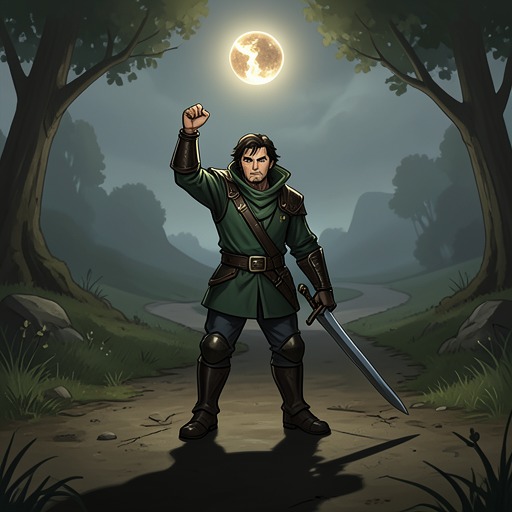
His response to the possibility of divine guidance is not passive submission. Bael-Sharoth says that there is a kind of fate one fights and a kind one makes, and that he will continue to love and care for Six while he waits to see the result. He could resist the apparent design by becoming cruel to her, but he rejects that alternative because Six has already suffered enough. The decisive freedom lies not in controlling the cosmic plan but in refusing to make another person bear the cost of his anger toward it.
The discussion then expands from Six’s individual situation to the condition of created beings. Zephyr describes angels as made to serve and cast aside when they question that purpose, while demons remain trapped in Hell and continue a losing war. Bael-Sharoth answers that cosmic significance and personal significance are different measures. Nothing may matter on the scale of God’s plans, yet how he treats Six matters to both of them, just as the children Zephyr saves matter to Zephyr. A higher power may control the universal outcome, but it cannot erase the immediate ethical reality of an act.
Bael-Sharoth calls the situation a rigged game in which the players can only play the hands dealt to them. As he grows older, he concludes that his remaining freedom is how he feels about what happens. This is not presented as unlimited free will. He imagines himself as a demon dancing on a string toward inevitable destruction, a puppet whose stage time will eventually end. Still, choosing to lean into the role rather than waste himself in futile resistance becomes a limited but authentic form of agency. The constraint is real; so is the responsibility exercised inside it.
His answer unexpectedly affects Zephyr, who admits that Bael-Sharoth is right. Bael-Sharoth then extends the argument to moral transformation, telling his former enemy that having been terrible does not require remaining terrible forever. If damned souls can change and escape Hell, perhaps demons can change as well, even if only temporarily. Fate may shape origins, institutions, and endings, but it does not make every intermediate choice meaningless.
Seasonal Time and Chosen Endings
The final seasonal image gives the concept a gentler resolution. As summer approaches its end, Bael-Sharoth looks at his house and remembers Maharet Flameheart’s observation that no child wants summer to end. He realizes that he does not want it to end either, so he decides that the family will use the remaining time for roasted marshmallows and warm nights beneath the stars before school begins.
The decision does not cancel the passage of time. Summer still ends, and the poem’s image of tumbling from one season into another emphasizes motion that no character can stop. What Bael-Sharoth can choose is the form of the farewell. Instead of treating the ending only as loss, he makes a temporary life within the larger schedule meaningful through shared rituals. The concept therefore closes not with escape from fate but with a practical answer to it: when time cannot be commanded, attention, affection, forgiveness, and conduct remain available. The cosmic game may be rigged, but the way its players inhabit their allotted moments is not wholly predetermined.