Murphy's Law
Soul Guardian: A Hellishly Cozy FantasyMurphy's Law is presented as a universal constant whose comic fatalism becomes literal when Bael-Sharoth and Maharet Flameheart animate a black SUV. It gives a name, personality, and narrative logic to a vehicle that is useful precisely because it turns every attempted solution into a new source of trouble, while also making the rule's central exception explicit: failure persists until something external intervenes.
Definition and Supernatural Embodiment
Murphy's Law holds that whatever can go wrong will go wrong, and that the resulting failure will remain in place until an outside force fixes it. The narration places it beside the laws of thermodynamics, treating it not merely as a human proverb but as one of the universe's governing constants. That framing gives ordinary inconvenience a cosmic scale: disaster is not random bad luck but the predictable expression of a rule.
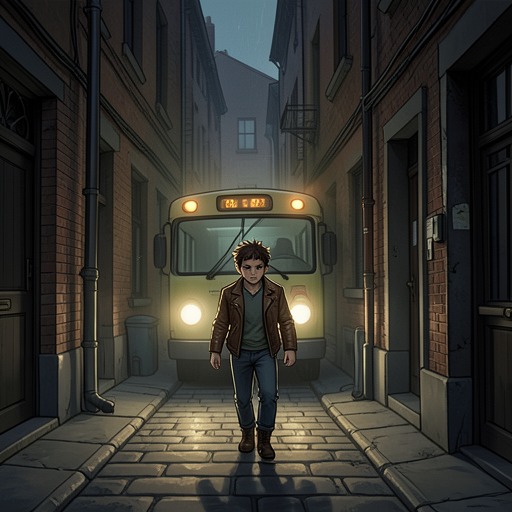
The principle acquires a literal body when Bael-Sharoth and Maharet Flameheart use a simple animus spell and a name to make a black SUV operate on its own. After arguing over what to call it, they settle on Murphy because the name captures the vehicle's expected behavior. The car is therefore not just transportation. It is a magical experiment in turning an abstract law into a sentient, functioning presence.
Murphy in Operation
Murphy knows the local streets remarkably well, which makes it capable of navigating the city even without a human driver. Its knowledge is undercut by its hazy relationship with traffic laws. Red lights and one-way streets become, from the perspective of the SUV's driving habits, suggestions rather than restrictions. The result is a vehicle that combines practical competence with systematic recklessness, embodying the way Murphy's Law converts an apparent advantage into an additional hazard.
Its behavior also includes an aggressive dislike of electric vehicles. This detail extends the rule beyond general mechanical failure into personal-seeming preference: Murphy does not merely malfunction, but expresses a hostile character. The distinction between a spell's side effect and an inherent SUV driver's disregard for traffic law remains uncertain, allowing the vehicle's personality to occupy the comic space between supernatural animation and familiar automotive stereotype.
Failure and the Limits of Repair
Murphy's Law becomes most consequential when Bael-Sharoth and Maharet Flameheart later try to give the SUV another chance. Bael-Sharoth plays along with the idea that better parts might make Murphy faster, but the attempt produces only a weak ticking noise before the sound fades. The animating spark is nearly extinguished, and Murphy is too far gone to recover.
This failure clarifies the rule's dramatic mechanics. Murphy's Law does not promise endless, indestructible misfortune; the animated vehicle can deteriorate until its sustaining force gutters out. Nor can optimism or a proposed upgrade repair it. The vehicle requires an effective outside intervention, and the absence of such a force leaves the law's consequence in its final form: a once-useful supernatural machine becoming irreparably dead.
Narrative Significance
Murphy's Law links cosmic order to domestic inconvenience. In a world containing demons, magic, possession, and banishment, the rule makes a malfunctioning car as revealing as a grand supernatural confrontation. The black SUV turns an abstract maxim into a recurring object of friction, while its eventual collapse gives the joke a material consequence rather than leaving it as a verbal aside.
The rule also resonates with the book's wider concern with systems that classify and constrain beings. A vehicle animated by a spell is governed by a principle that seems impersonal, universal, and difficult to escape; yet the same story repeatedly shows that stronger external agents can impose exceptions, whether through magic, authority, or violence. Murphy's Law thus functions as both a comic rule of accidents and a compact image of a universe in which consequences continue until some power capable of interrupting them arrives.