Arson
Soul Guardian: A Hellishly Cozy FantasyArson is one of Maharet Flameheart’s three hellcats and the most visually striking of the trio, an orange cat so intensely colored that she appears almost red. She enters Bael-Sharoth’s household alongside Robbery and Murder after the search for a tutor proves unsuccessful, bringing a small, predatory form of chaos into a home already crowded with supernatural tensions. Her decisive narrative function is to make danger domestic: Arson is not merely a creature to fear, but a new member of the family whose instincts must be negotiated rather than simply destroyed.
Identity and Introduction
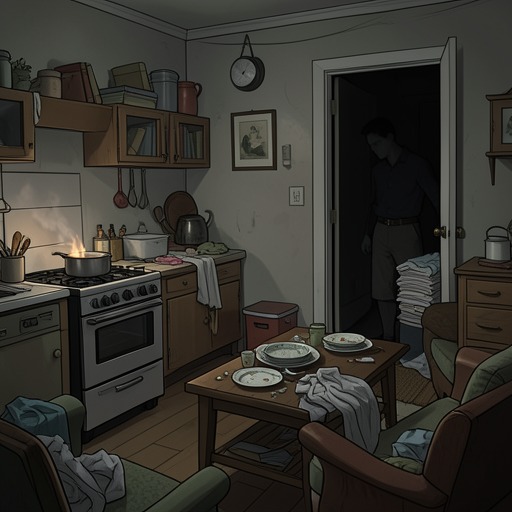
Arson is identified as one of three felines who arrive at the house unexpectedly. Titan detects the intruders before he can smell them clearly, reacts with alarm, and finds the cats occupying the living-room couch: one black, one white, and one orange almost red. Maharet’s ownership establishes Arson’s place in the household immediately. She calls the cats hers, and their arrival is presented as part of the family’s practical reality rather than as a temporary supernatural attack.
The circumstances of the cats’ arrival are also tied to the household’s failed attempt to find a tutor. Bael-Sharoth explains that the search has been less than fruitful, while the cats have apparently decided to come and live with the family. This juxtaposition gives Arson an intentionally disruptive entrance. A domestic problem has not been solved; instead, the home gains three dangerous animals, and the family must absorb them into its already complicated arrangements.
Temperament and Conduct
Arson’s behavior combines menace with comic self-awareness. When Maharet Flameheart summons a ball of flame to command the room’s attention, Arson is especially fascinated by the flickering hellfire. The gesture reveals both the cat’s attraction to destructive power and the normality of such power within the household. Fire is not an extraordinary spectacle for this family, but Arson’s interest marks her as particularly drawn to it.
Maharet establishes a direct rule that nobody is to eat anyone else, even when someone becomes annoying. She then corrects herself to clarify that there will be no acts of murder in the house. Arson accepts the restriction only after expressing its limits in a way that preserves her predatory identity: she will not eat Titan, Six, or Bael-Sharoth. Her apparent compliance is therefore less a transformation into harmlessness than an agreement to suspend her appetite within the household’s social order.
That distinction remains important. Arson does not become gentle simply because she is welcomed into the family. Her promise is delivered with audible dejection, suggesting that restraint costs her something, while Titan responds with defiance rather than trust. The scene turns a rule about safety into a miniature negotiation between species, personalities, and competing claims to territory.
Relationship with Titan and the Household
Arson’s clearest recurring relationship is with Titan, the hellhound assigned to protect the family. Titan reacts to the cats as invaders and demands to know why they are in the house. His hostility is partly protective and partly instinctive: the cats represent a threat to the child and to the household’s established balance, even though Maharet has admitted them.
The conflict never settles into a single decisive attack. Instead, Titan and Arson repeatedly chase one another through the living room. During one such commotion, Six follows after them and remarks that they probably are not actually trying to kill each other, while adding that caution is still wise. A minute later, Titan is running in the opposite direction with all three hellcats pursuing him. Arson is therefore not isolated as an antagonist; she participates in a group dynamic in which the cats collectively turn Titan’s vigilance into a running domestic spectacle.
Her relation to Maharet is structurally different. Maharet is Arson’s owner and the authority who defines the household’s boundaries, but she does not remove the cat’s dangerous nature. Instead, she incorporates it into family life by setting explicit prohibitions. Bael-Sharoth’s presence in the list of beings Arson must not eat further emphasizes that the rule applies across the household, including its most powerful adult members. The home is held together not by the absence of violence, but by negotiated limits on violence.
Narrative Role and Significance
Arson serves as a comic embodiment of the book’s recurring collision between the monstrous and the ordinary. The hellcat is capable of treating a hellfire flame as a toy and of imagining the household’s inhabitants as prey, yet her central scenes concern couches, family rules, and being chased through a living room. This contrast softens neither her danger nor the absurdity of the situation; it makes both visible at once.
Her name also carries the logic of the trio. Robbery, Murder, and Arson sound like a catalog of crimes, but they function as personal names for household animals. The result is a deliberate mismatch between legal or violent language and domestic familiarity. Arson’s menace is real enough to require Maharet’s warning, yet the same menace becomes the basis for slapstick when she and the other hellcats pursue Titan.
By the time the family is also dealing with Six’s schooling, a wedding, and the resolution of Cherry’s origins, Arson remains part of the background machinery of the home rather than a problem that has been permanently eliminated. Her continuing presence confirms that the household’s idea of family can include dangerous beings, provided they accept its rules. Arson’s ending is consequently not a defeat or a moral conversion. She remains a hellcat, remains fascinated by destructive energy, and remains willing to chase Titan; what changes is the social frame around those instincts. Within Bael-Sharoth’s family, even a creature named Arson can be given a place, a prohibition, and a role in the daily life of the house.