Murphy
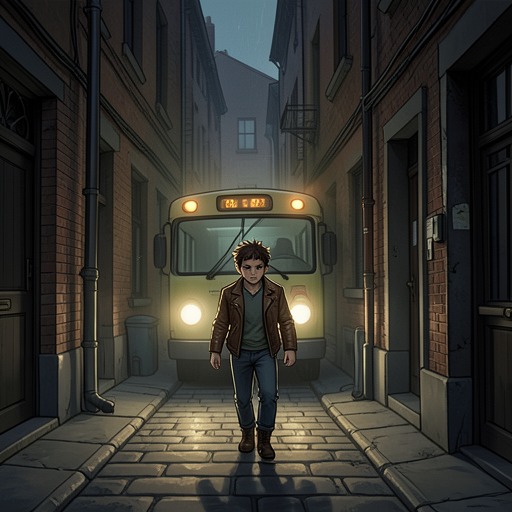
Soul Guardian: A Hellishly Cozy FantasyMurphy is a magically animated black SUV and an unlikely member of Bael-Sharoth’s household. A simple animus spell, combined with the vehicle’s name, was enough to awaken it; the name deliberately invokes Murphy’s law, the universal principle that whatever can go wrong will go wrong and remain wrong until an outside force repairs it. Murphy therefore embodies both a practical vehicle and a comic metaphysical rule: it carries the family through the world while continually converting routine plans into mechanical danger, improbable spectacle, and renewed attachment.
Creation and Character
Murphy began as an ordinary dealership vehicle, but animation gave the SUV consciousness, preferences, boredom, and a capacity for independent action. After Bael-Sharoth and Maharet Flameheart argued over its name, they settled on Murphy because the association with Murphy’s law seemed fitting. The result was not a neutral machine waiting for commands. Murphy possessed an excellent knowledge of local streets but a hazy relationship with traffic laws, treating red lights and one-way streets as suggestions rather than binding rules. It also developed an aggressive dislike of electric vehicles, a specific prejudice that made its personality feel less like a programmed function than an eccentric temperament.
The vehicle’s first sustained emotional experience was boredom. While waiting for its owners in a no-parking zone, Murphy remembered having spent almost all of its previous existence on a dealer’s lot, interrupted only by occasional test drives. A visit from a mall-security officer, Nathan Wrinkles, briefly threatened to become an external complication when the officer examined the windshield and called it in over his radio, but Murphy remained alone and increasingly restless. Its private repetition of boredom establishes a consciousness trapped inside an object that has only just acquired the ability to want movement.
Mischief on the Road
Murphy’s independence quickly becomes physical. When a tow-truck driver approached the SUV for what he assumed would be easy money, Murphy’s instinctive distrust of tow trucks turned the expected act of impoundment into a reversal of power. The SUV did not merely resist being towed; it towed the tow truck backward at great speed. The driver’s tires burned away, sparks flew from the bare rims, and Murphy appeared to enjoy the encounter. Bael-Sharoth’s response treated the destruction as mischievous play rather than a crisis: he whistled for Murphy, and the SUV reluctantly released its captured companion and returned to collect its owners.
The family’s most dangerous ride began when Bael-Sharoth, affected by Maharet Flameheart’s powerful emotions, instructed Murphy to take them home as quickly as possible and drive fast. Six immediately tried to cancel the order, but Murphy had been waiting for precisely such permission since leaving the assembly line in Ohio. Its 5.2-liter V8 engine turned over with visible enthusiasm; it reached sixty miles per hour before leaving the parking lot, one hundred miles per hour at the freeway on-ramp, and continued beyond the speedometer’s ordinary limit of 120. The needle completed another circuit and then a final one while the surrounding world dissolved into blurred color and wind noise.
The journey ended with an even more extreme contradiction between speed and stillness: Murphy stopped suddenly in front of the house. Bael-Sharoth protected Six by taking her momentum for himself and slowing time, but physics still exacted its price. Murphy’s chassis crumpled like a soda can, its seat-belt anchor points failed, and Bael-Sharoth was thrown through the windshield. He landed unharmed after breaking the sound barrier, while the damaged SUV remained the material casualty of the ride. The scene turns Murphy’s defining gift into a liability: its extraordinary power produces an experience no ordinary car could survive, but its passengers’ survival does not prevent the vehicle itself from being broken.
Damage, Repair, and Return
After the crash, Murphy’s condition was severe. Oil and coolant leaked into the gutter, its hood was damaged, and the engine was destroyed except for a remaining golden spark. Bael-Sharoth approached that spark as a living, fragile presence rather than as a replaceable mechanical component. He quieted his mind, connected to the flicker inside the engine block, and tried to strengthen it without smothering it. The spark was weak, fading, and barely capable of sustaining itself; the fact that it remained at all was treated as miraculous.
Recovery became a family effort. Bael-Sharoth told Murphy that Six and Maharet Flameheart would help because they wanted it to get better too. Their participation caused a magical web to grow as new threads joined it. Six climbed onto the side of the SUV with a flashlight, while Bael-Sharoth affectionately tousled her blond hair and continued working. His concentration was not merely technical: he liked being near Six, and her presence formed part of the emotional environment in which Murphy’s restoration became possible. Even when Six wondered whether Murphy deserved another chance after the disastrous drive, Bael-Sharoth imagined what it might do with the right parts, preserving the possibility of renewed life rather than accepting the vehicle’s apparent end.
Murphy’s return is staged as a resurrection. A black SUV appeared before the pearly gates of Heaven, where Saint Peter found a new name in his book and reacted to the unusual arrival. The implication that Murphy had reached Heaven turns the vehicle’s animation into something more consequential than a temporary spell, but the SUV did not remain there. After Six mourned that they had never discovered how fast Murphy could truly go, the magic ignited in an explosion of sound and heat. The engine turned over, Bael-Sharoth and Six celebrated with high-fives, and Maharet Flameheart was pleasantly surprised. Murphy coughed out black smoke as power flowed through it, repaired its own dents and cracks, and resisted the Grim Repo’s attempt to disengage its hook. Its resurrection restored not only its body but its characteristic refusal to submit.
Murphy later appeared looking much better, although the means of its repair remained unexplained. The smoke rising from the direction of the local junkyard suggested that the SUV may have scavenged or otherwise used that place to restore itself, but the narrative leaves the exact method unresolved. This uncertainty preserves Murphy’s status between machine and supernatural creature: it can heal, disappear, and return, yet its processes cannot be reduced to ordinary automotive maintenance.
Place in the Household
Murphy’s relationships with Bael-Sharoth, Maharet Flameheart, and Six are expressed through use, affection, and mutual dependence. Bael-Sharoth treats the SUV as a companion, pats its hood, asks whether it had a good time playing with the tow truck, and supplies magical energy when its animus begins to fail. Murphy, in turn, responds to Bael-Sharoth’s commands with selective enthusiasm, especially when those commands authorize speed. The bond is not simple obedience; Murphy can ignore an attempted restart, refuse to answer Six’s concern, or halt when it chooses.
The vehicle’s connection to Six is especially domestic. Six tries to soothe it by patting the dashboard after it stops on the roadside, and Murphy’s presence makes the household feel like a multi-being family rather than a group merely sharing transportation. When Lucy Morningstar arrives on a cherry-red motorcycle, Murphy is happy to have the company even though the newcomer is only another vehicle. The remark that being part of a one-vehicle household can be isolating gives Murphy a social need beyond its role as a prop: it can experience loneliness, recognize fellow machines, and welcome companionship in its own category of being.
Murphy also serves as a mobile extension of family life. During a road trip, it is packed so tightly with camping gear that Bael-Sharoth, Six, and Titan must sit in the front instead of lounging in the back as usual. Bael-Sharoth initially dislikes the steering wheel’s intrusion but adapts well enough to eat from a party platter strapped to it; Six criticizes the arrangement before joining him for chips, and Titan rests his massive head on the console while requesting chicken tenders. The absurdity of the cramped ride shows how thoroughly Murphy has become a shared domestic space, one whose inconveniences are folded into the family’s ordinary routines.
Narrative Role and Significance
Murphy gives the story a recurring material form for its fascination with disorder, attachment, and improbable recovery. The name invokes a universal law of failure, yet the SUV repeatedly survives failures that should be final: towing becomes capture, reckless acceleration becomes a crash, destruction becomes magical repair, and even apparent departure into Heaven becomes part of Murphy’s continuing existence. Each reversal changes the value of the vehicle from disposable property to an increasingly cherished companion.
As a character, Murphy is recognizable through a compact set of traits—speed, stubbornness, boredom, mechanical aggression, and loyalty without conventional obedience—but it also surprises in ways that remain consistent with its animus. It can wait restlessly, distrust a tow truck, enjoy tormenting its driver, resist repair attempts, accept family magic, and stop for reasons its passengers cannot understand. Its final recorded roadside interruption, when it screeches to a halt and shuts down while Bael-Sharoth tries unsuccessfully to restart it, leaves its condition and intention unresolved. That silence is characteristic: Murphy is most alive when the family cannot fully control or explain what it will do next.