
Racialized Suspicion
Speak No EvilThis flow traces how race shapes Niru’s school life, police encounters, family anxiety, and the public interpretation of his death.
increasing Bearing strength in each event
 decreasing
Bearing strength in each eventdecreasingSchoolroom Otherness

Schoolroom Otherness
Token Authority
In Global Literatures, classmates and teachers treat Niru as an authority on everything nonwhite. His Africanness becomes a classroom resource rather than a full identity.
Social Performance
He laughs with white classmates and joins their jokes while recognizing the colonial assumptions beneath them. Belonging requires strategic participation.
Narrative Importance
Racism appears first as ordinary social pressure, preparing the larger dangers that follow when Niru becomes visibly threatening to white observers.
Childhood Humiliation
Childhood Humiliation
Racial Play
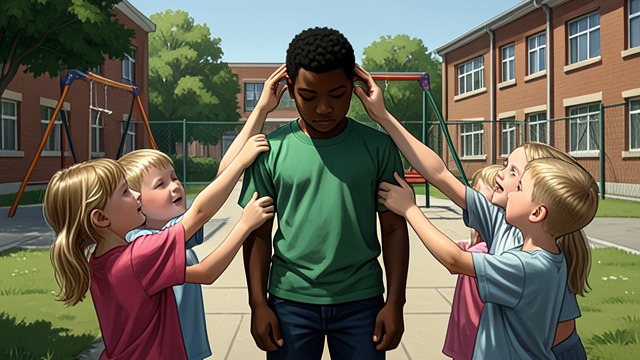
White children touch Niru’s hair, call him names, and treat his body as an object for experimentation. Their actions are framed as curiosity but produce fear.
Learned Silence
Niru allows the behavior because the children outnumber him. He learns to distinguish danger only after it has already entered his body.
Narrative Importance
These memories explain why later physical contact is never neutral. Racism has taught him that being seen can mean being handled.
The Traffic Stop
The Traffic Stop
Visible Compliance
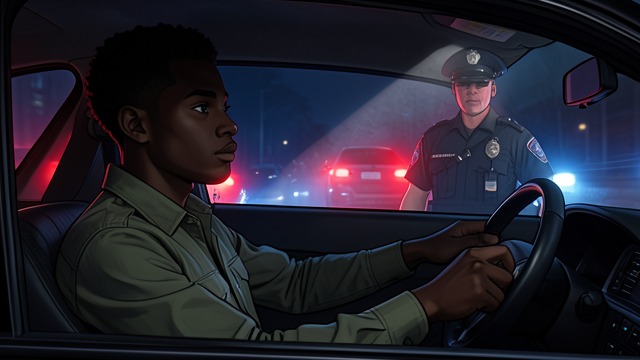
Police stop Niru for speeding. He keeps his hands visible, follows instructions, and remembers OJ’s warning that ordinary driving can become lethal.
Conditional Mercy
The officers release him without a ticket because he has no record. The encounter still leaves his hands shaking and his body convinced that danger was imminent.
Narrative Importance
The stop demonstrates how innocence does not eliminate racial vulnerability. Niru must perform harmlessness before authority can permit him to leave.
The Black Body at the Party

The Black Body at the Party
Mockery and Spectacle
White students imitate Black speech and music while laughing at Niru’s presence. His body is made into entertainment even as he remains socially isolated.
Accumulated Rage
Alcohol weakens his self-control and Meredith’s accusation gives the humiliation a target. His anger is personal but shaped by a wider racial environment.
Narrative Importance
The party turns racial performance into a pressure chamber. Niru’s later actions cannot be separated from the atmosphere that has repeatedly denied his full personhood.
The Public Narrative
The Public Narrative
Competing Accounts
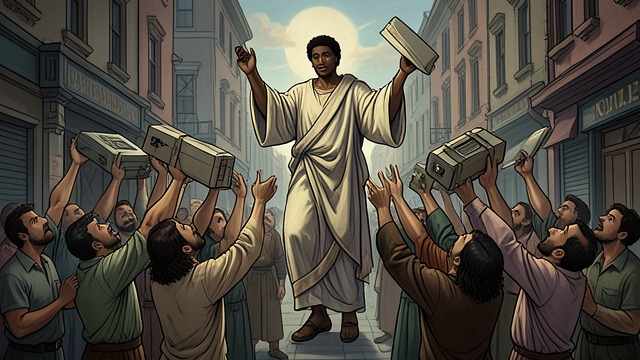
Media and officials present Meredith as an assaulted white girl while critics debate the shooting. Niru’s identity is reduced to a yearbook image and a criminalized moment.
Protest
Students and activists organize around the slogan White Lies Cost Black Lives. The city briefly turns the private tragedy into a national argument.
Narrative Importance
The public story determines whose fear counts. Niru’s life becomes visible only after his death, and even then through narratives controlled by others.
early in the school year
during Niru’s early childhood
after Niru’s failed meeting with Ryan
the night after the championship
the weeks after Niru’s death
