
A Play within a Changed World
Station ElevenKing Lear and A Midsummer Night’s Dream frame different moments in the novel, linking mortality, plague, and the persistence of performance.
increasing Bearing strength in each event
 decreasing
Bearing strength in each eventdecreasingLear’s Final Act
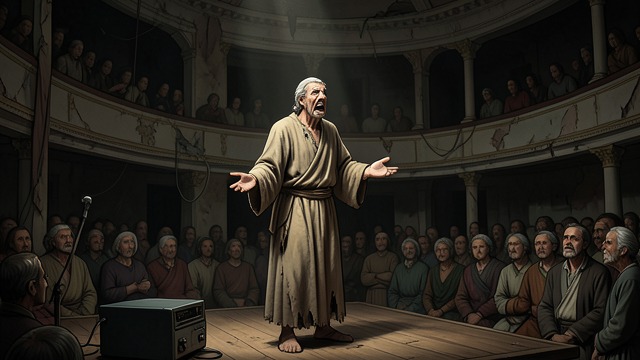
Lear’s Final Act
A role nearing its end
Arthur performs the mad scene in King Lear as his health fails. The play’s old king and its themes of loss surround a real death that no one expected.
Art and accident converge
The performance cannot control what happens, but its lines give Arthur’s last moments a shape. The stage becomes an accidental memorial witnessed by Jeevan and Kirsten.
Lear in Rehearsal
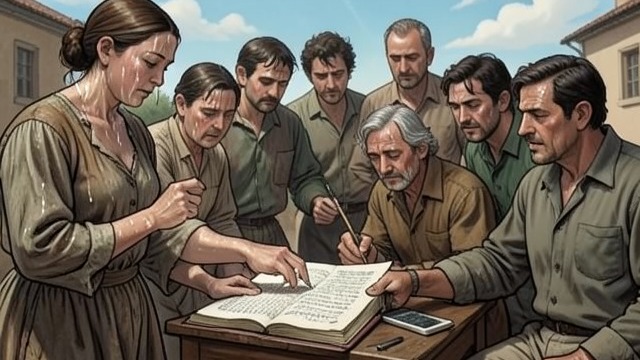
Lear in Rehearsal
A play learned anew
The Symphony rehearses King Lear on the road. Kirsten corrects lines and carries the text while the company struggles through heat and fatigue.
A private echo
For Kirsten, the play is linked to the night she last saw Arthur. Rehearsal brings the old performance into contact with her adult life without restoring the memories she has lost.
Choosing Midsummer
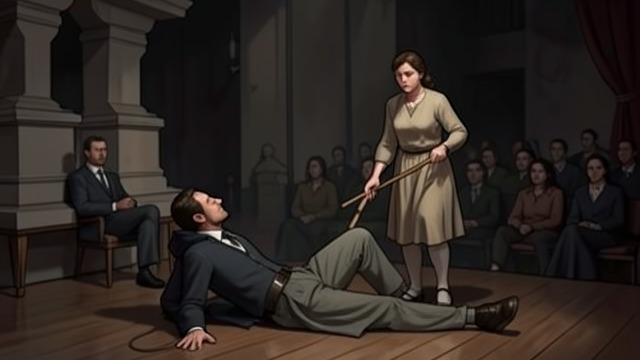
Choosing Midsummer
A lighter play selected
The Conductor chooses A Midsummer Night’s Dream because the town seems to need fairies rather than another tragedy. Kirsten performs Titania despite tensions with Sayid.
Art meets present conflict
The play’s jealous rulers and shifting loyalties echo the company’s private relationships. Its comedy cannot disguise the danger developing around the town.
A Plague in the Text
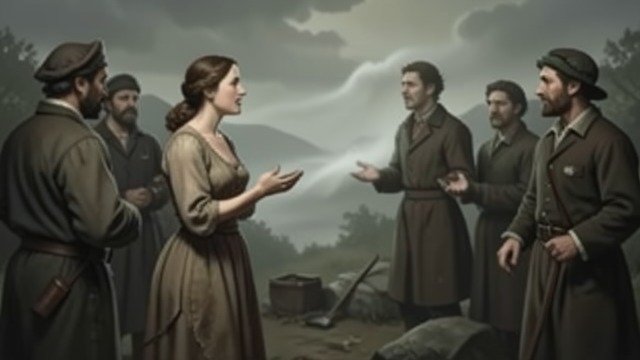
A Plague in the Text
Lines across centuries
Kirsten speaks of contagious fogs and altered seasons. Notes in the company’s text connect Shakespeare’s plague-haunted era to the world after the Georgia Flu.
History as recurrence
The speech makes the old play newly legible without making the two crises identical. Art carries language forward, allowing later performers to find echoes in changed circumstances.
The Sermon after the Applause
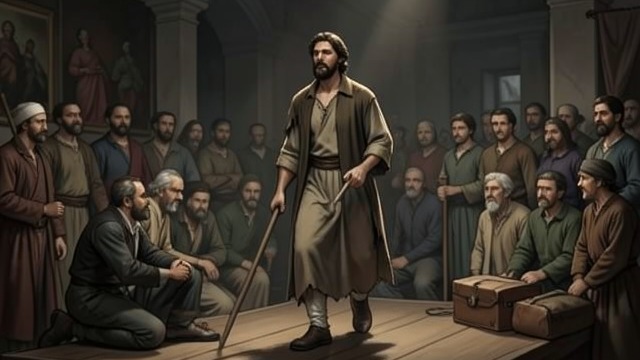
The Sermon after the Applause
A performance interrupted by power
The audience applauds, then the Prophet takes the stage and recasts survival as a divine mission. The performance’s shared attention becomes a platform for authority.
The troupe chooses departure
The Conductor recognizes the threat and orders the company to leave. Theatre has opened a gathering, but the performers must still navigate the politics of the world outside the play.
The winter night of Day One
Year Twenty, before the St. Deborah performance
The afternoon of the St. Deborah performance
During Titania’s speech
Immediately after A Midsummer Night’s Dream
