Arthur Leander’s onstage death
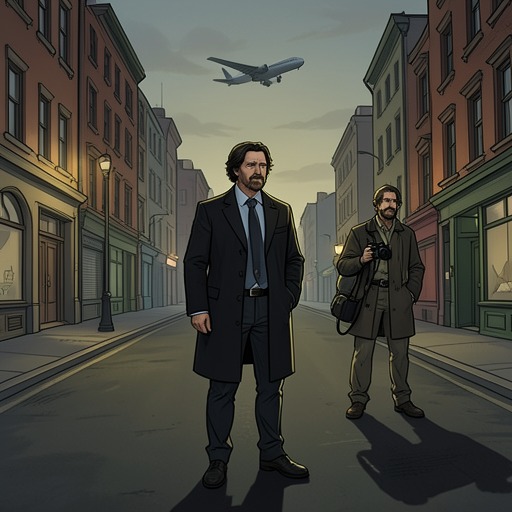
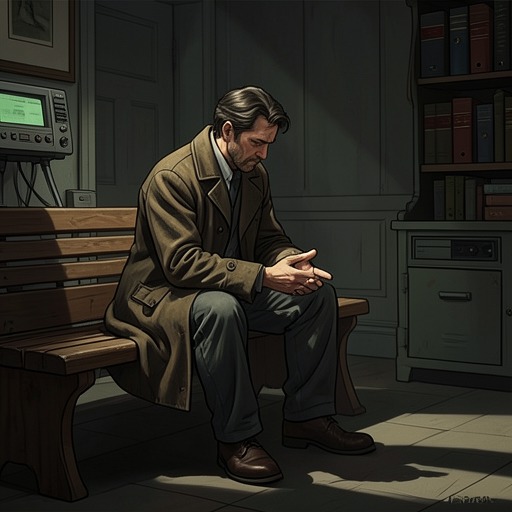
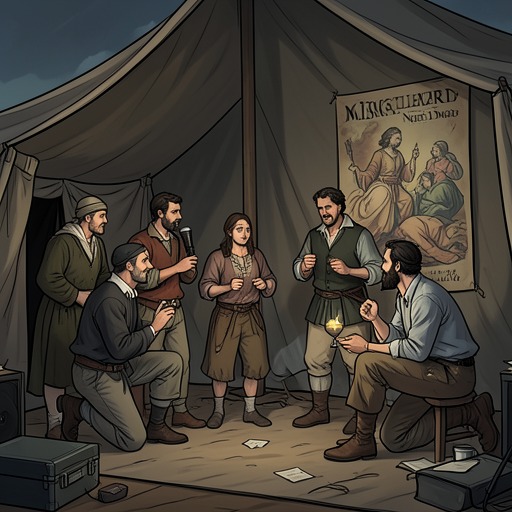
Station ElevenArthur Leander’s onstage death interrupts a performance of King Lear and turns its staged winter into a real emergency. At Toronto’s Elgin Theatre, the actor’s faltering performance becomes a medical crisis; Jeevan Chaudhary’s effort to reach him cannot prevent his death. The scene also becomes a lasting fragment of Kirsten Raymonde’s childhood memory, joining the theatre’s artificial snow and blazing lights to the image of Arthur lying still.
The performance breaks down
The incident takes place during act four of King Lear on a winter night. Arthur, fifty-one, stands in a pool of blue light, wearing flowers in his hair. Earlier, three little girls have played a clapping game onstage as younger versions of Lear’s daughters. Now they return in the mad scene as hallucinations, flitting through the shadows while Arthur, as Lear, stumbles and reaches for them. The distinction between performance and emergency is initially uncertain: a change comes over Arthur’s face, and he reaches for a column but misjudges the distance, striking it hard with the side of his hand.
The words and movements of the play become signs that the performance is failing. Arthur delivers the wrong line in a wheezy voice that is barely audible, then cradles his injured hand against his chest. For a moment, the other actors and audience cannot know whether the apparent breakdown is part of the acting. Jeevan, seated in the orchestra section, recognizes that something may be wrong, but hesitates; the people behind him murmur for him to sit, an usher moves toward him, and his girlfriend tugs at his sleeve. The theatre’s ordinary expectations of quiet attention delay action just as Arthur’s condition worsens.
Jeevan reaches the stage
Jeevan has trained to be a paramedic and knows King Lear well. When Arthur whispers another line, Jeevan realizes that the actor has skipped twelve lines. That specific break in the text makes the emergency harder to dismiss as deliberate performance. Arthur sways, his eyes unfocused, and no longer appears to Jeevan to be playing Lear. Jeevan pushes past an usher and runs for the stage, but a second usher coming down the aisle blocks the direct route. He throws himself up onto the stage without using the stairs, kicking the first usher, who has caught his sleeve.
Even as he moves toward Arthur, the stage’s artifice remains sharply visible to him: the falling snow is made of translucent plastic, clinging to his jacket and brushing his skin. The actors playing Edgar and Gloucester are distracted by the commotion rather than watching Arthur, who leans against a plywood column and stares vacantly. Shouts come from backstage, and two figures hurry toward the scene. Jeevan reaches Arthur as he loses consciousness and eases him to the floor. The snow continues to fall through the blue-white light, so that a theatrical image of winter frames an event the play cannot contain. Arthur is not breathing; the audience’s voices, phone-camera flashes, and indistinct exclamations replace the ordered language of the performance.
Death and its immediate aftermath
The surrounding actors register the rupture in their own ways. The performer playing Edgar drops the British accent he has used in the production and sounds like the Alabaman he is; the actor playing Gloucester pulls away the gauze that has covered half his face in the role and stands frozen. Their reactions mark the collapse of the performance’s protective fiction: the actor’s death is no longer an event contained within King Lear, and the people onstage must respond to Arthur rather than to Lear.
At 9:14 p.m., Walter Jacobi states the time. Medics strap Arthur onto a gurney, and one pulls down a blanket to fit an oxygen mask over his face. Jeevan understands that this appearance of continued medical care is a courtesy to Arthur’s family, so that they will not learn of his death through the evening news; he is moved by the decency of the gesture. The detail gives the aftermath a quiet, practical tenderness amid the public spectacle. The audience has witnessed the collapse, but the people handling Arthur still attempt to protect those who have not yet been told.
A remembered scene
Kirsten Raymonde is among the children connected to the performance: the three girls who appeared earlier as Lear’s daughters. Years later, her recollection of Arthur is incomplete. She cannot remember her street address or her mother’s face, but she remembers him as a fleeting impression of kindness and grey hair, and remembers him pressing two comic books into her hands. The clearest image she retains from before the collapse is the theatre: Arthur lying still on his back, paramedics leaning over him, people gathering, and snow falling indoors beneath electric light. A man in a suit speaks to her while the scene unfolds.
The event therefore survives in the novel both as a public interruption and as a fragment of private memory. Its details do not become a complete account of Arthur’s life for Kirsten; they remain an image assembled from gesture, sound, light, and artificial snow. The contrast between Jeevan’s urgent recognition and Kirsten’s later, partial recollection gives the death two distinct measures: the immediate attempt to act, and the childhood memory that persists after so much else has vanished. Onstage, the plastic snow continues to fall after the boundary between play and life has failed.