Hotel Le Germain
Station ElevenHotel Le Germain is the Toronto setting for a pivotal private turn in the lives of Arthur Leander and Miranda Carroll. Arthur arrives amid the awkward visibility of growing fame, retreats from the hotel lobby to his room, and calls Miranda, whose number he has kept for years. Their renewed connection leads to an affair conducted during his stay. The hotel’s narrative importance lies in that shift: a place where Arthur is publicly recognized becomes the enclosed setting in which he and Miranda confront desire, loyalty, and the cost of leaving an existing relationship.
A public arrival and private retreat
At thirty-six, Arthur is becoming extremely famous, a status he once secretly wanted but now finds embarrassing and difficult to navigate. At the hotel’s registration desk, a young employee welcomes him as an honored guest and mentions having enjoyed one of his detective films. Arthur cannot tell whether her attention reflects genuine admiration, politeness, sexual interest, or some combination. He smiles, thanks her, takes his key card, and walks toward the elevators conscious of the people watching him.
The lobby encounter makes fame a problem of interpretation as much as attention. Arthur has the recognition he once desired, yet cannot confidently read what other people want from him or decide how to respond. His effort to look purposeful and unconcerned is a performance layered over embarrassment. The hotel room offers a sharp counterpoint: once alone, he feels relieved not to be watched, but also disoriented and deflated. The room does not simply shelter him from public attention; it is where the unease left by that attention becomes an occasion for action.
The call from the room
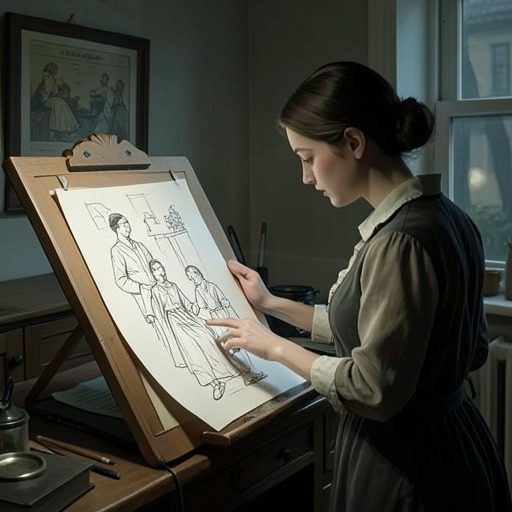
After sitting alone on the bed, Arthur suddenly knows what to do: he calls the cell number he has been saving for years. Miranda is at work when he reaches her, employed as an administrative assistant at Neptune Logistics. Her desk is in a private reception area outside her boss Leon Prevant’s office, beside a glass wall looking over Lake Ontario. The hotel is therefore connected to a very different interior: Miranda’s quiet workdays, with spare hours for drawing the graphic novels she is developing.
The call occurs after Miranda has been thinking about the lake and imagining Dr. Eleven in the submerged world of her comic. She has also just ended a painful exchange with Pablo, whose dismissive responses to her art have made her reconsider the relationship. Arthur asks to buy her lunch; she proposes dinner instead. Their conversation begins by telephone, but Hotel Le Germain supplies the setting for Arthur’s renewed presence in her life: he is staying in Toronto, and the saved number turns an old connection into a present possibility.
The affair and its ethical pressure
Miranda’s first meeting with Arthur takes place at a restaurant, not at the hotel. During that dinner, he listens with apparent interest as she describes her comic-book project and asks why she chose the form. The distinction matters to the hotel’s role: it is not the site of every step in their courtship, but it becomes the private place to which their relationship returns. Arthur is in Toronto for three more weeks before going back to Los Angeles, giving the affair a defined, temporary span.
At two in the morning, Arthur and Miranda lie together in his enormous bed at the hotel. He asks whether pursuing happiness can be dishonorable. Miranda answers by measuring that pursuit against the circumstances: she lives with Pablo, and sleeping with a film star is not, in her view, honorable. Arthur is uncomfortable with the label attached to his celebrity and kisses the top of her head. The scene holds attraction and moral unease together rather than resolving one into the other. The room’s privacy enables intimacy, but it does not erase the person and relationship left outside it.
Narrative significance
Hotel Le Germain is presented through contrasting degrees of exposure. In the lobby, Arthur is recognized and watched; in his room, he is alone enough to make the call he has delayed for years. Later, that same private setting accommodates a relationship whose consequences cannot be contained by its walls. The hotel thus marks both a retreat from celebrity and an entry into a more intimate form of risk.
The hotel scenes also bring Arthur’s uncertain public identity into contact with Miranda’s effort to protect a private creative life. His fame is something other people respond to, while her graphic novels are work she insists belongs to her even when Pablo dismisses it. Their encounter does not make those differences disappear. Instead, the hotel becomes a temporary space where their separate circumstances meet: Arthur’s discomfort with being watched, Miranda’s dissatisfaction with her existing relationship, and their choice to act on a renewed attachment despite its ethical complications.