Pablo
Station ElevenPablo is Miranda’s boyfriend during her early years as an artist and her first corporate job. His initial encouragement of her artistic identity gives way to resentment over the work that supports them, and their relationship ends when Miranda leaves him for Arthur. Seen chiefly through Miranda’s recollections, Pablo’s story turns on a reversal: he once seemed poised for artistic success, while she took paid office work at his invitation, but the balance between them changes as his career stalls and her job becomes essential to their shared life.
Artistic Ambition and Early Promise
Pablo and Miranda met at school, where he graduated a year ahead of her. His career initially appeared to be flourishing: he sold one painting for ten thousand dollars, then a larger one for twenty-one thousand, and seemed poised to become the next major name in art. On the strength of that promise, Miranda stopped working as a waitress at his invitation. But after a show was cancelled, he sold nothing for the next year. Miranda signed with a temp agency and soon found herself at a desk in a high tower, working outside Leon Prevant’s office.
The contrast between the two careers is important to their later arguments. Pablo’s language casts corporate employment as a system that traps people; Miranda’s wages, however, pay their rent. He sees her office job as a surrender of the identity they share as artists, while she experiences it as a practical obligation. His support for her artistic self-image does not translate into acceptance of the work and routine that sustain her.
Corporate Work and Growing Conflict
When Miranda struggles with office clothes that feel cheap and ill-fitting, Pablo tells her, “You’re an artist,” and questions why she would conform to a corporate dress code. She answers that her job requires it. He calls her “my poor corporate baby” and describes her as lost in the machine, adding that the job is only temporary. His language frames her employment as an imposed condition rather than a choice, even though she is the one earning the money that keeps them housed.
The disagreement sharpens when Pablo calls her at the office and asks what she does during her downtime. Miranda says she works on her project and questions his hostile tone. By then, she no longer cares as she once did: instead of being reduced to tears by the exchange, she looks out at the lake and imagines moving trucks, calling in sick, packing, and leaving within hours. The thought that “it is sometimes necessary to break everything” marks a change in her response. She is no longer only defending her work or trying to soothe Pablo; she is imagining an exit.
Pablo complains that Miranda works twelve-hour days, is gone from early morning until late evening, and sometimes works Saturdays. His complaint presents her absence as a relationship injury, but the hours belong to the job whose income pays their rent. When Miranda says, “This is what’s paying our rent,” Pablo asks whether she is accusing him of not pulling his weight. She gently puts down the receiver rather than continuing the argument. The gesture ends the call and leaves her wondering why she had not recognized his meanness earlier, perhaps even eight years before, when they began dating.
Breakup and Its Immediate Aftermath
After the call, Pablo emails Miranda with the subject line “WTF,” accusing her of being hostile and passive-aggressive and asking what is going on. She closes the message without replying. When Arthur later asks whether she is still with Pablo, Miranda says they are breaking up and are not right for each other; saying it aloud makes the decision real. The separation is not presented as a long negotiation. In the same sequence, Miranda and Arthur kiss in a taxi, enter a hotel, and begin a relationship.
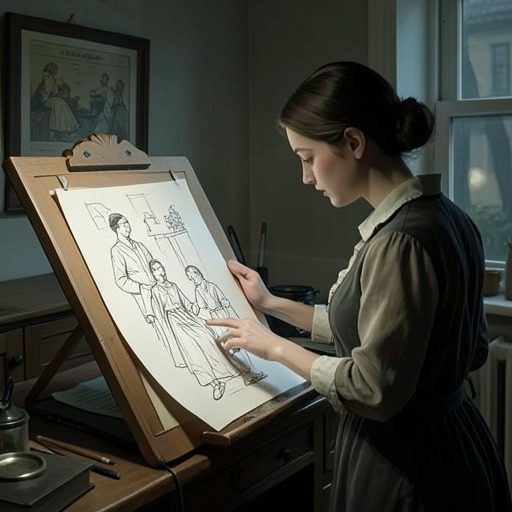
The account of Pablo’s last morning with Miranda is later partly withheld from the story Arthur tells in company. After Miranda has moved toward Arthur, she returns to the apartment for a watercolor she has decided to take from the drafting table. Pablo is awake, drunk, and weeping. Miranda comes back to the hotel with a bruise on her face. The account gives these details together but does not explicitly identify how the bruise was caused, so its origin remains unstated.
Arthur’s public version of how Miranda arrived at his hotel omits this painful return to the apartment and the bruise. His telling focuses instead on her appearing with two suitcases and staying with him. The omission makes Pablo part of a history that is present in Miranda’s experience but absent from the polished story others hear. Their breakup is therefore both a private rupture and a selectively narrated episode in the account of how Miranda and Arthur began their life together.
Narrative Role
Pablo is defined less by a sustained independent storyline than by the shifting pressures within his relationship with Miranda. His early success helps explain why she left waitressing at his invitation; the collapse of that promise helps explain why her wages become central to their shared circumstances. His opposition to corporate conformity is sincerely tied to her artistic identity, yet it becomes difficult to separate from his resentment of the routine and financial dependence their situation entails.
The relationship’s change is registered through Miranda’s reactions as much as through the arguments themselves. A conversation that might once have made her cry now turns her attention to the lake and the possibility of leaving. She eventually speaks the breakup aloud, while Pablo’s final appearance in the account is the drunk, weeping figure she encounters when retrieving the watercolor. That object, chosen from the apartment as she leaves, links the artistic life they once shared to the separation that makes a new life with Arthur possible.