Pre-collapse era
Station ElevenThe Pre-collapse era is the novel’s vanished world of electric light, commercial air travel, mass communication, and functioning public services. It is not presented as a single continuous period so much as a before that becomes legible through its abrupt ending and the later lives of its artifacts: familiar devices cease to work, while the routines and connections they once enabled become difficult for survivors to imagine. The Georgia Flu supplies the historical divide. In its aftermath, airplanes remain on runways, screens go dark, and the Internet disappears, turning the ordinary infrastructure of modern life into a collection of memories and relics.
Everyday Technology and Connection
The former world is evoked through the small comforts and shared routines that depend on electricity. A retrospective inventory recalls illuminated swimming pools, games under floodlights, porch lights attracting moths, and trains powered by electric third rails. Concerts had bright stages, electric instruments, and crowds lifting phones to take photographs. The list makes technological loss intimate: it is not only the disappearance of machines, but also the disappearance of the occasions and habits built around them.
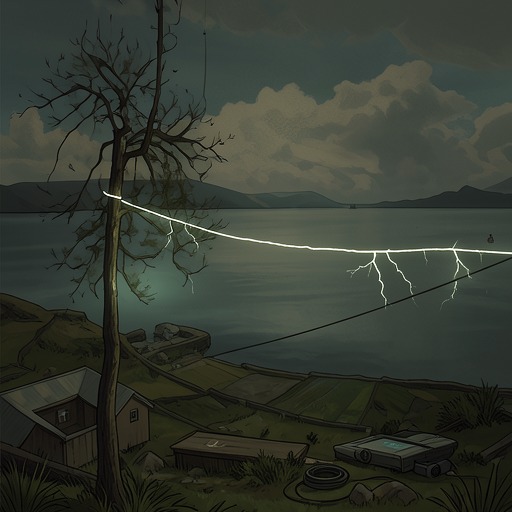
The Internet had made distant lives feel present. People encountered one another through photographs, messages, relationship updates, plans, complaints, and appeals for help; following those fragments could make someone feel less alone. Afterward, this ordinary, ambient connection is no longer available. The loss is not described merely as a failed service: the network had helped people experience themselves as part of a larger social world.
Electricity also represented possibility beyond communication. In Traverse City, an inventor later tries to power a laptop by pedalling a stationary bicycle, hoping to find the Internet. The effort makes clear how fully the former network depended on infrastructure that is no longer there. The screen displays a page-unavailable notice; the inventor pedals to keep it from flickering, while his explanation about satellites leaves the lost system visible only as a fragile image and a story.
The Flu and the Historical Divide
The transition begins with an emergency that becomes impossible to treat as local. Hua tells Jeevan Chaudhary that more than two hundred flu patients have been admitted since morning, including 160 in the preceding three hours, and that fifteen have died. The hospital’s emergency room is full and beds have been placed in hallways. Hua’s warning that the illness is spreading beyond the hospital prompts Jeevan to understand that the outbreak could divide his life into a before and an after.
The official response and the ordinary news environment still function briefly as the crisis emerges. A broadcast reports that Toronto General Hospital and two other local hospitals have been placed under isolation and that Health Canada is confirming an outbreak of the Georgia Flu. The report says fatalities have occurred, while officials ask people to remain calm. For Jeevan, however, the hospital’s numbers carry more force than the measured public announcement: the old world’s systems are still speaking, but their ability to contain or explain the emergency is already in doubt.
The collapse of communications unfolds in stages. At Frank’s apartment, Jeevan and Frank watch news coverage as reports become more local and international sources fall silent. By the time other channels show static, test patterns, or repeated emergency advice, the last newsroom broadcast has ended: Jeevan wakes at two in the morning to find the room empty on-screen. A day later the camera is switched off or fails, and the Internet goes dark the day after that. The sequence turns the failure of media into a visible measure of institutional retreat.
The End of Mobility and Public Systems
Air travel marks both the scale of the former world and the depth of its disappearance. The retrospective account recalls the view from thirty thousand feet: illuminated towns seen through airplane windows, each suggesting lives continuing below. After the collapse, aircraft remain, but flight largely does not. Planes gather snow on their wings and acquire improvised uses: some serve as cold-weather food storage, while aircraft near orchards hold fruit that dehydrates in summer heat. Their continued physical presence makes the loss of travel more concrete, not less; the machines are there, but the network that made them vehicles is gone.
At the airport, Clark Thompson sees the transition as commercial aviation stops. The departures cease, a quarantine announcement reaches the terminal, and the remaining passengers discover that roads, buses, trains, and flights offer no route onward. People who have left return after finding no ground transport; others set out walking toward Severn City. The stranded passengers remain beside aircraft that brought them there, now unable to carry them any farther. Their predicament compresses the collapse of a global transport system into a terminal full of people who cannot continue their journeys.
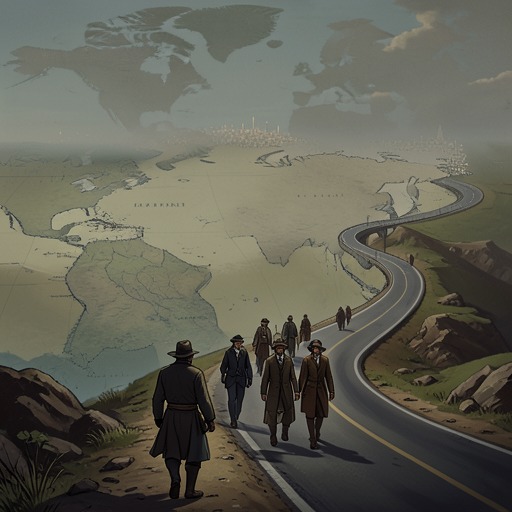
The loss extends beyond travel and communication. The inventory of what no longer exists includes pharmaceuticals and the confidence that a small cut or scratch can be treated; it also names the disappearance of fire departments, police, road maintenance, and garbage collection. Borders remain on old maps, but countries no longer operate as functioning, staffed boundaries. The former world’s conveniences depended on overlapping institutions and supply systems, and their failure leaves ordinary risks without the protections people had taken for granted.
Memory, Artifacts, and Historical Knowledge
After the technological systems fail, their devices remain as objects whose practical use has diminished while their historical meaning grows. By Year Fifteen, Clark’s Museum of Civilization in the Skymiles Lounge preserves cell phones, tablets, laptops, game equipment, shoes, vehicle engines, and a chrome motorcycle. He records passports, driver’s licences, and credit cards belonging to people who lived at the airport and later died. What had once been routine equipment or personal identification becomes evidence of individual lives and of a society that organized itself around mobility and electronic connection.
The museum also preserves the gap between experience and inheritance. Children at the airport school learn that airplanes once crossed the world and that small electronic devices could connect to a worldwide network. They are taught about satellites and a system that had been everywhere, but even teenagers struggle to understand the old borders and distances. The map can point out Chicago, Detroit, and Severn City; it cannot make the former ease of movement fully imaginable. Knowledge survives, yet the lived scale of the connected world does not automatically pass from one generation to the next.
Survivors’ memories make that distance personal. In Traverse City, Kirsten Raymonde admits that she cannot really remember what computer screens looked like, although she was eight when the old world ended. Electricity nonetheless fascinates her through images of lamps, a nightlight, a chandelier, and a bright stage. August, by contrast, remembers television as part of his childhood and seeks old TV Guides and poetry books among abandoned houses. For him, television recalls a specific life of watching shows and playing violin; for Kirsten, electricity is more an imagined set of lost possibilities. The contrast shows how the same past can be a fading recollection for one survivor and an inherited, nearly magical idea for another.
Narrative Significance
The Pre-collapse era gives the novel’s later world its measure of absence. The former world is reconstructed through inventories, interrupted broadcasts, abandoned aircraft, surviving screens, and the lessons taught to children who have never known the systems being described. Those forms of evidence differ: a television can preserve a test pattern, a museum can preserve a phone, and a school can explain the Internet, but none restores the social experience that once connected the objects and institutions.
That contrast also prevents the past from appearing only as an abstract age of progress. Its lights, networks, medicines, and transportation depended on material systems that could fail, and their disappearance changes what people can reach, know, and rely on. In the post-collapse present, the remains of the former world are at once useful, puzzling, and mourned. The era matters because it establishes what has vanished while showing that its meanings endure unevenly—in remembered routines, carefully kept objects, and stories passed on to people born after the divide.