Fire code
Stephen King Three Classic Novels Box Set: Carrie, 'Salem's Lot, the ShiningFire code appears in the novel not as a detailed body of statutes but as the ordinary safety infrastructure meant to protect a crowded school. Its clearest presence is the gymnasium’s sprinkler system, whose intervention during the Spring Ball disaster reveals how a safeguard can become part of a wider chain of danger when other systems have been compromised.
Purpose and Presence
The gym where the Spring Ball is held also serves as the school auditorium. Its sprinkler pipes run through the walls, with small nozzles set into the ceiling; Carrie White later recalls them as a consequence of fire laws. The regulations are not discussed in technical detail, but their material result is visible: the building has a system intended to respond to fire.
Other protections appear alongside that system. The gym’s lobby doors are normally not locked, a condition attributed to state law, and people attempting to escape initially crowd against them when they fail to open. The account distinguishes this legal requirement from the sprinklers, but both details establish a school environment in which safety depends on built systems and rules functioning as expected.
The Sprinklers During the Spring Ball Disaster
After the crowd rushes toward the unyielding lobby doors, the sprinklers come on across the gym. Water falls onto the basketball court, interrupts the panic at the exits, and begins washing away the blood where Carrie fell. For a moment, the response appears to restore order: people stop pressing against the doors and look up at the water.
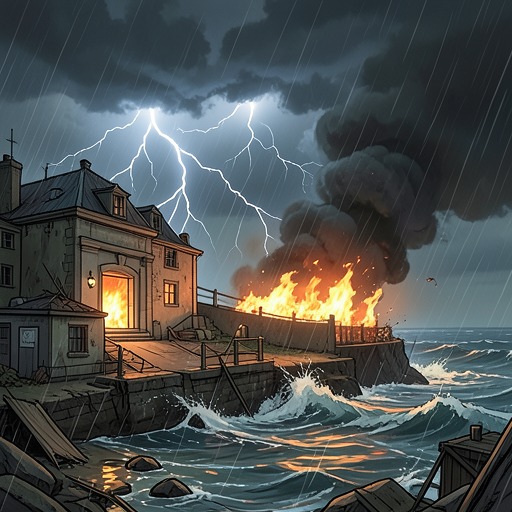
But the wet floor meets exposed electrical equipment. Josie Vreck, trying to reach the band’s equipment, grabs a microphone stand and cannot let go. A flash and feedback shriek accompany the electrocution; he falls against an amplifier, which tumbles into the water, and his shirt catches fire. The sprinklers have supplied water as designed, yet in the presence of live microphones and amplifiers that water helps create a new immediate hazard. The scene turns a familiar protective system into part of the disaster’s violence without suggesting that the code itself prescribed the dangerous outcome.
Firefighting and Systemic Failure
The danger extends beyond the gym. Fire hydrants in the area have been vandalized, and water pressure from Spring Street toward Grass Plaza is reported to be affected. At the hydrant on the corner of Grass Plaza, Thomas K. Quillan sees the large lug nuts unscrewing themselves before it bursts. He hears Carrie speaking to herself about giving them a shower, then loses track of her as the fire trucks arrive. The testimony connects the hydrant failures to her, while showing how the damage obstructs the response outside the school.
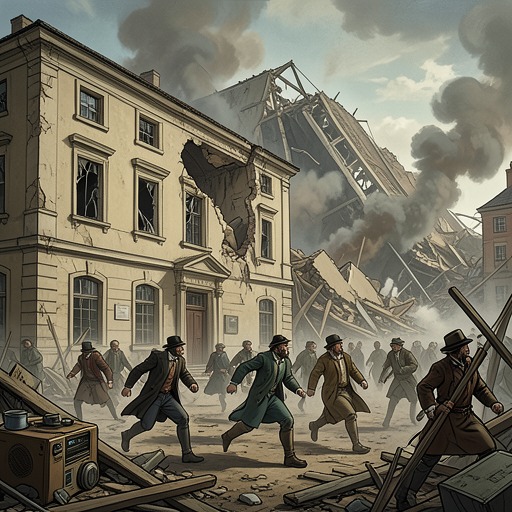
When the new pumper reaches the school, firefighters discover that the hydrants will not provide water. The school explodes while Chief Burton is shouting at them. In the town’s emergency response, Otis Doyle learns that water remains available in the old Rennett Block across town and that hoses are being laid; children are also setting up a hospital in the police station. These details show both the consequence of the local infrastructure failure and the improvised effort to find resources elsewhere.
Significance
Fire code represents a promise of safety embedded in the school’s architecture, but the disaster exposes the limits of that promise. Sprinklers can activate and doors can be legally required to remain unlocked without guaranteeing escape or rescue when doors will not yield, electricity remains dangerous in water, and hydrants have been disabled. The novel makes the failure systemic: the same crisis moves through the gym, the street-level water network, and the delayed firefighting response. Safety rules and equipment remain present, but their protection is overwhelmed by converging hazards.