My Name Is Susan Snell
Stephen King Three Classic Novels Box Set: Carrie, 'Salem's Lot, the ShiningMy Name Is Susan Snell is the central first-person memoir within the larger record of the Chamberlain disaster, presenting Susan Snell’s recollections of Carrie White alongside the aftermath of the Spring Ball massacre. Its decisive significance lies in the contrast between the private girl Susan remembers and the public monster that others repeatedly claim Carrie was. The book does not merely preserve events; it shows how trauma is retold through memory, journalism, testimony, accusation, and the need to assign blame.
Form and Subject
My Name Is Susan Snell takes the form of a personal account whose subject is both Carrie White and the catastrophe that destroyed Chamberlain. Susan recalls Carrie’s life at close range, while the surrounding documentary materials widen the frame to include emergency reports, police testimony, commission proceedings, and later journalism. The result is a composite narrative in which intimate knowledge repeatedly collides with institutional language.
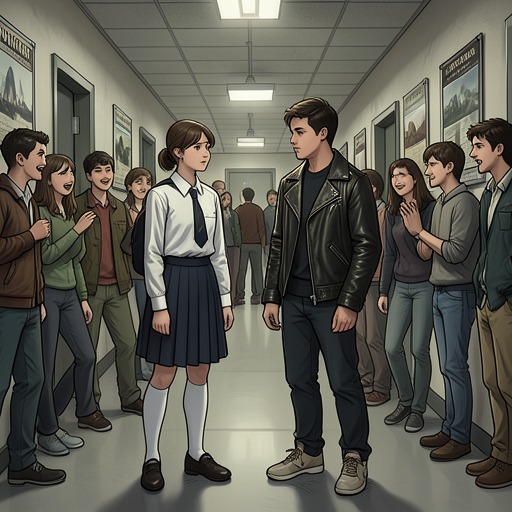
Susan’s account insists on Carrie’s ordinary desires. The day before the prom, Carrie waited outside one of Tommy Ross’s classes, apparently expecting him to reject her for lingering near him. She explained that she had to be home by eleven-thirty because her mother would worry. Tommy proposed stopping at the Kelly Fruit Company afterward for a burger and a root beer, away from the other students who would be going to Westover or Lewiston. Carrie accepted with visible happiness. Susan presents this modest plan as evidence against the label of monstrosity: Carrie could be satisfied by a hamburger and a dime root beer after her only school dance, provided she did not make her mother anxious.
Carrie Before the Disaster
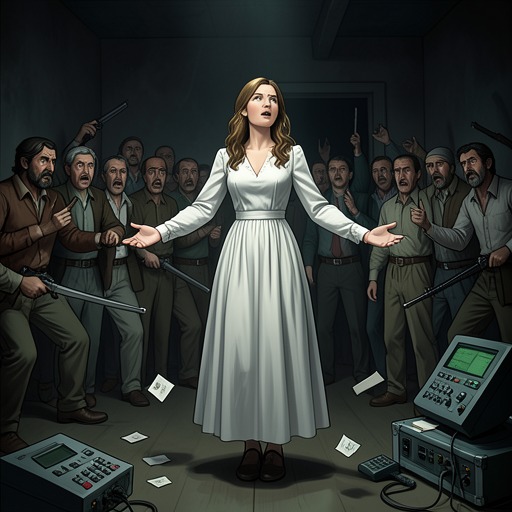
The memoir gives special force to Carrie’s first arrival at the dance. She encounters not simply fashion or decoration but a world of glamour made strange by capitalization and atmosphere. Chiffon, lace, silk, satin, flowers, dinner jackets, cummerbunds, and polished black shoes transform the gymnasium into a place where classmates seem like wraiths or beautiful strangers rather than the people who had humiliated her. The scene records both her wonder and her distance from the social world she has entered.
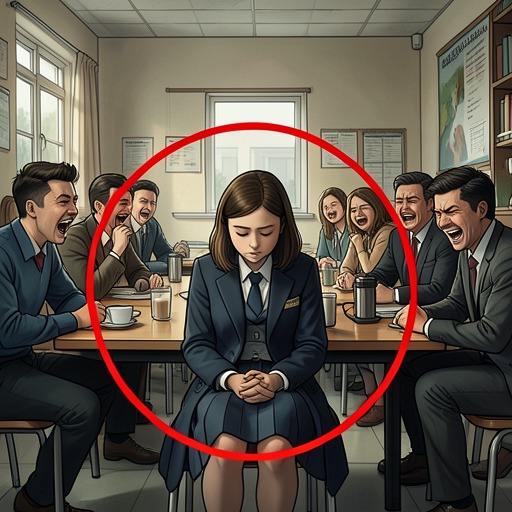
That distance matters because Susan’s narration refuses to let the later destruction erase Carrie’s vulnerability. Carrie is shown as a frightened adolescent trying to follow rules imposed by her mother, hoping not to spoil Tommy’s evening, and discovering pleasure in an uncomplicated meal. Her conduct before the disaster is therefore not presented as the behavior of an inexplicable force but as the behavior of a socially isolated girl briefly admitted to an ordinary ritual of youth.
Documentary Record of Catastrophe
The book’s personal testimony is counterpointed by the impersonal urgency of the New England AP ticker. At 10:46 P.M., the report announced that a fire was raging out of control at Ewen Consolidated High School while a school prom was taking place. The emergency response was crippled by a material act of sabotage: hydrants in the area had been vandalized, and water pressure from the city mains was inadequate across the area from Spring Street to Grass Plaza. The disaster therefore appears not as a single supernatural flash but as an expanding system failure in which fire, damaged infrastructure, and blocked rescue combined.
The police record supplies another precise point in the chronology. The sheriff testified that he was on Old Bentown Road, assisting the Durham constable with an automobile accident, when he received a radio transmission from Officer Jacob Plessy at 10:21 reporting trouble at Ewen High School. Later communications reveal how quickly the town’s capacity to coordinate collapsed. At 12:10 A.M., every remaining town telephone line became jammed; at 12:06 a gas main on Jackson Avenue was opened, and at 12:17 an ambulance attendant’s discarded cigarette butt contributed to a further explosion. The blast destroyed nearly half a block, including the offices of the Chamberlain Clarion, and by 12:18 Chamberlain was cut off from the wider country.
Testimony and the Search for Blame
The official inquiry repeatedly tries to convert a complex catastrophe into a question of personal responsibility. Witnesses are asked whether they saw Carrie White, how they recognized her, and whether they are certain she caused what happened. Cora Simard’s answer that she simply knew it was Carrie exposes the gap between conviction and direct observation. Another witness states personal certainty that Carrie did it, even though the evidence presented in the record is shaped by shock, incomplete perception, and the collective need for an identifiable cause.
Susan’s testimony is treated with similar suspicion. When questioned about how she could know Carrie was present without hearing her, Susan invokes the knowledge attributed to Tom Quillan, Cora Simard, and Victor Mooney. The examiner rejects her response as impertinence, then asks whether she had prior knowledge of Carrie’s whereabouts. Susan denies it and calls the suggestion absurd. The exchange dramatizes the pressure placed on witnesses: the inquiry seeks a clean chain of knowledge and causation, while Susan’s experience remains bound to intuition, trauma, and the unstable testimony of survivors.
Aftermath and Memory
The later sections of My Name Is Susan Snell present Chamberlain as a community living inside the disaster’s aftermath rather than moving beyond it. A September account describes intact residential streets, graceful old oaks, neat houses, black wreaths, and an urban center still blackened and shattered. Unlike the optimism that followed the tornado of 1954, Chamberlain has no comparable atmosphere of rebuilding. The town has been declared a disaster area, but its immediate activity is grief: the main business has become funerals.
The death toll gives the catastrophe its communal scale. Four hundred and forty people are reported dead, eighteen remain unaccounted for, and sixty-seven of the dead are Ewen High School seniors who had been on the verge of graduation. They are buried in three mass ceremonies on June 1 and 2, followed by a memorial service in the town square on June 3. These ceremonies attempt to give public form to losses that the memoir preserves as individual and psychologically unresolved.
Susan’s closing words return the disaster to the problem of narration. She says that her little book is finished and hopes it will sell well, while also hoping to go somewhere nobody knows her and to think about what to do before her light is carried down the long tunnel into blackness. The ending does not offer recovery or a settled verdict. Instead, the act of writing becomes both witness and burden: a way to keep Carrie’s human scale in view while acknowledging that no memoir, report, or inquiry can make the devastation whole again.