Norma Watson
Stephen King Three Classic Novels Box Set: Carrie, 'Salem's Lot, the ShiningNorma Watson is a student at Ewen High School whose role in the Spring Ball sequence combines social performance, observation, and retrospective testimony. She helps organize the dance’s visible rituals, scrutinizes Carrie White when Carrie arrives in an unfamiliar dress, circulates the ballots that place Carrie and Tommy Ross among the candidates, and witnesses the blood falling over the stage. In the later account of the disaster, Norma’s testimony gives the catastrophe a sharply visual and bodily form: blood splashes the mural, drenches Carrie, and stains the white instrument of Josie and the Moonglows. Her perspective also records the moment when the school’s celebration becomes panic, making her a minor participant in the event and an important witness to its transformation into public memory.
Identity and Social Position
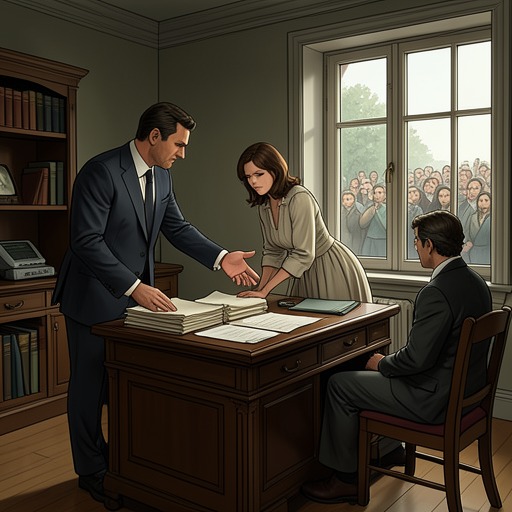
Norma appears as part of the school’s ordinary social machinery rather than as an isolated observer. When Tommy Ross returns to the entrance with her, her hair has been pulled into a large, teased arrangement for the affair. The detail places her within the carefully performed world of the dance, where appearance, popularity, and the ability to carry news matter as much as the formal program. She leads Carrie and Tommy to their table and speaks with the bright, inspecting energy of someone accustomed to noticing deviations from the group’s visual code.
Her attention to Carrie is both complimentary and invasive. Norma looks Carrie up and down for an exposed strap, pimples, or any other piece of information that could be carried back to the door. She praises Carrie’s dress and remarks that Carrie looks so different and is positively glowing, then asks for the secret behind the change. The exchange reveals Norma’s social reflex: she recognizes Carrie’s transformation, but initially processes it as spectacle and gossip rather than as an ethical or emotional breakthrough for Carrie.
Participation in the Spring Ball
Norma’s actions help maintain the formal structure of the dance. She and Tina Blake circulate mimeographed ballots while the candidates and their dates sit at decorated tables. When Norma drops a ballot at Carrie and Tommy’s table, she breathes a good-luck wish, and Carrie discovers that the school has placed them on the ballot. Through this small administrative gesture, Norma participates in the mechanism that turns the couple into public figures for the evening; the school votes for single candidates while their dates are drawn into the ceremony as well.
The scene also gives Norma a limited but revealing relation to Carrie’s new confidence. Carrie answers Norma’s probing question with a joke about being Don MacLean’s secret lover. Tommy suppresses a snigger, while Norma’s smile slips. Carrie is surprised by her own wit and by the satisfaction of seeing the joke land against someone else. Norma therefore becomes one of the first people at the dance to encounter Carrie not as the helpless object of humiliation but as someone capable of answering back. The reversal is slight, comic, and socially charged: Carrie experiences the pleasure of making the joke rather than receiving it, while Norma momentarily loses control of the exchange.
Witness to the Blood and the Collapse of Ceremony
In Norma’s later account, the catastrophe begins with a visual interruption. She is stationed at the ushers’ table just inside the main doors, looking toward the stage with Tina Blake and Estelle Horan, while the school is standing, applauding, and singing its song. A metallic object catches the light above the stage apron. The moment is presented as too quick for collective comprehension, but Norma remembers the sparkle as the first visible sign that the ceremony has been sabotaged.
The next image is the decisive rupture: a huge red splash rises into the air, strikes the mural, and runs down in long drips. Norma knows immediately that it is blood, although Estelle Horan thinks it is paint. Carrie receives the worst of it. Sitting motionless, she appears to Norma as though she has been dipped in a bucket of red paint. Josie and the Moonglows are splattered as well, including the lead guitarist’s white instrument. The contrast between the carefully decorated dance and the contamination of bodies, artwork, and music makes the prank more than an isolated insult; it converts the school’s symbols of celebration into evidence of violence.
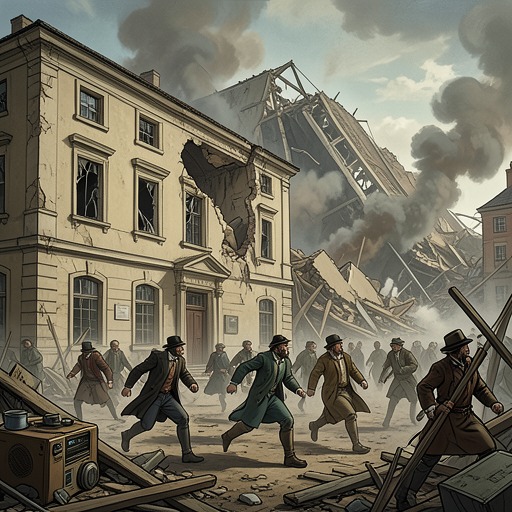
Norma’s account emphasizes paralysis before movement. She says that nobody moved and that she felt frozen, while her thoughts became entangled with Carrie and God. Estelle then says that Carrie is back, and Norma confirms the statement. The lobby doors slam shut, the sound resembling hands clapping, and a scream initiates a stampede toward the exits. Norma remains standing in disbelief long enough to see Carrie looking into the lobby, her face smeared with blood. Her testimony thus captures the value shift at the center of the disaster: applause and communal ceremony become terror, and Carrie changes in the crowd’s perception from recipient of humiliation to the threatening figure associated with what follows.
Testimony, Memory, and the Disaster’s Meaning
Norma’s evidence is not a detached reconstruction. It is a retrospective account shaped by shock, bodily imagery, and the need to give sequence to an event that seemed to happen before anyone understood it. Her recognition of blood, her freezing response, and her recollection of the doors closing preserve the disaster as a series of sensory fragments rather than as a cleanly controlled chain of causes. That form matters because the wider record repeatedly struggles to determine how responsibility should be assigned: analysts debate Tommy Ross’s part in the catastrophe, witnesses claim certainty about Carrie White’s presence, and investigators press for a single accountable explanation.
The surrounding documentary record enlarges the significance of Norma’s witness. David R. Congress argues that Carrie White’s telekinetic capacity could remain hidden until extreme personal stress, while testimony about the shower-room humiliation establishes the social violence that preceded the dance. The Spring Ball disaster therefore appears neither as an inexplicable supernatural interruption nor as a simple prank gone wrong. Norma’s observations supply the public surface of the turning point, while the broader record connects that surface to ostracism, abuse, and the delayed emergence of a power that had previously gone unnoticed.
The school’s physical failures intensify what Norma sees. A contemporary report states that a fire was raging out of control at Ewen Consolidated High School, and that area fire hydrants had been vandalized, leaving emergency response without adequate water pressure. Norma does not explain those conditions, but her account records their human consequence: the crowd’s first instinct is escape, yet the doors become part of the panic rather than a reliable route out. Her position near the entrance makes her both an observer of the stage and a witness to the collapse of the building’s social and practical order.
Narrative Function and Significance
Norma is not developed as a major agent with an independent plot objective, but she is more than a nameless member of the crowd. Her social scrutiny helps establish the norms Carrie is entering, her handling of the ballot helps place Carrie within the public ritual, and her testimony preserves the exact visual transition from dance to disaster. She is recognizable through a cluster of traits—fashion-consciousness, curiosity, and participation in school ceremony—yet the horror she witnesses exceeds that narrow social role and forces her into the position of a recorder.
Her importance lies in the contrast between the smallness of her earlier actions and the scale of what she later sees. A good-luck whisper, a comment about a dress, and the distribution of ballots belong to the ordinary world of adolescent display. The blood splash, the smeared face, the slamming doors, and the stampede belong to the world of irreversible consequence. Norma stands at the seam between them. Through her, the narrative shows how the Chamberlain disaster is experienced by those who are neither its central perpetrator nor its principal target: first as spectacle, then as disbelief, and finally as testimony that can never restore the ceremony it describes.