Black Prom: The White Commission Report
Stephen King Three Classic Novels Box Set: Carrie, 'Salem's Lot, the ShiningBlack Prom: The White Commission Report is the principal documentary archive through which the aftermath of the Chamberlain disaster is presented. Rather than offering a single settled account, it assembles testimony from witnesses, officials, and survivors, allowing the catastrophe to emerge through direct observation, damaged memory, hostile questioning, and gaps that the investigators cannot convincingly close. Its significance lies in this tension: the report records what happened while also displaying the institutional pressure to make the event appear exceptional, comprehensible, and finished.
Documentary Form and Authority
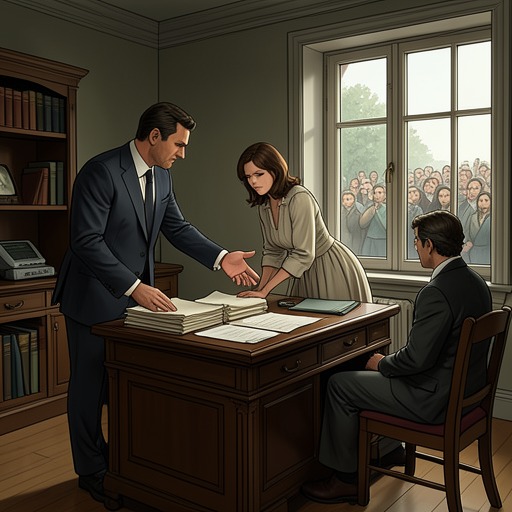
The report enters the narrative as a published abridgment of sworn testimony taken before the State Investigatory Board of Maine in connection with the events of May 27–28 in Chamberlain, Maine. The deposition of Thomas K. Quillan is explicitly identified as coming from the report, as is the testimony of Sheriff Otis Doyle concerning the night of the disaster. Other sections reproduce the questioning of Cora Simard, whose daughter was lost on Prom Night, and Susan Snell, whose account becomes one of the most important surviving challenges to the official version.
This documentary framing gives the report a legal and evidentiary authority that contrasts sharply with the terror and confusion of the events themselves. Questions are formal, repetitive, and often accusatory. Answers are reduced to fragments that must bear the weight of a catastrophe too large for ordinary testimony. Cora Simard’s certainty that she recognized Carrie White is presented in the stark reply that she simply knew, while the Board presses Susan Snell over how she could know Carrie had been present when she had not heard her. The report therefore preserves not only information but the struggle over what can count as knowledge.
Recording the Spring Ball Disaster
The report’s documentary excerpts surround the decisive public ritual at Ewen High School. Vic Mooney, President of the Senior Class, calls the students to their seats for the vote for King and Queen. The contest is briefly criticized as insulting to women and men, but the protest dissolves into general laughter, restoring the festive surface of the ceremony. The report then records the result: Tommy Ross and Carrie White win by one vote.
The apparent coronation is immediately shadowed by Carrie White’s distress. The applause makes her feel exposed and almost punch-drunk; she appears unable to decide whether the moment is a dream or a humiliation. Vic announces the names of the 1979 Spring Ball King and Queen, and Tommy, already in the fading moments of his life, takes Carrie’s hand and grins at her. The report’s placement of this testimony beside the later evidence makes the ceremony painfully double: the same public recognition that seems to offer Carrie entry into communal life becomes the threshold of her destruction.
The central trauma is the pig-blood prank. After the buckets are emptied, Carrie is drenched in blood before the entire school. The physical scene recalls the shower-room incident that began the novel’s chain of humiliation: blood runs down her leg, and later the memory returns as a sensory flood of wet coppery odor, blood on her thighs, shower water striking tile, and tampons and napkins thrown against her while girls urge her to plug it up. The report thus documents repetition rather than an isolated prank. The Spring Ball reproduces the earlier public shame on a larger ceremonial stage, transforming adolescent cruelty into a collective act of exposure.
Testimony, Blame, and Uncertainty
The report’s witnesses do not provide a seamless chronology. Their accounts are shaped by shock, partial perception, and the need to explain personal responsibility. One witness recalls laughter spreading through the hall even though Vic Mooney’s face was frozen with shock. Another account describes Miss Desjardin moving toward Carrie before being thrown against the wall as if by an invisible force. Such testimony registers the emergence of Carrie’s telekinesis as something observed indirectly: bodies move, objects fail, and witnesses infer an unseen cause after the fact.
The Board’s questioning also reveals an institutional desire for a manageable culprit. Susan Snell is asked whether she denies prior knowledge of Carrie White’s whereabouts and rejects the suggestion as absurd. When she asks whether the investigators are seeking the truth or merely a scapegoat, the exchange exposes the narrowing logic of the inquiry. The report can preserve her resistance, but its very structure places that resistance inside an interrogation designed to assign a comprehensible chain of blame.
Cora Simard’s testimony supplies another form of certainty. Asked how she knew the dead girl was Carrie White, she answers that she simply knew; later, when asked whether she was personally sure Carrie White had done what was attributed to her, she again answers yes. These brief answers are not developed into a complete evidentiary argument. Their force comes from the emotional certainty of a bereaved witness, while the surrounding questions reveal how grief and public explanation can become entangled.
Official Conclusions and the Return to Square One
The report does not finally establish that Carrie’s power can recur. Its concluding statement notes that an autopsy found cellular changes that might indicate paranormal power, but declares that there is no reason to believe a recurrence is likely or even possible. This conclusion attempts to close the case scientifically while leaving the central phenomenon unresolved. The language of possibility is retained, but the public is offered reassurance rather than a method for understanding what happened.
That reassurance is presented as part of a broader policy of containment. The White Commission has worked to convince the public that the nightmare in Chamberlain was a complete fluke, even while the possibility of isolating children who display similar abilities is raised and immediately questioned as socially unacceptable. The report therefore ends not with mastery but with a return to uncertainty, described as a return to Square One. Its official skepticism cannot erase the testimony, and its institutional confidence cannot fully suppress the fear that the disaster represents a pattern rather than an exception.
Narrative and Thematic Significance
As an object within the novel, Black Prom: The White Commission Report converts a private and bodily history into a public legal artifact. The shower-room blood, the detention imposed by Ewen’s administration, the election conducted by Vic Mooney, the one-vote victory, and the blood-soaked Spring Ball are not merely remembered scenes; they become exhibits in a civic effort to define what the town endured and who must bear responsibility.
The report also creates a structural contrast between official narration and lived trauma. Its questions seek stable facts, while the surviving accounts return to sensation, shame, disbelief, and involuntary certainty. The most revealing material often appears where the documentary form strains: in the refusal of Susan Snell to accept the Board’s framing, in Cora Simard’s unexplained recognition, and in the conclusion’s attempt to deny the likelihood of recurrence without disproving the power itself. Black Prom: The White Commission Report therefore functions both as evidence and as an instrument of social defense. It preserves the record of the disaster while showing how a community tries to make an unbearable event legible by isolating it, prosecuting it rhetorically, and declaring it over.