Ewen High School
Stephen King Three Classic Novels Box Set: Carrie, 'Salem's Lot, the ShiningEwen High School is the principal public institution through which Chamberlain’s adolescents learn, compete, socialize, and police one another. Its classrooms, locker room, offices, gymnasium, auditorium, electrical equipment, sprinklers, and fire exits form the setting for both Carrie White’s long humiliation and the Spring Ball disaster. The school begins as a place of routine supervision and social exclusion, but its failure to protect Carrie and its dependence on vulnerable infrastructure make it the central stage on which private cruelty becomes public destruction.
Setting and Social Order
Ewen High’s locker room establishes the school’s social geography. After Period One volleyball, the girls crowd beneath the showers, shouting, passing soap, dressing, and watching the clock. Carrie White stands apart among them, physically conspicuous and socially isolated: a chunky sixteen-year-old with acne, colorless wet hair, and a withdrawn posture. She wishes for the private showers available at Westover or Lewiston because the communal space exposes her to constant scrutiny. The school’s architecture therefore makes observation unavoidable; the shower room is not merely a facility but a mechanism through which the students maintain the distinction between the accepted girls and the perpetual target.
That order is already old when Carrie enters the story. She remembers walking from the small house on Carlin Street to Barker Street Grammar School with the Bible under her arm, encountering stares and sudden silence, then kneeling in the cafeteria before the laughter began. The memory becomes the origin of what she experiences as the “red-plague circle,” a stigma that cannot be scrubbed away. Her later experiences at Ewen High continue the same pattern: the school is a modern institution, but its collective memory preserves the original mark and repeatedly renews it.
Discipline, Administration, and Exclusion
The school’s adults respond to disorder through formal supervision, but discipline does not erase the culture that produces the disorder. On the Monday after the shower-room incident, Miss Desjardin enters the locker room while the girls dress in subdued silence. Her whistle and gym clothes signal authority, and she reminds the students that graduation and the Spring Ball are approaching, with dates and gowns already being arranged. The same institution that must address the humiliation of Carrie is simultaneously preparing the social ceremony in which popularity, romantic pairing, and public appearance will be displayed.
The administration also treats student conflict as a problem of procedure and pressure. Principal Henry Grayle has been expecting John Hargensen, whose daughter Chris Hargensen skipped detention with Miss Desjardin. Grayle and Pete Morton later discuss the absence of any word from John while Christine Hargensen has stopped boasting that her father will force the school to yield. These scenes show Ewen High negotiating between its disciplinary rules and the influence of a powerful parent. The school possesses authority, but that authority is conditional and vulnerable to external pressure.
The institution’s social life extends beyond its official buildings. Tommy Ross practices baseball, while Susan Snell waits for him at the Kelly Fruit Company, a combined grocery, soda fountain, and gas station that functions as Chamberlain’s nearest high-school hangout after the rec center is closed. Ewen High’s students carry its alliances and conflicts into the town, and the school’s boundaries are consequently porous: the community supplies its meeting places, rumors, adult interventions, and eventual emergency response.
The Spring Ball and the Gymnasium
The Spring Ball turns Ewen High into a theater of collective expectation. On Wednesday afternoon, Susan Snell and fourteen other students on the Spring Ball Decoration Committee work on a huge mural for the space behind the twin bandstands. The theme, “Springtime in Venice,” is represented by gondolas, a canal at sunset, and a gondolier on a fourteen-by-twenty-foot canvas. Students color the numbered sections like children working across a giant coloring book, and Susan imagines that it may be the prettiest prom ever. The mural and the decorated gym give the school a carefully composed surface of beauty, order, and adolescent promise.
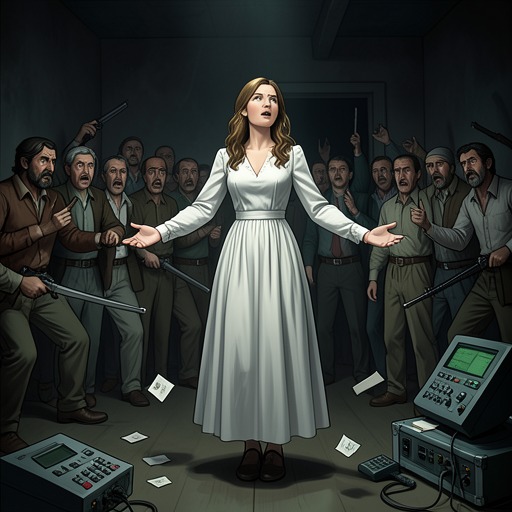
On Prom Night, the gymnasium is also the school auditorium, joining celebration and performance in a single structure. When Tommy Ross brings Carrie White to the entrance, students turn to look at them and an awkward silence forms before George Dawson insults Tommy’s appearance. Even Carrie’s arrival as a formally dressed guest is treated as a spectacle. She has hoped that the others will know her, but the school’s first response is still the old response: scrutiny, surprise, and ridicule.
The backstage and service spaces reveal a less ceremonial side of the same building. Billy Nolan enters through a window overlooking the backstage storage area, using a tool he made in the Chamberlain metal shop to release the slip lock. The auditorium’s darkness, old paint, canvas flats, music stands, instrument cases, and piano become the hidden infrastructure of the prank. The school’s public pageant depends on concealed labor and concealed access, and that hidden space allows the planned violence to be installed without interruption.
Infrastructure and Catastrophe
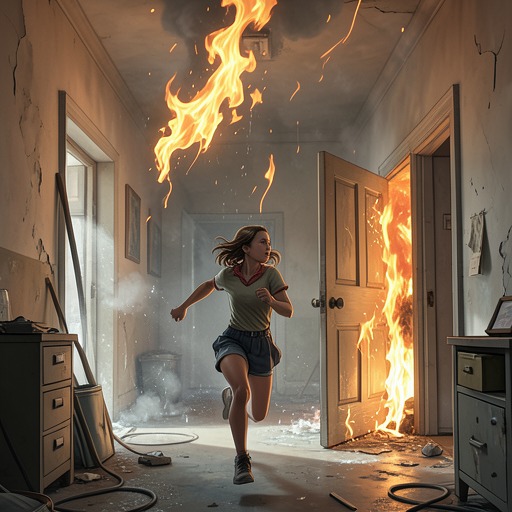
The disaster begins when the gym’s systems turn against the gathering. Water falls from the school sprinkler system, first appearing to witnesses as rain. The panic at the doors pauses as students look upward, but the apparent relief is deceptive: the water reaches the basketball court and electrical equipment. Josie Vreck, trying to protect the band’s amplifiers and microphones, is caught holding a microphone stand. He cannot let go; his body convulses in the water, smoke rises from his shirt, and he falls onto an amplifier that topples into the flooded area. A flash and a piercing feedback whine are followed by fire.
The school’s exits and emergency systems fail together. Students press against doors that should open, while others are directed toward the rear fire doors. Outside, nearby hydrants have been vandalized, and water pressure from the city mains is absent in the area extending from Spring Street to Grass Plaza. The failure is therefore not confined to the gym: the building’s sprinklers, electrical network, doors, and the town’s firefighting infrastructure become part of one cascading breakdown.
Thomas K. Quillan later describes a hydrant at the corner of Grass Plaza whose large side nuts unscrewed themselves before it burst. Firefighters arrive to find that the hydrants cannot provide water, and the school explodes while Chief Burton shouts at them. The testimony converts a chaotic disaster into evidence of a force operating through public utilities and mechanical systems. What appears at first to be institutional malfunction is revealed as a destruction that reaches beyond the school’s walls.
Aftermath and Significance
The consequences spread through the building and into Chamberlain. Survivors flee through the fire doors while water washes away the smear of blood where Carrie fell. At the same time, the combined presence of water and live electrical equipment produces further deaths, including Josie Vreck’s electrocution and burning. The school is no longer a protected civic environment; its ordinary safety devices have become instruments of injury.
The emergency response exposes the scale of institutional collapse. Otis Doyle learns that Motton and Westover are being asked to send ambulances and hearses, while a makeshift hospital is established in the police station because the town lacks a functioning immediate refuge. The conversation is marked by disbelief that such a catastrophe could be happening in Chamberlain at all. Ewen High thus becomes the point from which a school tragedy expands into a municipal disaster.
The school’s meaning is also inseparable from the blood imagery that precedes and follows the Spring Ball. Carrie’s first humiliation begins when menstrual blood falls onto the shower-room tile and Susan Snell identifies it aloud. Margaret White explains blood through the “Curse of Blood,” drives Carrie toward the prayer closet, and treats bodily development as religious contamination. At the dance, Carrie is drenched in pig blood before the assembled students, experiencing the prank as the final repetition of the shower-room violation. The institution has allowed private shame to become public ritual; the resulting destruction reverses the direction of contamination, carrying blood, water, fire, and electrical violence from Carrie’s body into the gym and then through the town.
Ewen High School therefore represents more than a backdrop for the novel’s climax. It is the place where social stigma is made habitual, where adult rules coexist with unequal power, and where a celebration designed to display communal belonging becomes an arena of exclusion. Its physical systems make the consequences literal: doors do not open, sprinklers flood the floor, electricity kills, hydrants fail, and the school explodes. The building’s destruction is the material counterpart of a social order that has repeatedly seen Carrie White, stared at her, disciplined around her, and failed to recognize the danger created by its own cruelty.