Josie Vreck
Stephen King Three Classic Novels Box Set: Carrie, 'Salem's Lot, the ShiningJosie Vreck is a student at Ewen High School and a member of the school band. He is a minor figure in the Spring Ball sequence, but his position near the stage makes him a direct witness to the transition from public celebration to catastrophe. His actions also bring him into the machinery of the disaster: he tries to protect the band’s equipment, becomes trapped by an energized microphone stand, and is badly burned as water and electricity combine around him.
Identity and Place in the School
Josie is associated with the band performing at the Spring Ball, where the gymnasium also serves as the school auditorium. During the dance he is close enough to the stage to see Tommy Ross lying there after the ceremony turns violent. When the first shock passes through the crowd, Josie climbs onto the stage and kneels beside Tommy Ross, his face described as white with fear. He tries to lift Tommy, but the throne overturns and Tommy rolls onto the floor. Josie’s instinct is immediate and practical: he calls for medical help rather than remaining a passive observer.
The scene gives Josie little independent biography, yet his responsibilities are clear. He is not part of the students’ social contest over status, nor is he presented as one of the people responsible for the prank. He belongs to the working machinery of the dance, represented by the band, its microphones, amplifiers, and stage equipment. That role places him within the event’s infrastructure rather than at its social center.
Actions During the Disaster
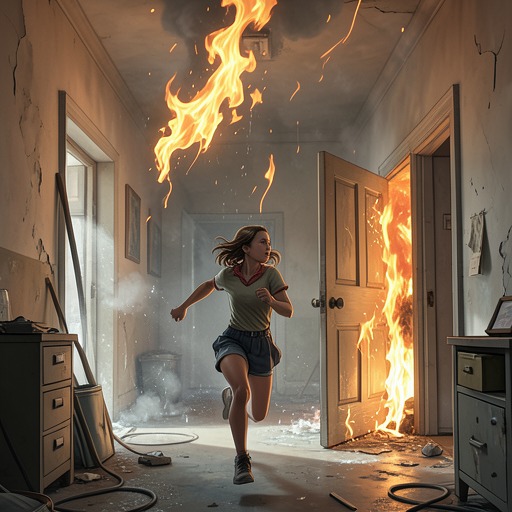
As panic spreads through the gym, the school sprinkler system suddenly activates. Water falls across the basketball court, while the band’s amplifiers and microphones remain in place. Josie reacts by shouting for the band members to shut off the electrical equipment. The order shows that he recognizes the danger created by water and live current, even as the crowd around him struggles to understand what is happening.
Josie then jumps down from the stage, but the attempt to control the equipment fails. A flash occurs, followed by a scream and a piercing feedback whine. He is holding one of the microphone stands and cannot release it. His eyes bulge, his hair stands on end, and his feet slide in the water as smoke begins to rise from his shirt. He falls onto one of the large amplifiers, which topples into the water. Another flash follows, the feedback stops, and Josie’s shirt catches fire.
His ordeal is therefore not a separate accident from the larger destruction. The sprinklers, electrical amplifiers, microphone stands, and stage wiring form a chain of material failures and human attempts at intervention. Josie’s effort to prevent the band equipment from worsening the emergency instead leaves him physically connected to the lethal system. The ordinary objects of a school dance become conspicuous, unstable forces once their normal conditions of use collapse.
Relationships and Immediate Consequences
Josie’s closest demonstrated connection is with the band and its equipment. He acts on behalf of the other musicians when he orders them to switch off the amps and microphones, but the band members have already fled by the time he reaches the stage area. His concern for the equipment and for the safety of the room thus becomes an isolated responsibility, leaving him exposed when no one remains to help.
He is also one of the first students to respond to Tommy Ross’s collapse. His kneeling beside Tommy and attempt to lift him contrast with the stunned inaction of the surrounding crowd. Yet the response does not save either boy from the disaster’s momentum: Tommy is already dying, while Josie is caught in the electrical violence that follows. The narrative places both figures within the same reversal, moving from the ceremonial recognition of Tommy and Carrie White to bodily danger and death.
Narrative Significance
Josie’s brief appearance makes the Spring Ball disaster legible as more than a single act of revenge. The event spreads through the school’s physical systems: water fills the gym, electrical equipment remains active, the power infrastructure begins to fail, and the doors and emergency arrangements become matters of life and death. Josie’s body is the clearest immediate proof that the celebratory apparatus has become destructive.
His role also sharpens the contrast between intention and consequence. Josie tries to respond rationally to a recognizable electrical hazard, but the situation has already exceeded ordinary control. The same equipment that supports music and communal celebration becomes an instrument of injury. In this way, Josie functions as a human point within the disaster’s larger network of students, water, electricity, and supernatural force. His actions reveal how quickly a public ritual can turn into a technological and bodily catastrophe once its systems are disrupted.