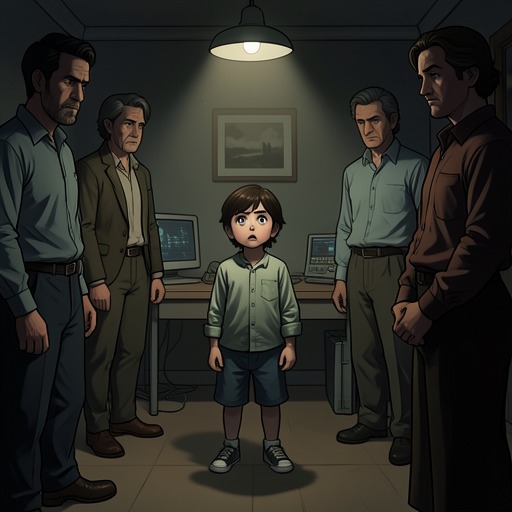
We were kids
Stephen King Three Classic Novels Box Set: Carrie, 'Salem's Lot, the Shining“We were kids” is the central refrain Susan Snell uses to frame the Prom Night disaster in My Name Is Susan Snell. Repeated three times after she invokes two hundred deaths and the destruction of an entire town, it asks readers to hold the participants’ youth in view without making the catastrophe disappear. The phrase is both an explanation of how young people could make disastrous decisions and a protest against the public and institutional effort to reduce the event to a simple story of blame.
Origin and Context
In the book’s introduction, Susan argues that the press, scientists at Duke University, David R. Congress, and the White Commission have failed to understand a fundamental fact about what happened in Chamberlain: the people involved were young. She identifies the phrase as the starting point for her account, which must revisit painful scenes before explaining her own involvement in Prom Night and attempting to clear her name.
Her list of ages gives the refrain its concrete basis. Carrie White, Chris Hargensen, and Susan were seventeen; Tommy Ross was eighteen; and Billy Nolan was nineteen, after repeating ninth grade. The group was not all the same age, but Susan’s emphasis is on their shared immaturity rather than on a claim that every participant was a child in precisely the same sense. She concedes that older adolescents may behave in more socially acceptable ways than younger ones, while remaining capable of bad decisions, overreaction, and underestimation.
Repetition and Meaning
Susan’s repetition turns a brief statement into an insistently stated interpretive claim: “We were kids. We were kids. We were kids trying to do our best.” The final phrase adds an account of intention to the appeal to age. It does not erase the scale of the disaster; instead, it places the participants’ efforts and failures within the same frame as its consequences. The refrain therefore asks for an explanation more capacious than condemnation, while leaving the damage itself undeniable.
That tension is sharpened by the circumstances Susan names around the refrain: two hundred deaths and the destruction of an entire town. The expression’s plain, almost elementary wording stands against those immense consequences. Its simplicity is part of its force, but also part of its risk: detached from the disaster it follows, it might sound like an excuse. In context, Susan presents it as a fact the public has neglected, not as proof that the young people’s actions were harmless.
Testimony and the Struggle over Blame
The phrase also belongs to Susan’s effort to resist being made a scapegoat. In testimony before the State Investigatory Board of Maine, she is questioned about whether she knew where Carrie White was. When the questioning turns on how she could know Carrie was present if she could not hear her, Susan points to other witnesses who seemed to know as well. She challenges the inquiry’s priorities, asking whether it seeks the truth or a scapegoat. The testimony makes the refrain’s stakes more personal: Susan is not only describing adolescent judgment but contesting the way an inquiry assigns knowledge and responsibility after a mass tragedy.
The disaster’s documented aftermath supplies a stark counterweight to the language of youth. A 10:46 p.m. AP bulletin reported that fire was raging out of control at Ewen Consolidated High School; the report also states that area hydrants had been vandalized. After the final AP reports, a gas main was opened at 12:06 a.m.; its explosion destroyed nearly half a block, including the Chamberlain Clarion offices, and by 12:18 a.m. Chamberlain was cut off from the surrounding country. Against this sequence of institutional and physical breakdown, “We were kids” cannot be a complete account of what happened. Its significance is that it insists the people implicated in that devastation must be understood as young, fallible human beings even when the consequences are irreparable.