
The Meaning of Punishment
Stephen King Three Classic Novels Box Set: Carrie, 'Salem's Lot, the ShiningThis arc traces punishment as a recurring method used at home and school, contrasting discipline, moral instruction, and control.
increasing Bearing strength in each event
 decreasing
Bearing strength in each eventdecreasingThe Closet as Discipline
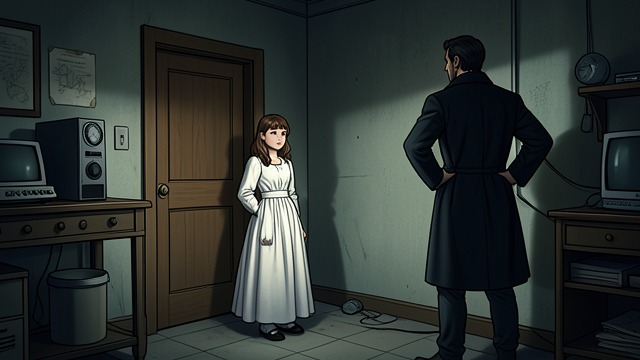
The Closet as Discipline
Confinement at Home
Margaret White sends Carrie to the prayer closet for perceived disobedience. The punishment joins isolation, fear, and religious instruction in a small physical space.
Authority Without Dialogue
The closet leaves little room for explanation or negotiation. It teaches Carrie that disagreement can be answered by confinement rather than understanding.
A School Emergency Misread

A School Emergency Misread
Carrie’s Panic
At Ewen High School, Carrie believes that she is bleeding to death. Her distress is treated first as a disruption before Desjardin recognizes how little Carrie has been told.
Responsibility Beyond Punishment
The incident cannot be solved by disciplining Carrie. Her need is for help and information, while the school must confront the cruelty of students who turn her distress into entertainment.
Detention Imposed

Detention Imposed
Collective Discipline
Desjardin assigns gym detention to the girls involved in the hazing. The school’s chosen punishment is limited but makes clear that the behavior has consequences.
Resistance to Accountability
Christine Hargensen and others focus on the inconvenience and possible loss of prom access. Their response shows how punishment can fail when recipients treat it as an injury rather than a reason to reflect.
A Father Challenges the School

A Father Challenges the School
Punishment Recast
John Hargensen describes his daughter as the victim of Desjardin’s handling and threatens a lawsuit. His intervention attempts to make school discipline itself the wrongdoing.
Competing Claims
Henry Grayle counters that Carrie also deserves protection under the school’s authority. The dispute asks whose suffering institutions recognize and whose conduct they are prepared to punish.
The Final Cost

The Final Cost
Punishment Escalates
Carrie’s retaliation becomes a townwide death sentence imposed by force rather than a proportionate response. Hundreds of people are caught in a crisis they did not individually cause.
The Question of Justice
The destruction does not resemble the restorative accountability Carrie never received. The novel leaves the distinction between justice and revenge painfully clear without offering a simple remedy.
Carrie’s childhood
May 1979, after the shower incident
The Monday after the shower-room incident
Later that week
After the disaster, June 1979
