Carrie White's death
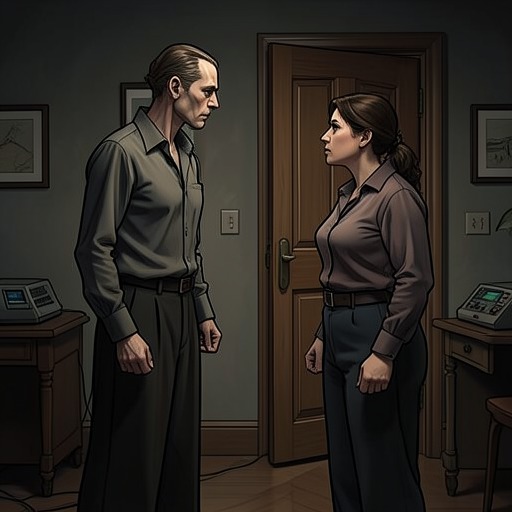
Stephen King Three Classic Novels Box Set: Carrie, 'Salem's Lot, the ShiningCarrie White's death closes her flight from the destruction at Chamberlain in a second catastrophe at The Cavalier. Gravely wounded and carrying the effects of the fire, she reaches the roadhouse parking lot and confronts Christine Hargensen and Billy Nolan, the people connected to the attack on her at the Spring Ball. The encounter ends in a collision and fire. At approximately two o'clock in the morning, Susan Snell finds Carrie alive but dying; their last contact makes recognition, betrayal, guilt, and the limits of understanding part of the event itself.
Approach and Crash
Carrie reaches The Cavalier after crawling much of the way from Carlin Street. She is roughly seventy feet from Christine Hargensen and Billy Nolan when Billy starts his car and switches on the headlights. Their beams reveal Carrie standing in front of them: her gown is bloodied, dirty, and marked with grass, and the hilt of a knife protrudes from her shoulder. Much of the blood is her own. The revelation that she has survived long enough to reach them turns the scene into a confrontation, even though she is swaying and close to collapse.
Christine screams, and Billy reacts immediately. He shifts the car into low gear, releases the clutch, and accelerates toward Carrie. The narrative makes the response nearly instantaneous: she has only just appeared in the headlights when he drives. The collision sends the car into the roadhouse structure at about forty miles per hour. Billy is thrown forward into the steering column, while Christine strikes the dashboard. The sequence links Carrie's arrival to the crash without reducing the deaths or injuries in the scene to a simple account of her intentions; the immediate physical action described is Billy's decision to accelerate.
The car's gas tank splits. Fuel gathers near the rear, and a section of exhaust pipe falls into it, igniting the gasoline. Carrie lies on her side, panting, with her chest on fire. She tries to drag herself across the parking lot but makes no progress. The fire at The Cavalier thus follows the catastrophe at Chamberlain, while the body at its center is no longer a figure capable of directing destruction: Carrie is badly injured, unable to move herself to safety, and dependent on the chance that someone will find her.
Sue Snell Finds Carrie
At two o'clock, Susan Snell comes upon Carrie. From the embankment between Henry Drain's meadow and the parking lot, she first takes the crumpled figure for a dead body. The comparison that crosses her mind is to animals struck by traffic. But Carrie is not entirely absent: Susan senses a faint, persistent presence in her mind, a muted psychic impression that continues to identify itself as Carrie even while Carrie is unconscious.
Susan crosses the guard rail and approaches through the heat and crackle of the burning wooden building. A car is burning near the back door, but she does not investigate whether anyone is inside it. Her attention fixes on Carrie, lying in a small pool of blood. The knife still protrudes from her shoulder, and blood also comes from her mouth. Susan registers the devastating contrast between Carrie's abilities and her helplessness: the person who could start fires, bring down electrical cables, and kill almost by thought alone cannot turn herself over.
Susan kneels beside her and turns her onto her back, supporting her by an arm and the uninjured shoulder. Carrie moans and her eyes flutter. As consciousness returns, the psychic image sharpens for Susan. Their contact is not an ordinary conversation; Susan recognizes herself directly in Carrie's mind, and Carrie answers through a confused mixture of accusation, memory, and feeling. Carrie believes that she was tricked. Susan tries to understand what happened and asks about Tommy Ross, but the exchange does not produce a clear explanation or reconciliation. Instead, the old wound of the Spring Ball prank remains active at the very moment Susan is physically trying to help her.
The Last Psychic Exchange
The encounter moves from accusation toward Carrie's grief and pain. In Susan's mind, Carrie mourns her mother and believes that she killed her; she is also frightened and suffers from the wounds to her chest and shoulder. Susan cannot complete an answer that would undo what Carrie believes or make the experience intelligible. The contact brings her compassion for Carrie through the shock, but compassion does not give her control over the dying girl's thoughts or body.
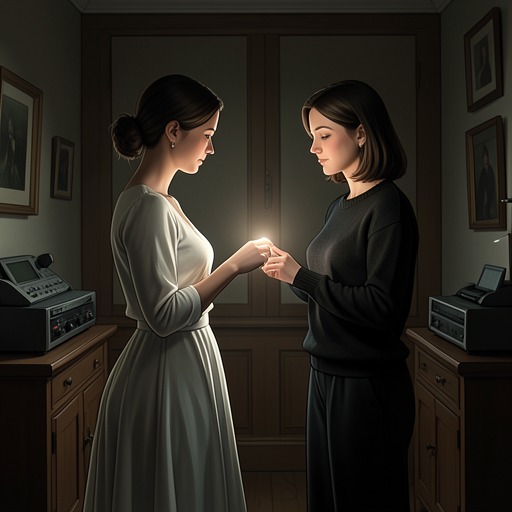
Susan tries to withdraw from the psychic connection, partly to leave Carrie the privacy of dying. She cannot disengage. Carrie's mental cry intensifies, then fades; Susan experiences that fading as a light disappearing into darkness and realizes that she is feeling Carrie die. The scene makes the psychic link both a means of recognition and a burden of witnessing: Susan is not merely looking at Carrie's injuries but experiences the extinguishing of her consciousness from within the connection. The last exchange cannot restore Tommy Ross, Carrie’s mother, or the possibility of trust. It can only bring Susan close enough to recognize the pain that remains.
Identification and the Record
The account fixes the time of death as approximately 2:00 a.m. on May 28, 1979. The recorded cause lists hemorrhage, shock, and coronary occlusion and/or possible coronary thrombosis. That qualified medical wording resists a single, definitive explanation: Carrie's death follows severe wounds and the fire, while the record preserves uncertainty about the precise bodily cause. Susan Snell is named as the person who identifies the deceased, completing the sequence that began when she followed the psychic presence to Carrie.
The later testimony makes that identification a subject of scrutiny. Asked how she knew it was Carrie White, Susan answers that she simply knew; when asked whether she is personally sure Carrie did it, she answers yes. In the inquiry associated with the White Commission, questioning presses her on how she could know Carrie was present if she did not hear her, and challenges her denial of prior knowledge of Carrie's whereabouts. Susan points to the comparable knowledge attributed to Thomas K. Quillan, Cora Simard, and Victor Mooney, and asks whether the inquiry seeks truth or a scapegoat. Her testimony does not make the psychic experience verifiable to the investigators, but it records the certainty with which she encountered Carrie and identified her.
The death therefore has two endings: the bodily event in the parking lot and its later conversion into testimony. The official record supplies a time, possible causes, and an identifier; Susan's account insists on a kind of knowledge the questioning cannot comfortably classify. The novel places that unresolved gap beside the intimate final contact between the two girls. Carrie dies believing she was betrayed and grieving her mother, while Susan survives as the witness who was unable to look away. The event closes Carrie's life without making its causes, or the larger disaster's meaning, fully settled.