Ewen High sprinkler system
Stephen King Three Classic Novels Box Set: Carrie, 'Salem's Lot, the ShiningThe Ewen High sprinkler system is ordinary fire-safety equipment transformed into one of the most consequential instruments of the Spring Ball disaster. Designed to protect the gymnasium and auditorium from fire, it becomes, under Carrie White’s control, a means of trapping the students, flooding the dance, and creating the wet electrical environment in which the destruction of Ewen High begins. Its significance lies in that reversal: a system intended to preserve life becomes part of the disaster’s machinery.
Design and Setting
The system is installed throughout the gymnasium, which also serves as the school auditorium, and extends into the short corridor leading to the rear fire doors. Carrie remembers seeing the sprinkler pipes pass through small holes in the green cinderblock wall, with numerous nozzles inside the gym. Their presence is explained by fire laws, making them an emblem of institutional preparedness and regulated safety. Yet the same building contains exposed stage power cords and electrical equipment, so the safety network is embedded in a more vulnerable technical environment than the students recognize.
The arrangement of the building matters during the emergency. The main doors can be forced shut, while the corridor sprinklers remain inactive even after water begins falling across the gym. The fire doors at the end of that corridor are open, but confusion prevents most of the crowd from using them immediately. The sprinkler system therefore does not operate as an isolated device: its effects depend on doors, wiring, exits, water pressure, and the behavior of a panicking crowd.
Carrie White’s Activation of the System
After the pig-blood prank at the Spring Ball, Carrie White stands outside the gym and uses telekinesis to close the doors. She then turns on the sprinkler system with what the narration presents as startling ease. Her intention is punitive rather than protective: she wants the students to experience a humiliating shower that will ruin their dresses, hairdos, and shoes. The water is significant because it repeats the structure of the earlier shower-room humiliation while reversing the positions of victim and audience. Carrie is no longer the exposed girl being watched; she is the unseen force controlling the room.
At first, only some of the sprinklers respond. Carrie discovers that looking up toward the sprinkler system allows her to trace its course more easily with her mind, and she activates additional nozzles one after another. The gym becomes a place where the infrastructure seems to answer directly to her attention. The result is described simply and unnervingly: it is raining inside the gym. Carrie smiles, but the water does not satisfy her because the trapped students are not yet crying. The system thus becomes an extension of her escalating desire to hurt those who have humiliated her.
From Safety Device to Weapon
The sprinklers alter the crowd’s immediate behavior. Panic at the doors briefly stops as students back away and look toward the ceiling. Some stare at Tommy Ross, while others remain in small groups, blinking at one another; the smear of blood where Carrie fell is gradually washed away. The water obscures evidence even as it creates new danger, carrying the scene from public humiliation toward infrastructural catastrophe.
The danger becomes lethal when the wet floor meets the electrical equipment used by Josie and the Moonglows. Josie Vreck grabs a microphone stand and cannot release it. His body moves in an almost motionless electrical convulsion, his feet sliding in the water and smoke rising from his shirt. He falls onto a large amplifier, which topples into the flooded area, producing a piercing feedback whine, a sizzling flash, and fire. The sprinkler system does not itself cause the electrical fault, but it supplies the water that makes the collision between the dance’s entertainment apparatus and the building’s emergency system fatal.
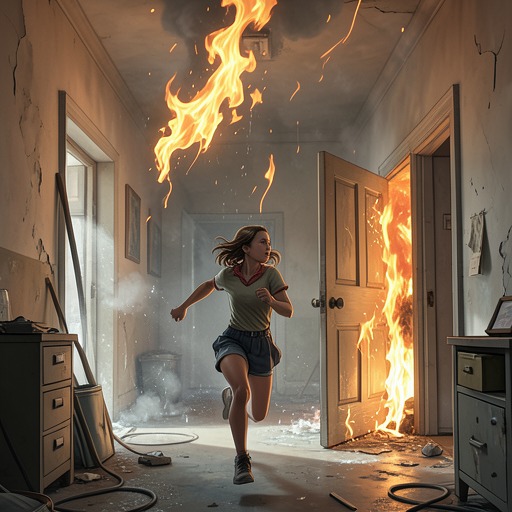
The resulting fire spreads from the electrical equipment to the stage mural and then through the backstage stores of uniforms, books, and papers. The school’s protective architecture is consequently caught in a chain reaction: water creates the conditions for electrocution, electrical failure produces fire, and the fire consumes the combustible spaces surrounding the auditorium. What should have been a barrier against disaster becomes one link in a cascading systems failure.
Infrastructure and the Collapse of Rescue
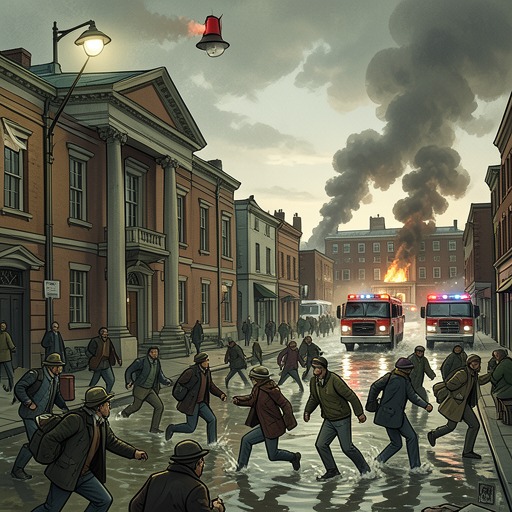
The sprinkler system’s apparent activity also contrasts with the failure of the town’s wider fire infrastructure. The fire hydrants around the school have been vandalized, leaving arriving fire crews without usable water. A hydrant on the corner of Grass Plaza is seen unscrewing its own large side nuts before exploding, an event attributed in testimony to Carrie’s telekinetic power. At the same time, officials search for Harry Block, the Commissioner of Public Utilities, because the town’s water supply has become central to the emergency.
This distinction is crucial. Water is abundant inside the gym, where it magnifies the electrical danger, but unavailable to the firefighters outside, where it might have contained the blaze. The Ewen High sprinkler system therefore appears as part of a grotesque inversion of civic protection: the school can discharge water, yet the town cannot reliably deliver it to the fire engines. The failure is not merely supernatural or mechanical. It is spatially divided between an interior flooded into danger and an exterior deprived of the water needed for rescue.
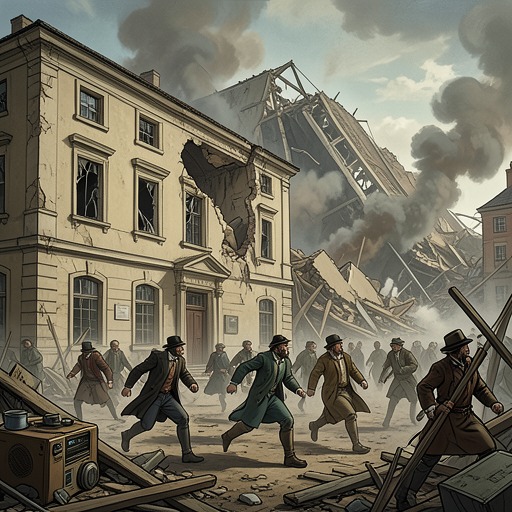
The consequences extend beyond the school. An Associated Press report records the fire raging out of control at Ewen Consolidated High School, while later events include a gas-main explosion, the destruction of nearly half a block, and the severing of Chamberlain’s connection with the outside world. The sprinkler system is one early and visible point in that expanding network of failures, linking the Spring Ball to the destruction of the town’s communications, utilities, emergency response, and civic center.
Narrative and Thematic Significance
The system gives material form to the novel’s recurring blood-and-water imagery. Carrie’s blood is first seen running down her leg in the shower room, where the other girls laugh and the adults fail to understand the humiliation. At the Spring Ball, water washes away the blood on the floor, but it cannot wash away the violence that produced it. Instead, the water spreads the consequences through the building and prepares the stage for fire. Cleansing and contamination become inseparable.
The sprinkler system also marks Carrie White’s movement from helplessness to destructive agency. Earlier, school authority responds to the girls’ behavior with detention, and the gym is a place where institutional discipline is imposed. During the dance, however, Carrie takes command of the same institutional space by manipulating its doors and sprinkler nozzles. The equipment does not merely symbolize power; it performs power, converting her will into a physical environment that confines everyone else.
Its final irony is that the students are endangered not by the absence of modern safety technology but by its displacement from its intended purpose. The pipes, nozzles, fire laws, exits, hydrants, electrical cables, and emergency services form a network meant to preserve the community. Once that network is sabotaged, overloaded, or redirected, it accelerates the disaster instead. The Ewen High sprinkler system consequently stands as a compact image of the Spring Ball massacre and the Chamberlain disaster: a safeguard becomes a trap, water becomes a conductor of death, and the infrastructure of communal protection becomes an instrument of communal ruin.