Margaret White’s prohibition on showers
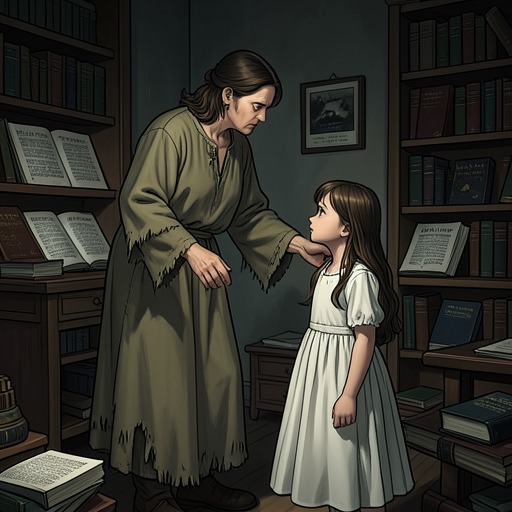
Stephen King Three Classic Novels Box Set: Carrie, 'Salem's Lot, the ShiningMargaret White’s prohibition on showers is a central rule of the White household: Margaret treats communal bathing as sinful and forbids Carrie White from showering with the other girls. The rule does more than restrict hygiene. It marks Carrie’s body as dangerous, exposes the conflict between religious confinement and adolescent belonging, and contributes directly to the circumstances of Carrie’s first menstruation and the shower-room humiliation that begins the novel’s chain of violence.
Religious Rule and Domestic Control
Margaret White’s prohibition belongs to the severe religious order governing the White house. The bathroom has a claw-foot tub but no shower attachment, and the nearly white wooden floor is associated with the household maxim that cleanliness is next to godliness. Within that space, however, ordinary washing is not neutral: Margaret says that showers are sinful. The prohibition therefore makes the shower a moral boundary rather than a practical facility. Carrie is expected to remain inside her mother’s controlled system, where the body is covered, watched, and interpreted through religious guilt.
The rule is part of a wider effort to keep Carrie inside what Margaret regards as a protected circle of salvation. Carrie remembers that she had tried to fit into life beyond the White house, had resisted Margaret in many small ways, and had attempted to erase the red-plague circle that seemed drawn around her from the day she entered public school. Margaret’s ban on showers belongs to the same structure of separation as her objections to the Christian Youth Camp, her prohibition against swimming there, and her insistence that safety and salvation exist only within the red circle. The shower is forbidden because it would place Carrie among other girls, outside Margaret’s direct control and within a social world Margaret defines as sinful.
Carrie’s Disobedience
Although Carrie knows the prohibition, she hides her shower things in her school locker and showers anyway. Her decision is cautious rather than openly triumphant. She participates in what feels to her like a shameful naked ritual because she hopes, however slightly, that the circle separating her from the other girls might fade. The act is thus both an attempt at ordinary inclusion and a private rebellion against Margaret’s authority. Carrie does not disobey because she has escaped shame; she disobeys because continued obedience has made belonging impossible.
The communal shower at Ewen High is filled with noise, steam, jokes, and the routine movements of girls dressing after physical education. Carrie stands among them as an outsider, described as a chunky, pimply girl with colorless wet hair, while the others stare at her. She wishes for the individual private showers available at schools in Westover or Lewiston, because privacy would spare her the constant gaze that turns bathing into public exposure. Margaret’s prohibition has therefore produced a cruel contradiction: it teaches Carrie to regard communal nudity as sinful, yet Carrie enters that very space in the hope of becoming less isolated.
Connection to the Shower-Room Humiliation
Carrie’s disobedience places her in the locker room when her first menstruation begins. The girls do not understand the event as a private medical crisis. When blood runs down Carrie’s leg, they form a circle around her, chant about her period, and treat her fear as entertainment. Susan Snell reacts with disgust and tells Carrie to clean herself up, while the other girls throw sanitary napkins at her and tell her to plug it up. Carrie believes she may be bleeding to death because Margaret has never explained menstruation to her.
The prohibition on showers does not cause the girls’ cruelty by itself, but it shapes the conditions in which that cruelty becomes possible. Carrie enters the locker room without the knowledge or confidence that might have allowed her to understand what is happening. Margaret’s refusal to discuss the body leaves Carrie vulnerable at the precise moment when the school’s communal gaze turns bodily change into spectacle. The domestic rule and the school’s bullying thus mirror one another: Margaret frames Carrie’s body as sinful, while the girls frame it as ridiculous and contaminated.
Aftermath and Wider Significance
The shower-room incident becomes the immediate source of institutional and personal consequences. Carrie is absent from school during the following week, and the conduct of Christine Hargensen and roughly ten other girls is later described as physical and verbal abuse. The school dispute over punishment makes clear that the episode was not harmless teasing: Carrie was a frightened girl experiencing her first menstrual period, and the others used her ignorance and distress against her.
The incident also becomes the beginning of Carrie’s awakening to her telekinetic ability. Later documentary commentary argues that the ability to move objects through will emerges during moments of extreme personal stress and that a powerful TK potential existed within Carrie White. The shower-room humiliation is therefore the point at which Margaret’s attempt to suppress bodily knowledge collides with a power that cannot remain suppressed. What begins as a ban on showering ends by exposing the inadequacy of every system that claims to control Carrie through shame.
The rule also acquires retrospective force after the Spring Ball disaster. Carrie’s experience of the girls at the dance repeats the pattern established in the shower: they appear beautiful and accepting, then recoil from her while laughing, and she crawls through the aftermath as though the old public humiliation has returned in a larger form. The national report of the destruction of Chamberlain and the later assertion that the Carrie White affair is over place the private prohibition within a much broader chain of causes. Margaret’s command was domestic and religious, but its consequences extend from one forbidden shower to social exclusion, psychic retaliation, and the destruction of a town.