Pig-blood buckets
Stephen King Three Classic Novels Box Set: Carrie, 'Salem's Lot, the ShiningPig-blood buckets are the physical centerpiece of the prank at the 1979 Spring Ball and the object through which private humiliation becomes public disaster. Their contents deliberately resemble the menstrual blood that first exposed Carrie White to the cruelty of her classmates, while their placement above the King and Queen’s platform turns the school’s supposed celebration into a staged act of sacrifice. The buckets therefore matter not merely as props but as instruments that carry blood, shame, revenge, and catastrophic power from one setting into another.
Acquisition and Preparation
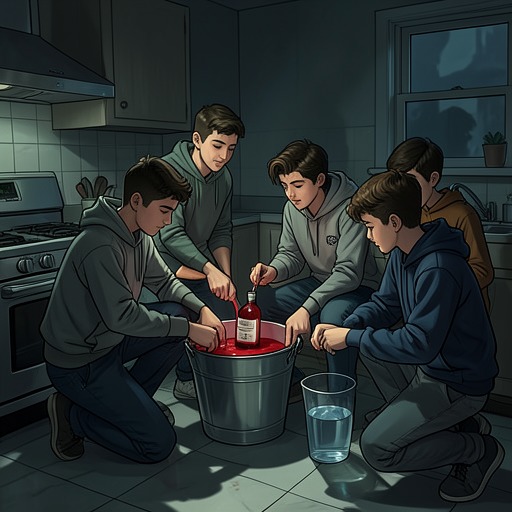
Billy Nolan brings two buckets of pig blood to Ewen High after midnight, driving into the deserted school grounds with the lights off and checking that neither of Chamberlain’s two police cars is nearby. The blood has frozen solid inside an ice chest, but he expects it to thaw during the next twenty-two hours. He places the buckets on the ground while he prepares the mechanism, working in the gym-auditorium with tools from his kit and a brown bag containing hardware.
The rig is designed to suspend and release both containers above the platform. Billy wears Playtex rubber gloves and installs two small pulleys, one in the backstage area and another in the loft, using nails, a hammer, and eyehole screws. He then carries the buckets through a forced window and across the beams, using one in each hand for balance. The blood has still not thawed after roughly half an hour. At a chalk-marked position, he ties the handles together with running slipknots made from jute twine, threads the twine through the screws and pulleys, and leaves the slack within reach of the vent. The buckets are thus transformed from passive containers into a concealed apparatus whose success depends on timing, concealment, and the unsuspecting movement of the crowd below.
Connection to Carrie’s Blood Imagery
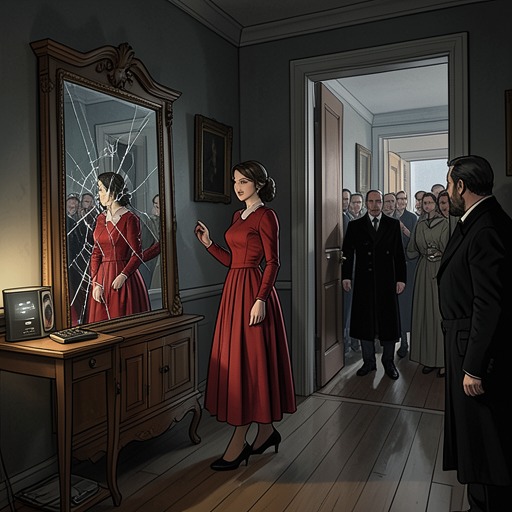
The prank’s force depends on the difference between pig blood and the blood associated with Carrie’s first menstruation. In the shower-room incident, the girls see blood running down Carrie’s leg only after she steps out of the shower. The first drops strike the tile while Sue Snell recognizes what is happening and tells Carrie that she has gotten her period. Carrie, standing in the center of a forming circle, is already accustomed to being the object of ridicule; the scene joins puberty to exposure, social ostracism, and the conviction that her body is dirty.
Margaret White gives that blood a religious meaning. While punishing Carrie, she describes Eve’s first sin as intercourse and links the curse of blood to childbirth, presenting menstruation and sexuality as signs of inherited guilt. Her religious language makes blood a marker of contamination rather than ordinary physical change. The buckets exploit precisely that association: they place an artificial version of blood over Carrie at the moment when she has been raised into public honor, turning the school’s ritual of recognition against her body.
The image also echoes Margaret’s own fixation on blood. During the confrontation before the Spring Ball, she wounds herself, strikes herself in the mouth, and marks Daddy Ralph’s Bible with her blood while whispering about being washed in the Blood of the Lamb. The buckets consequently stand at the intersection of several incompatible meanings: menstrual blood as shame, religious blood as sin and purification, and pig blood as a deliberately abject substance chosen for a cruel joke.
Release at the Spring Ball
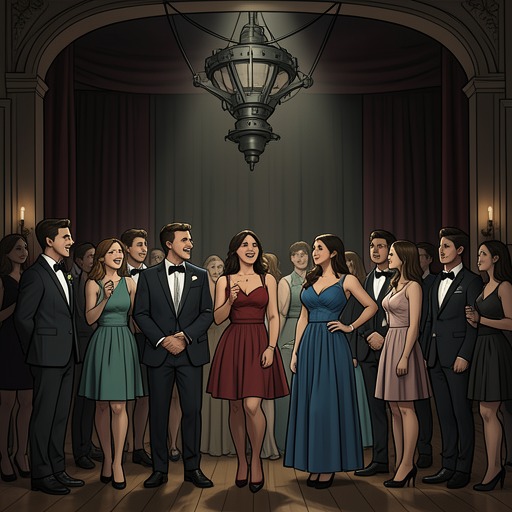
The buckets remain unnoticed while the event proceeds toward the voting for King and Queen. Vic Mooney, President of the Senior Class, calls the students to their seats and announces the contest. After the votes are counted three times, he declares that Tommy Ross and Carrie have won by one vote. The result briefly reverses Carrie’s established social position. She is astonished and exposed by applause, yet she has been granted the ceremonial place normally reserved for the admired couple.
That reversal lasts only until the buckets are revealed. As the crowd falls silent, two containers are seen dangling high above the thrones, swinging and banging together. They are still dripping when the loose string pays out and both buckets fall. One strikes Tommy Ross on the head with a noise like a gong; the other releases its load over the platform, drenching Carrie and Tommy in front of the assembled students. The object that had been hidden in the school’s rafters becomes suddenly visible as both weapon and spectacle.
The buckets’ physical action destroys the meaning of the coronation. Carrie has just been named Queen of the Spring Ball, but the blood covers her at the exact instant of triumph, replacing applause with shocked silence and then with raw, hysterical laughter. The ceremony becomes an anti-coronation: elevation turns into degradation, the crown into a target, and the school’s collective celebration into the public repetition of the shower-room humiliation.
Consequences and Aftermath
For Carrie, the falling blood is not an isolated prank. It reactivates the shower-room scene in a violent sensory recurrence: the running blood, the shower tiles, the thrown tampons and napkins, and the voices demanding that she plug it up. She experiences the prank as the final nightmare of being drenched in the secret of blood before everyone. The buckets therefore make the past physically return at the very moment Carrie has imagined a new social identity for herself.
The immediate result is a reversal from embarrassment to retaliation. Once Carrie opens her eyes and sees that the blood is real, the prank becomes the decisive trigger for her telekinetic response. The buckets have done more than stain a dress or interrupt a dance; they have supplied the final public proof that the community has repeated its earlier cruelty despite the apparent possibility of reconciliation. Their fall converts humiliation into an act directed outward against the people and institutions that have enclosed her.
The object’s consequences extend beyond the auditorium. Later, Jackie reports that many people saw Carrie at the prom and that she was covered with blood. When Billy Nolan confirms that the pig blood was theirs, the buckets become evidence of the prank’s connection to the destruction spreading through Chamberlain. In that retrospective exchange, the concealed mechanism is no longer a private joke between conspirators but part of the explanation for the town-wide catastrophe.
Material and Thematic Significance
The buckets expose the material structure behind a supposedly spontaneous disaster. Their freezing, thawing, ropes, pulleys, chalk marks, and fingerprints make the prank an engineered event rather than an accident. Yet once released, the mechanism exceeds the pranksters’ control. A device built to produce laughter instead initiates a sequence of death and destruction, demonstrating how carefully arranged cruelty can create consequences that its creators cannot contain.
Their movement also traces the story’s expanding scale of pollution. Blood begins as a bodily sign seen on a shower-room tile, is reinterpreted by Margaret as a religious curse, is collected from a pig and hidden in an ice chest, and is finally spread across the bodies and architecture of the school. From there, the imagery enters the wider town as electrical wires fall, people burn in the streets, and Chamberlain becomes contaminated by violence. The buckets are the transitional objects in that progression: they carry the intimate shame of Carrie’s body into the public space of the Spring Ball, where it becomes the catalyst for communal collapse.
As objects, the buckets are initially transparent in the practical sense: containers stored out of sight, useful only to the people who have prepared them. Their hidden mass and suspended position make them suddenly conspicuous when they begin to drip, swing, and fall. That change in status is central to their narrative function. They cease to be background equipment and become an accusing presence above the crowd, revealing that the celebration has been rigged and that the school’s social order has been built over an unseen mechanism of punishment.