Thomas Everett Ross
Stephen King Three Classic Novels Box Set: Carrie, 'Salem's Lot, the ShiningThomas Everett Ross, generally called Tommy Ross, is Carrie White's escort to the Ewen High School Spring Ball and a pivotal figure in the chain of decisions that leads from adolescent remorse to catastrophe. He stands at the intersection of two sharply different social worlds: he is one of the school's most popular students, while Carrie is an ostracized target of long-running cruelty. The later accounts repeatedly ask whether his role was innocent or manipulative, but the evidence presents a young man whose ordinary popularity, athletic promise, intelligence, and willingness to take Carrie's place in the social world briefly make another future imaginable.
Identity and Social Position
Tommy is established as the admired center of Ewen High School's social order. Susan Snell has been popular throughout her school life, and her relationship with him seems to confirm the hierarchy surrounding them: classmates have already voted them the class couple for the yearbook, and they appear destined to become Spring Ball King and Queen. Their pairing is described as a fixed star in the shifting constellation of school relationships, an acknowledged Romeo-and-Juliet arrangement, while the narrative recognizes the disturbing sameness of such couples in white suburban high schools across America. Tommy's status is therefore not merely personal charm; it is a form of social capital that makes his attention consequential.
Yet the surviving portrait resists the dismissive image of Tommy as a merely handsome athlete or a "dumb jock." He was an above-average athlete whose best sport was baseball, and he had played on the Ewen varsity squad since his sophomore year. Dick O'Connell, general manager of the Boston Red Sox, indicated that Tommy would have received a substantial signing bonus had he lived. At the same time, Tommy was a straight-A student. His parents said that he intended to postpone professional baseball until after college, where he planned to study English. He also wrote poetry, and a poem composed six months before his death appeared in the established little magazine Everleaf. Classmates who survived the Spring Ball remembered him as friendly and good-natured, a testimony that complicates later theories built around the idea of a shallow, clique-centered athlete.
Relationship with Susan Snell
At the beginning of the relevant episode, Tommy and Susan are lovers, though their intimacy is still new. They have been going out more or less steadily since October, have been sexually involved for only two weeks, and have made love seven times by the Friday night on which Susan's thoughts turn back to Carrie. Their relationship is not presented as a simple fairy-tale union. Susan recognizes that her attraction to Tommy is bound up with his popularity and with the security and status their pairing gives her. The handsome reflection of them together and the ease with which they fit socially carry an uneasiness beneath the warmth.
That uneasiness becomes moral rather than merely romantic when Susan tells Tommy about the shower-room incident and her participation in the history of humiliating Carrie. She understands that the cruelty did not begin and end with one prank. The girls' meanness had continued from grammar school, often as a seemingly harmless group laugh, and she admits that she had joined some of it. Susan tells Tommy that she may have more to make up for than the shower room alone. In her account, the boys' teasing was brief, whereas the girls' hostility continued until its origin could no longer even be remembered. Her remorse changes the meaning of her relationship with Tommy: the couple's privileged security becomes the vantage point from which she sees the person excluded from it.
When Susan asks Tommy to take Carrie to the Spring Ball, he initially responds with disbelief, saying, "You must be crazy." The resistance is practical and emotional rather than a stated rejection of Carrie. Susan remains uncomfortable but determined, insisting, "It's the way I want it." Tommy then asks Carrie whether she would go with him. The invitation is a small social gesture with enormous stakes because it offers Carrie entry into the ceremony of popularity that has always excluded her. The later record disputes Susan's explanation, with some commentators alleging that she invented or romanticized the idea of atonement, but Tommy's conduct is consistently difficult to reconcile with a deliberate scheme to humiliate Carrie.
The Invitation and the Spring Ball
Tommy's invitation is formally phrased: he asks Carrie whether she has a date for the Ball and whether she would want to go with him. Carrie blinks in response, and Tommy experiences a brief, disorienting interval in which he feels as though his mind is no longer controlling his body. The sensation passes almost immediately, but its dreamlike quality gives the invitation an ominous place in the narrative. He touches Carrie's hand afterward, uncertain whether the gesture is kindness or whether it may make matters worse.
The wider documentary frame magnifies this uncertainty. The Shadow Exploded calls Tommy Carrie's ill-starred escort and compares the destruction of Chamberlain, Maine, with another twentieth-century catastrophe driven into public consciousness by mass media. In that account, Tommy appears as a possible trigger-man: the person whose action set something irrevocable in motion. The question is whether he acted knowingly or unknowingly. Theories of a practical joke even place him and Christine Hargensen at the center of a plan to bring Carrie to the Spring Ball and complete her humiliation, with some versions casting Susan as a conspirator. The text explicitly presents this as a theory rather than an established fact, and the portrait of Tommy's character weighs against it.
On the night of the Ball, Tommy drives Carrie to the parking lot beside the high school's new wing. He switches off the engine after letting it idle briefly. Carrie sits beside him with a wrap around her bare shoulders, troubled by the sense that she has entered a dream whose hidden intentions she has only just begun to perceive. She worries about leaving Margaret White alone, and Tommy asks whether she is nervous. The scene holds open the possibility of ordinary tenderness just before the social ritual becomes a public mechanism of exposure. Tommy's presence gives Carrie a temporary escort into the world, but it cannot protect her from the crowd's power to redefine the meaning of every gesture.
Death and the Collapse of the Social World
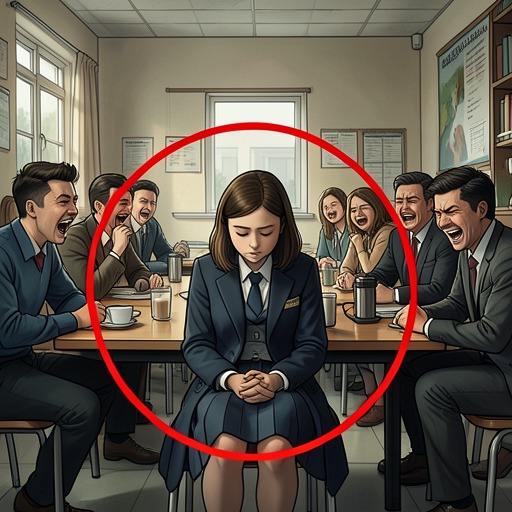
Tommy's importance is inseparable from the event in which the promise of the invitation is destroyed. Carrie initially experiences the Spring Ball as enchantment and wonder, but after the prank and the crowd's reaction, the fairy tale turns corrupt. She sits still while laughter washes over her; the students remain beautiful, yet the scene has crossed into poisoned unreality. The laughter returns the old social judgment, now amplified by the ceremony that was supposed to reverse it. Tommy's effort to give Carrie a place within the school's ideal couple structure therefore becomes part of the setting in which that structure fails catastrophically.
The retrospective account by Susan insists that the disaster must not be reduced to the calculations of adults, experts, or institutions. She says that the press, the scientists at Duke University, David R. Congress, and the White Commission failed to understand the most fundamental fact: they were kids. Carrie, Christine Hargensen, and Susan were seventeen; Tommy was eighteen; Billy Nolan was nineteen. Susan repeats that they were children trying to do their best, even while recalling that two hundred people died and an entire town was destroyed. Tommy's death consequently carries a double meaning. He is a victim of the Spring Ball massacre, but he is also evidence of how adolescent choices, social pressure, and entrenched cruelty can produce consequences no participant fully comprehends.
Tommy's surviving reputation remains divided between causation and character. The catastrophe makes his invitation look ominous in retrospect, and the documentary voices keep testing whether a popular boy could have been acting a part. But the evidence of his academic ability, literary interests, friendliness, and apparent good nature prevents the role from settling into a single explanation. He is neither a supernatural agent nor a secret villain established by the record. His decisive action is humane in intention or at least humane in appearance, while the social world around it supplies the humiliation, pressure, and violence that turn that action into an element of disaster.
Narrative Significance
Tommy functions as the story's bridge between popularity and exclusion. His relationship with Susan shows how belonging can feel both secure and morally compromised; his invitation gives Carrie a brief opening into that protected circle; and his death demonstrates that the privileged center is not outside the consequences of its own cruelty. The contrast is especially stark because Tommy has more than popularity: he possesses athletic promise, academic distinction, literary ambition, and the goodwill of classmates who knew him. The narrative thus refuses to let the disaster be explained by a simple opposition between a thoughtless athlete and a wronged outsider.
His role also exposes the instability of social identity at Ewen High School. Susan's decision to send him in her place is an attempt to convert remorse into action, but Tommy's popularity makes the gesture visible and therefore vulnerable to competing interpretations. To Carrie, the invitation can suggest recognition; to later investigators, it can be recast as evidence of conspiracy; to Susan, it becomes part of the burden of remembering. Tommy is valuable to the narrative precisely because he cannot control these meanings. His intention, whatever its full complexity, is overtaken by the group dynamics surrounding the Spring Ball.
In the final assessment, Thomas Everett Ross is a rounded rather than a single-function figure: popular but not intellectually empty, athletic but literary, intimate with Susan yet capable of extending recognition toward Carrie, and apparently kind while becoming retrospectively entangled in catastrophe. His death closes the possibility that the invitation might have produced a durable reconciliation. What remains is the tragic contrast between the ordinary future he seemed to possess and the violent historical role assigned to him afterward as Carrie's escort and the alleged trigger-man of the Chamberlain disaster.