White house
Stephen King Three Classic Novels Box Set: Carrie, 'Salem's Lot, the ShiningWhite house is the White family’s small bungalow on Carlin Street in Chamberlain, Maine. It is both a recognizable home and the central enclosed space of Carrie White’s childhood: a place where Margaret White imposes religious discipline, where Carrie’s extraordinary ability first erupts under extreme stress, and where family violence and supernatural disturbance become inseparable. Its history turns an apparently ordinary residence into the first known site of the forces that later devastate Chamberlain.
Setting and Household
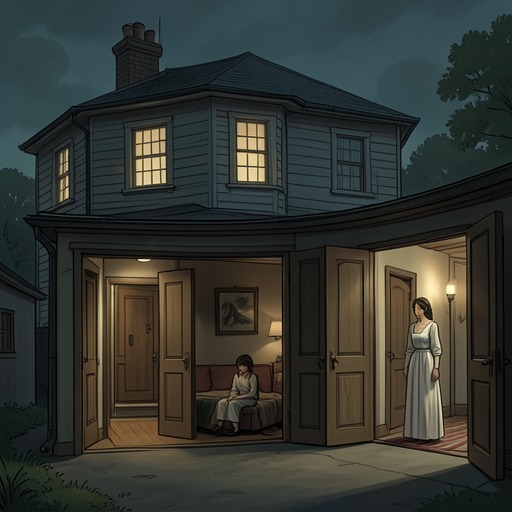
The house is described from Carrie’s return to it as a small white bungalow with blue shutters and ivy climbing the west side. The ivy can appear picturesque, yet Carrie sometimes sees it as a grotesque, veined hand gripping the building. That unstable image captures the house’s double character: familiar enough to be home, but threatening enough to seem physically hostile. Margaret White lives there as a widow with her three-year-old daughter, Carietta, and later raises Carrie within the same severe domestic environment.
Inside, daylight gives way to brown shadows, coolness, and the oppressive smell of talcum powder. A Black Forest cuckoo clock ticks in the living room, while a luminous picture of Jesus hovering over a family bears the caption The Unseen Guest. Religious imagery governs the interior. A cross stands on an altar table covered with embroidered silk, white candles flank it, and pictures of Jesus and his apostles surround it. The house therefore makes doctrine architectural: its rooms and objects turn Margaret’s faith into a system of surveillance, fear, and punishment.
Religious Discipline and Confinement
The most terrifying part of the house is the closet beside the altar, lit by a hideous blue bulb and associated with Jonathan Edwards’s sermon Sinners in the Hands of an Angry God. Margaret uses this closet as a place where Carrie’s resistance to God’s will, and to Margaret’s will, is to be extinguished. The domestic threshold between ordinary rooms and the closet functions as a boundary between public respectability and private coercion.
When Carrie experiences her first menstruation, Margaret’s religious explanation turns puberty into sin. She invokes Eve, intercourse, childbearing, and the Curse of Blood, then drags Carrie toward the altar and the closet. The house thus becomes the scene in which bodily development is translated into theological guilt. The violence is not incidental to the setting; the home’s religious objects, rituals, and enclosed spaces give that violence its authority.
The 1966 Stone Incident
The house first enters the historical record through the Rain of Stones on the White House. On August 17, 1966, stones reportedly fell from a clear blue sky onto Carlin Street, principally striking Margaret White’s home. The rain extensively damaged the roof and ruined two gutters and a downspout valued at approximately twenty-five dollars. Margaret could not be reached for comment, and the report identifies her as a widow living with her three-year-old daughter, Carietta.
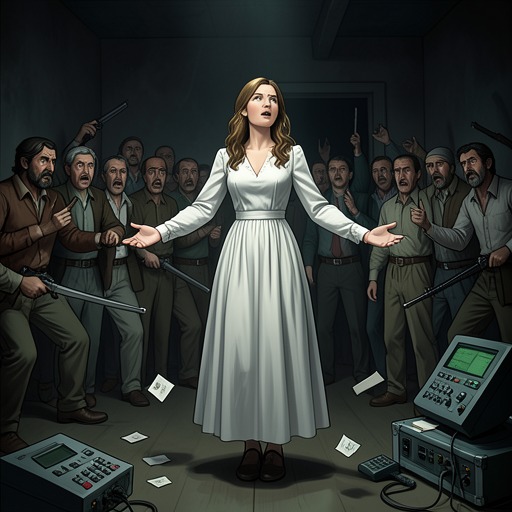
Carrie later remembers the incident only in fragments. During the disturbance, Margaret is described with Daddy Ralph’s long butcher knife in one hand and Daddy Ralph’s Bible in the other, accusing the child of being a devilspawn witch. Stones strike the roof, the house throws its furnishings around, chairs whistle down the hall, beds fall over, and the dining-room table attempts to jam itself through a window. Margaret drops the knife and prays as the building seems to shake under the force of the attack; both mother and daughter eventually faint. The memory then disappears from ordinary recollection, surviving chiefly in dreams, while the knife returns to its drawer and Margaret’s bruised neck is explained by silence.
Carrie’s Awakening and the House’s Destruction
The 1966 incident is later interpreted as early evidence of Carrie’s telekinetic potential. David R. Congress argues that the ability may remain submerged until moments of extreme personal stress, explaining why earlier signs were missed. The house is therefore not merely the backdrop of Carrie’s childhood; it is the first enclosed laboratory in which psychic power answers physical and emotional pressure.
Years later, after the Spring Ball disaster, Carrie returns home wounded and pursued by the consequences of the night. The house remains tied to Margaret’s demand that Carrie become the Angel’s Fiery Sword, an instrument for destruction rather than an independent person. In the final confrontation, Margaret attacks Carrie with the carving knife while holding Daddy Ralph’s Bible. Carrie’s power responds with a violent disturbance that throws furniture through the house and turns the residence itself into an instrument of rupture. The home that once confined her can no longer contain what its punishments helped awaken.
Narrative Significance
White house gathers the novel’s central oppositions into one physical structure: shelter and imprisonment, family and danger, faith and fanaticism, memory and repression, the ordinary object and the suddenly animate thing. Its cuckoo clock, altar, closet, Bible, knife, roof, windows, and furniture shift from domestic details into evidence of control or resistance. The 1966 stones foreshadow the later catastrophe by making the house the first place where private abuse, supernatural power, and public explanation collide.
The house also gives the wider disaster a material beginning and an intimate scale. Later reports and the national AP ticker frame the destruction of Chamberlain as a disaster of major proportions, while The Shadow Exploded declares that the Carrie White affair is over and turns toward the future implications of the TK gene. Against that public, scientific, and media language, White house preserves the personal history beneath the catastrophe: a child, a mother, a locked closet, and a home whose walls repeatedly fail to keep violence or power contained.