Sons of Wolves Motorcycle Club
Stolen WanderSons of Wolves Motorcycle Club is the central brotherhood of Rex Foster’s adult life: a violent, tightly organized biker community that replaces the family he rejects, protects its members, and expects absolute availability in return. The club gives Rex belonging and brothers, but its demands expose the cost of that belonging. His abandonment of Nancy O’Neill after discovering her pregnancy forces him to choose between the club’s identity and a future built around love, responsibility, and fatherhood; his eventual departure is therefore both a personal rupture and the clearest sign of his moral reorientation.
Nature, Brotherhood, and Hierarchy
Sons of Wolves Motorcycle Club functions as Rex’s chosen family. He dismisses biological family as overrated and says that he joined the Sons of Wolves Motorcycle Club because he found the only brothers he would ever need. The statement explains why the club’s authority reaches so deeply into him: membership is not merely an association with other riders but a replacement for the family structure he has refused. Loyalty to the club supplies identity, companionship, and protection, while also making disobedience feel like betrayal of the people who raised him within its world.
The club has a recognizable hierarchy. The Old Man acts as an intimidating senior authority who can summon Rex, question his conduct, and impose punishment, while the boss determines whether a member may leave and under what terms. Snake represents the club’s immediate peer pressure, mocking Rex for failing to answer his phone and warning that he is in deep trouble with the boss. When Rex moves toward him in anger, the Old Man intervenes and orders him to leave Snake alone, demonstrating that violence inside the brotherhood is still subject to rank and command.
The club’s obligations are practical as well as symbolic. A protection job requires four men and one truck, but Rex’s refusal to answer the Old Man’s call leaves the group with only three men and one truck. The Old Man makes the danger of that absence explicit: Rex’s choice could have exposed a brother to death. The club therefore treats availability as a matter of collective survival, not personal convenience. Rex’s later fear that someone might have died because of him shows that, despite his resentment and distraction, the club’s code remains active in his conscience.
Discipline, Work, and Club Ritual
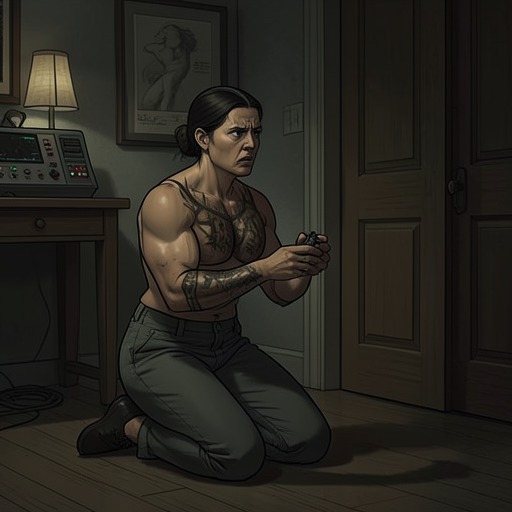
Rex’s punishment is deliberately humiliating rather than immediately lethal. The club gives him a car in the garage that has been covered in muck, oil, and other filth and orders him to make it shine by the next morning. He fills five buckets with water, each becoming brown and greasy, and spends roughly an hour and a half cleaning a vehicle that is not even one-fifth clean at the beginning. The work converts an abstract charge of disloyalty into bodily labor: Rex must carry the smell, grime, exhaustion, and ridicule produced by his failure to serve the group.
The punishment also reveals the club’s capacity for communal cruelty. When Rex emerges covered from head to toe in dirt, Snake and several other men laugh from beside their motorcycles. Rex answers with a promise that he will get them back one day, preserving the teasing, retaliatory tone through which the members mark one another as insiders. The scene is degrading, but it is also a ritual of continued inclusion: the club humiliates Rex because it still claims the right to discipline him.
Alcohol and masculine banter reinforce the club’s social atmosphere. Rex drinks whisky with Snake and asks whether he has ever been with a woman he loves. Snake reveals that he is married and describes marriage as having a best friend around all the time, while Rex responds with fear that love could expose a woman to the club’s violence and damage. Rex’s question is unusually vulnerable because it tests whether intimacy can coexist with Sons of Wolves identity. The club’s culture makes loyalty, toughness, and sexual confidence familiar, but emotional responsibility remains frightening and difficult to name.
Conflict with the Police
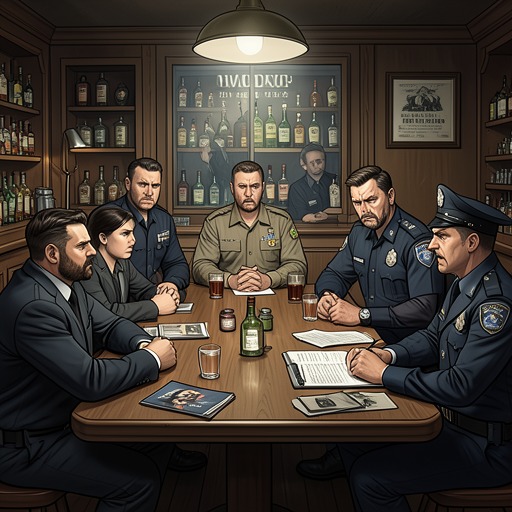
The club’s wider conflict with the police becomes an armed confrontation inside a bar. Rex is preparing to accept the terms of his departure when Michaels arrives with thirteen men in civilian clothes. Their clothing does not conceal their institutional identity; they walk with what Rex recognizes as the gait of police officers announcing their power. Michaels taunts the boss, and the boss responds with controlled hostility while offering drinks, exposing a conflict in which public authority and biker solidarity are separated by mutual contempt rather than by any simple moral divide.
Rex refuses to let the club speak for him once he has renounced membership. He tells Snake that he is no longer a Son of a Wolf and has surrendered his right to protection, insisting that Snake need not intervene on his behalf. He then challenges Michaels by suggesting that Michaels has brought so many men because he is afraid to fight alone. The provocation turns the encounter into a test of competing masculine reputations: Michaels relies on numbers, rank, and firearms, while Rex wagers that public shame will force him into a direct contest.
The confrontation escalates when Michaels draws a handgun and every man in the room produces a weapon, with police and bikers aiming at one another. Michaels presses the gun against Rex’s forehead, while Rex refuses to show fear and accepts that his history has already brought him close to death many times. The scene makes the club’s violence mirror the police violence confronting it. Both sides possess weapons, group backing, and a language of pride; the difference between outlaw force and official force becomes unstable when Michaels threatens to kill a man who has not been arrested.
Nancy O’Neill breaks the standoff by redirecting the men’s pride toward the consequences of their behavior. She asks whether the confrontation serves Salem, the police, the biker club, their families, their careers, or their dreams, and challenges the claim that pointing a gun at an unarrested man constitutes police work. Her intervention causes the men on both sides to lower their weapons. Michaels is left exposed as the person who converted institutional power into personal intimidation, and he finally lowers his gun and declares the feud over. Nancy then slaps the handgun from his hand and orders him never to point a gun at Rex again. The Old Man prevents Snake from restarting the violence and confirms that the conflict is finished.
Exit, Banishment, and the Possibility of Change
Rex’s departure is governed by formal, irreversible terms. The Old Man warns him that once he is unpatched there will be no return and asks whether he is making a genuine decision or merely blowing off steam. Rex explains that he entered the life as a boy consumed by rage, fighting, and defiance, and says that he is almost certain the club is no longer the right place for him. His language does not erase gratitude; he remains thankful that the club accepted him when he was young. Leaving is instead presented as recognition that the identity which once saved him has become incompatible with the person he is trying to become.
The boss permits Rex to leave because he has earned that right, but the permission is inseparable from banishment. Rex may not continue living in Salem, may not visit the clubhouse or the club’s bars, and will receive no protection or responsibility from the organization if anything happens to him. These conditions sever both geography and institutional shelter. The club does not simply release him into an unchanged life; it removes the spaces, symbols, and collective defense that made him a Son of Wolves.
Rex’s change is measured against the club’s model of manhood. He once believes that toughness means enduring danger, fighting enemies, and remaining loyal to brothers regardless of personal cost. Yet his conversation with Snake shows that he is increasingly afraid of what the club could do to someone he loves: he worries about infecting or twisting a partner with its violence. Later, while urging Bill O’Neill to fight his way back from alcoholism and shame, Rex says that there is always a way back and that a man must be strong enough to choose it. The advice applies to Rex as much as to Bill. His deepest act of strength is no longer proving that he can survive inside the club, but accepting the loss of its protection in order to remain with Nancy and their child.
Narrative Significance
The Sons of Wolves Motorcycle Club embodies the tension between chosen brotherhood and chosen responsibility. It gives Rex a family when he believes he has no use for one, yet its code initially helps him flee from the obligations of intimacy. The club’s demand that he answer the phone, join protection work, and accept punishment contrasts with Nancy’s demand that he stay until the baby is born and become dependable. In this conflict, the institution is not portrayed as empty: its members care about one another, its leaders can recognize earned rights, and its rules prevent some violence. But its loyalty remains conditional on continued participation in a life Rex no longer accepts.
The club’s final significance lies in what Rex carries away from it and what he refuses to carry forward. He retains courage, loyalty, practical protection, and the ability to confront danger, but he rejects the idea that violence and emotional withdrawal are the only forms of masculine strength. At the wedding, when he sees Nancy and their son Sebastian together, his sense of warmth and protection belongs to a new family rather than to the clubhouse. His declaration that he will always have Nancy completes the movement begun when he surrendered his patch: the former Son of Wolves member finds belonging not by denying family, but by choosing to become responsible for one.