Henry Refuses to Sell the Adjacent Plots to Paul Louk
Straight ManHenry’s refusal to sell the two adjoining lots he had bought near his home to Paul Rourke becomes more than a rejected property offer: it fixes an old resentment in place and supplies one of the distant causes through which Henry understands the English Department Wars. The episode joins a private attempt to keep colleagues at a distance to the novel’s broader suspicion that conflicts often grow from decisions made long before their consequences become visible.
The Lots and the New Development
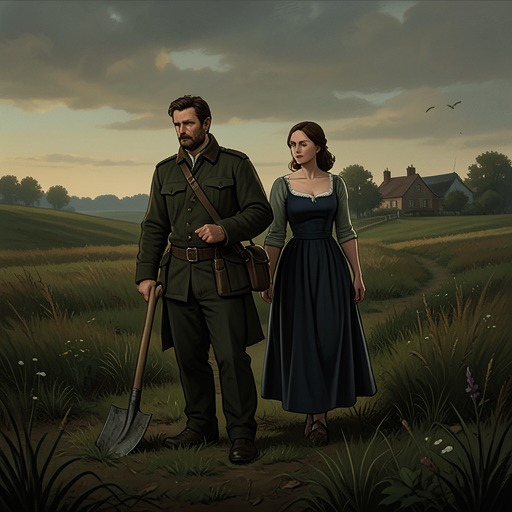
The dispute began with Henry and Lily’s decision to purchase the two lots next to their home in Allegheny Wells. In Lily’s later account, the consequential choice was not building their house but buying the extra land to prevent neighbors. Henry’s explanation gives the purchase an immediate, anxious purpose: he wanted to escape the prospect of colleagues settling around them. The lots therefore represented both a financial burden and a boundary he hoped to preserve.
That boundary became harder to maintain as the hill developed. A service road cut through the trees, and the road’s arrival helped trigger a rush of sales. Although the landowner had promoted development for years, buyers had been reluctant to go first. Once the first house foundations were under way, three more lots sold partway down the hill. Henry read the repeated Sold signs as evidence that the university community was moving toward his home.
The change acquired particular force when Jacob Rose became dean that fall and bought the largest remaining parcel, two acres, for a house twice the size of Henry’s. In November, Finny, the English Department Instructor, and his wife Marie bought a lot at the bottom of the hill. Henry then borrowed from the credit union to acquire the adjoining lots. The decision was made despite Lily’s reluctance to take on more debt for that purpose. Their disagreement was not simply over property: Henry saw the new neighbors as a looming invasion, while Lily did not share his sense of impending danger.
Rourke’s Offer and Henry’s Refusal
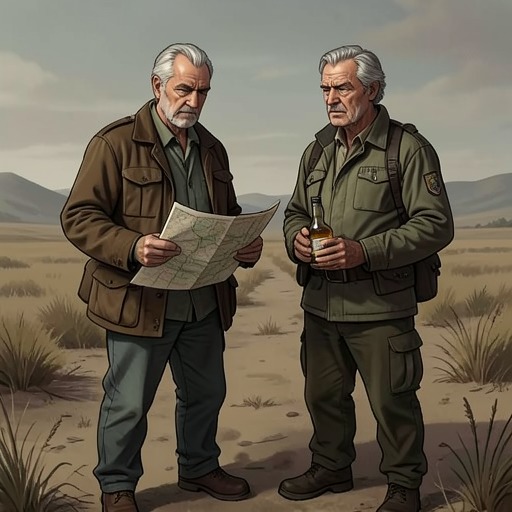
Paul Rourke approached Henry that December, three months after the purchase. By then, the price of the few lots still available had doubled over the preceding year. Rourke argued that selling both parcels at his offered price would effectively make Henry’s own land free. His proposal thus presented the lots as an opportunity for financial gain, while Henry treated them as land he had acquired precisely to prevent someone like Rourke from living nearby.
Henry refused without negotiation. Rourke’s response—that everything was for sale—immediately angered him, and Rourke warned that a new development across the road would weaken Henry’s bargaining position. Henry answered with a taunt of his own, turning a transaction into an openly antagonistic exchange. The refusal was not presented as a carefully reasoned investment decision; it was consistent with Henry’s desire to retain control over who might become his neighbor, even when selling could have offset the cost of his land.
Events soon confirmed that Rourke had been right about development across the road. Later that week, heavy equipment appeared along the county road, and trees were cleared for a new access road. From their snowy front deck, Henry and Lily could see red surveyors’ stakes marking future lots and the road’s winding route across the hillside. The expansion made the land dispute part of a larger transformation of the neighborhood, but it did not lead Henry to regret rejecting Rourke’s offer.
A Feud Planted in the Past
Lily predicts that Rourke will hate Henry forever because of the refusal. Henry dismisses the prediction as no revelation, maintaining that Rourke had hated him long before the land deal. His explanation is characteristically combative: he portrays Rourke as a rationalist with a narrow academic specialty, a bitter former Catholic and failed seminarian whose old religious formation still colors his outlook. These are Henry’s judgments, not an impartial account of Rourke, and their extravagance shows how readily he turns a property dispute into an argument about the other man’s entire character.
Henry also imagines that having Rourke as a next-door neighbor would have offered him more occasions for resentment and closer opportunities to observe Henry’s movements. He goes so far as to speculate that Rourke might have found a way to kill him and make it look like an accident. The account presents this as Henry’s hostile fantasy, not as evidence of an actual murder plan. In the same sardonic vein, he regards nearby ex-wives who know him as a final line of defense should Rourke ever try to harm him.
The later development, Allegheny Estates II, gives the dispute an ironic coda. Though the hills appear alike, the houses across the road suffer from recurring problems: basements fill with water in the rain, mud accumulates at the entrance, the stone pillars begin to lean, and wooden decks warp. These troubles do not prove that Henry made the better financial choice, but they complicate the image of the neighboring development as an uncomplicated prize Rourke might have bought. The lots Henry kept remain bound to a landscape changing around him.
Consequences and Meaning
Henry and Lily’s purchase, followed by the refusal to sell, becomes one of the origin stories for the English Department Wars. Lily connects the decision to later events, including Gracie DuBois’s attack on Henry with a spiral notebook. Henry does not claim that the lot refusal mechanically caused every later conflict; instead, he reflects on how remote, unresolved disputes can persist and acquire consequences long after their original circumstances have faded. He specifically distinguishes the tension in a later meeting from the older grievance that, in his view, underlies Rourke’s hostility.
Rourke’s offer thus matters both as a concrete conflict over two parcels and as an illustration of Henry’s theory of causation. He imagines animosities growing from a single seed planted long ago, rather than from the most recent slight. The refusal gives that theory a particular date, place, and choice: a credit-union-financed purchase, an offer made as development accelerated, and Henry’s decision to keep the land. Its consequences remain open-ended in his telling, since the people involved are still alive and the past may yet produce further conflict.