Meg Quigley
Straight ManMeg Quigley is an adjunct instructor at West Central Pennsylvania University whose ambitions, family ties, and uncertain future bring her into William Henry Devereaux, Jr.’s professional and private life. Seen largely through his perspective, she is both a person making difficult choices about work and study and the focus of his growing attraction. Her independence is not a settled freedom: her father’s hopes, the precariousness of adjunct teaching, and her own doubts all press on the decisions available to her.
Identity and Background
Meg is one of Billy Quigley’s daughters, and William Henry Devereaux, Jr. describes her as strikingly beautiful and unlike anyone else. That impression matters partly because it colors his attention to her; it does not define her ambitions or her complicated bond with her father. She has been married once, and after that marriage she dates in search of a man who measures up to Billy, a standard she has not found easy to meet in Railton.
Meg and Billy fight in ways that can be harsh and cruel. In public, she dismisses him as foolish; William Henry Devereaux, Jr. suspects that this stance conceals a more complicated private attachment. Her bluntness about Billy’s likely future and reluctance to visit his deteriorating house sit beside evidence that his judgments and expectations still shape her choices. She is not simply rejecting his influence: she is also trying to decide how much of her own future should be organized around what he has sacrificed for her.
Work and an Uncertain Future
Meg teaches as an adjunct, a position whose continuation William Henry Devereaux, Jr. cannot promise. When she asks whether she will still be teaching in the fall, he can offer only hope and an assurance that he will try. Her question makes the precariousness of her employment personal: the future of her work depends partly on decisions made by people who cannot guarantee that the university will retain her.
Billy intervenes with a different plan. He asks William Henry Devereaux, Jr. not to rehire Meg, explaining that he has contacted an acquaintance at Marquette who can arrange an assistantship for her in the coming academic year. Billy believes she has the best chance among his children and wants to help her toward that opportunity. His request is an attempt to use his connections for her benefit, but it also puts her employment and direction in the hands of other people. Meg later describes graduate school as her father’s plan rather than her own. She is unsure that she wants a Ph.D., and even doubts that she would want one if it were simply handed to her.
Her hesitation is not merely a question of academic interest. Leaving the profession would make her feel that her father’s hard-earned support had been wasted, while she regards the value of her existing M.A. as limited. William Henry Devereaux, Jr. suggests that she could choose a different line of work while she is young, but no resolution follows. When she says she will wait to see whether her father has a job next year, her immediate prospects remain entangled with his. Her office makes that vulnerability visible: it is in a large room on a lower floor of the Modern Languages Building, where twelve desks are shared by twenty-four adjunct faculty.
Meg also presses William Henry Devereaux, Jr. on adjuncts’ place in the union, asking him to include them. The request connects her individual uncertainty to the collective conditions of contingent academic work. She is not only waiting for a decision about her own position; she points out that instructors in her situation need representation within the institution’s labor arrangements.
Family Ties and Personal Entanglements
William Henry Devereaux, Jr.’s acquaintance with Meg includes episodes that deepen their familiarity. After she passed out at a pub during the fall semester, a man contacted the department looking for Billy, who was teaching. William Henry Devereaux, Jr. went instead and took Meg back to her apartment. The incident exposes a vulnerable side of their relationship, though it does not dissolve the difficult dynamic between Meg and her father. Later, Billy asks for help steering her toward the assistantship, making clear that his concern for her prospects persists even amid their quarrels.
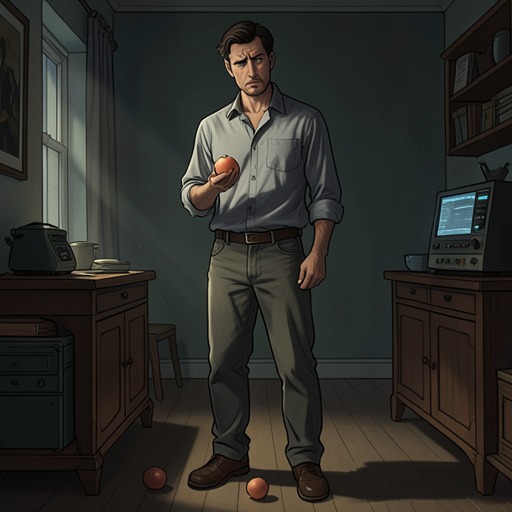
William Henry Devereaux, Jr.’s interest in Meg becomes increasingly difficult for him to separate from his work and imagination. A peach she brings with her becomes one of several peach pits on his blotter, prompting him to wonder whether the gesture carries a suggestive meaning or is simply being overread. His speculation also implicates Rachel, his secretary, in his fantasies and uncertainty. The scene reveals more about the narrator’s inability to read his own desires than about any definite intention on Meg’s part. Later, when asked which woman he may be half in love with, he names Meg as well as Rachel.
Meg’s connection to Julie Devereaux supplies a firmer account of her own loyalties. She knows Julie and has received messages from her while away for the weekend. When William Henry Devereaux, Jr. arrives at Meg’s flat, Meg is uncomfortable discussing the situation on the landing and tells him that Russell seems to want to stay, but that she needs him to leave. She identifies herself as Julie’s friend. The boundary is direct: whatever her private feelings toward William Henry Devereaux, Jr. or Russell, she does not want to disregard her relationship with Julie.
Attraction, Boundaries, and Narrative Role
The attraction between Meg and William Henry Devereaux, Jr. is presented through implication, self-questioning, and other people’s observations, rather than through a settled declaration of mutual commitment. He worries that he may be trying to draw Rachel into an affair and imagines Meg’s peach as a challenge or a rebuke; neither interpretation is established as Meg’s intention. When Billy later tells him that Meg has said she has been flirting with him for a long time and believes he desires her, the attraction acquires a more definite basis, but it still does not produce a relationship or a clear decision between them.
Meg also sees William Henry Devereaux, Jr. during an acute private crisis at the university. She arrives with Billy, identifies the office where he has been, and is present while he is trying to avoid being seen. The encounter makes his embarrassment inseparable from his awareness of her: he is especially anxious that she witness his vulnerability. Her presence does not turn the episode into a romance; instead, it exposes the imbalance between his fantasies about her and the ordinary, sometimes awkward circumstances in which they meet.
In her flat, Meg’s surroundings suggest a life divided between reading and drinking: half-burned candles, liquor bottles, and a large stack of books share the room. A copy of William Henry Devereaux, Jr.’s book sits among works by Frederick Exley and Scott Fitzgerald. The detail links her to literary culture without reducing her to the younger woman who admires or tempts a writer. She is at once a teacher with an insecure job, a daughter negotiating a father’s plans, a friend protecting Julie, and a person whose own educational and romantic choices remain unsettled. The novel leaves those choices open; her significance lies partly in how they unsettle William Henry Devereaux, Jr.’s confidence that he understands either his own motives or hers.