Occam’s death
Straight ManOccam’s death is recounted through the burial that follows William Henry Devereaux, Jr.’s return from the hospital. As he digs a grave behind the house, his father watches from the deck; the distance between them turns the work into an imagined exchange about resemblance, inheritance, and the father’s own past. The scene offers no account of how Occam died, but makes the burial itself a vivid encounter between two generations of the Devereaux family.
Return Home and the Burial
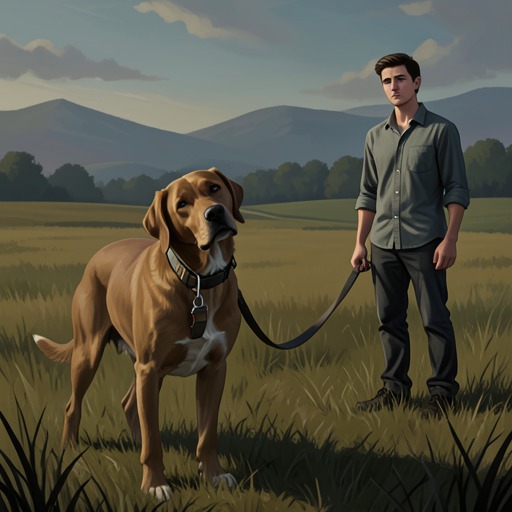
On the day he leaves the hospital, William Henry Devereaux, Jr. returns home with Lily and Angelo. Finny has been convinced that nobody blames him for Occam’s death, and William has foolishly promised to read Finny’s dissertation when it is finished. He then gathers Occam in a sheet and carries him around the back of the house to the edge of the woods.
The grave takes about an hour to dig. The labor costs William a pair of loafers and his favorite chinos, which he ruins while standing thigh-deep in the hole. These plain physical details anchor the scene in the work of burying Occam, even as the narrator marks the conversation that follows as imaginary.
The Father on the Deck
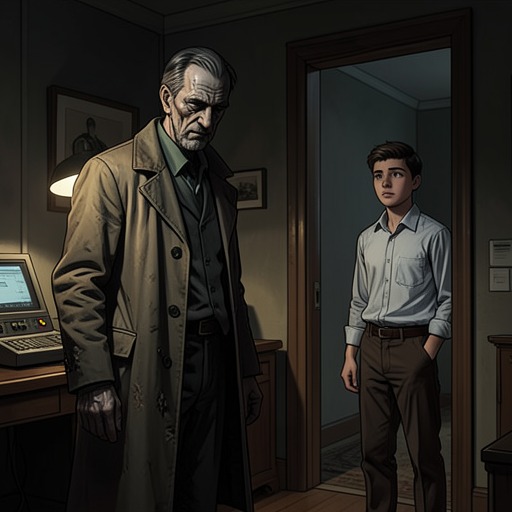
While William is digging, William Henry Devereaux, Sr. leans heavily on the railing of the back deck and watches. Lily and Angelo, who had wanted to help, and William’s mother are also present. Yet the imagined vignette seems arranged chiefly for the two William Henry Devereauxs: father above on the deck, son below at the edge of the woods.
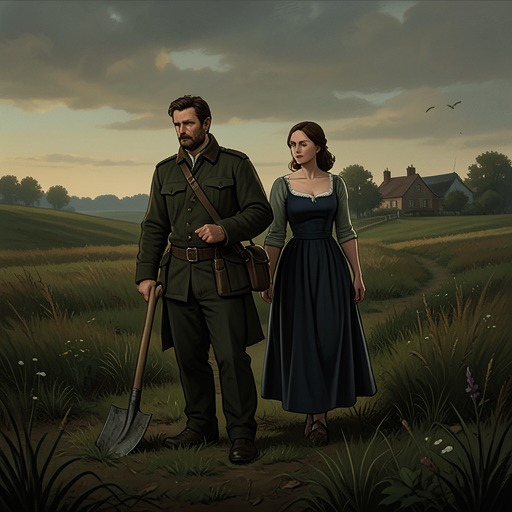
They are about fifty yards apart, too far for the father to see his son clearly. To his aging eyes, the sight of William burying Occam may recall the man who buried his first dog forty years earlier. The parallel is also bodily: William recognizes that he has come to resemble his father, and that his hands, once soft from a professor’s work, are blistered as his father’s hands had been long ago.
An Imagined Exchange
The exchange between father and son takes place in William’s imagination, not as a conversation spoken across the lawn. From his position above, William imagines his father interpreting the burial as proof of paternal importance and approval. William’s imagined response turns on a practical difference: unlike his father at the earlier dog’s burial, he did not have to borrow a shovel.
The spatial arrangement gives this private exchange its shape. The father has the advantage of standing on the deck; William, hip-deep in the grave, must work harder to send his thought uphill. His eyes sting with salt as he continues digging. The scene therefore holds filial recognition and resistance together: William sees how closely he resembles his father, yet answers the imagined paternal claim with a small assertion of independence.
Significance of the Parallel
Occam’s burial links the present to the death of William’s first dog four decades earlier. The repeated act does not erase the difference between father and son; instead, it makes resemblance unavoidable. William’s professor’s hands acquire the blisters associated with his father’s earlier labor, and the grave becomes a place where inherited likeness is registered through work rather than declared outright.
The vignette also distinguishes the event from the story William tells himself about it. The burial is concrete and costly, while the father’s thoughts and the son’s reply belong to an imagined conversation shaped by distance, memory, and their shared history. Occam’s death thus becomes the occasion for William to confront both his likeness to his father and his wish not to be subsumed by the older man’s account of what that likeness means.