The Soul of the University
Straight ManThe Soul of the University is William Henry Devereaux, Jr.’s satirical op-ed series about academic lunacy, written under the pseudonym Lucky Hank. Its deadpan treatment of university life turns institutional disputes into material for comedy; its history also exposes the tension between satire and the university’s demand that its members defend higher education in earnest.
Origins and Form
Last year, William Henry Devereaux, Jr. wrote a series of op-ed satires for the Railton Daily Mirror, known locally as The Rear View. The installments presented academic lunacy in a deadpan style under the name Lucky Hank. The series made satire a public-facing form of commentary on university life, rather than confining its observations to the campus.
Subject and Method
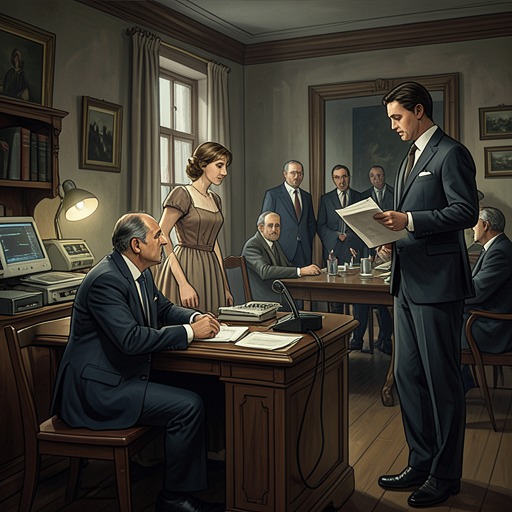
The series’ characteristic target is institutional absurdity. William Henry Devereaux, Jr. considers writing another installment after a personnel committee meeting in which Gracie DuBois maimed him with the ragged end of a spiral notebook. Teddy Barnes recounts the meeting enthusiastically, but William Henry Devereaux, Jr. finds his account narratively inadequate: it foregrounds the provocation and misses what the events felt like to the person at their center. The contrast makes the work’s implied standard of satire more than a matter of finding a ridiculous incident. The story must give events shape and render character; even a true account can fail if it does not establish what matters.
Reception and Possible Revival
Earlier installments angered university administrators and colleagues. They accused William Henry Devereaux, Jr. of lacking the seriousness they believed higher education required, weakening the public’s already limited support for universities, and biting the hand that fed him. The objections reveal the series’ institutional risk: its comic exposure of academic behavior could be treated not as a defense of the university through criticism, but as an attack on it.
After the committee meeting, William Henry Devereaux, Jr. considers reviving the series with an account of his maiming. He judges that the incident needs no exaggeration to produce an absurdist effect, yet does not treat its suitability as settled. The contemplated piece would draw on the gap between the event’s inherent absurdity and Teddy Barnes’s pedestrian telling, while asking whether bringing the column back is worth renewing the conflict that its earlier installments provoked. The series therefore remains both a satirical outlet and a question about the consequences of making institutional foolishness public.