William Henry Devereaux Sr.’s death
Straight ManWilliam Henry Devereaux, Sr.’s death in mid-July is quiet in its circumstances but consequential in its aftermath: it makes his son confront how little they had shared, while his wife begins to meet him anew through the pages he left behind. The scene of his death is almost mistaken for an ordinary rest; the conversations and manuscripts that follow give that stillness its emotional weight.
Death and Immediate Circumstances
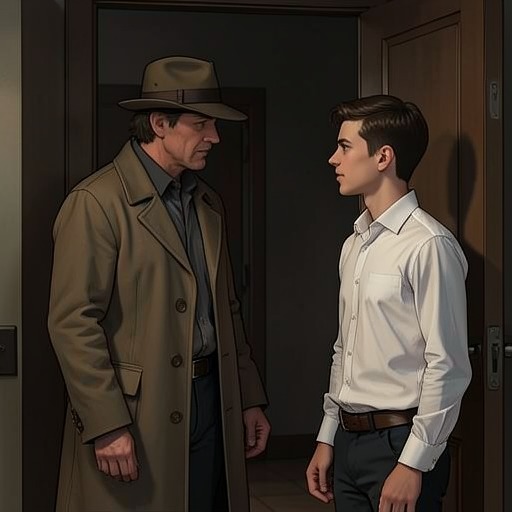
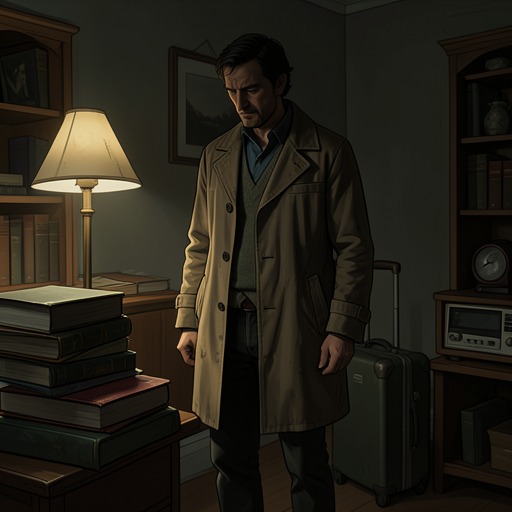
William Henry Devereaux, Sr. dies sitting upright in his favorite reading chair, dressed as if for a faculty meeting in a tweed jacket, corduroy slacks, and a button-down oxford shirt. He is reading Our Mutual Friend, with his chin resting on his chest. His death is described as quiet and painless. His wife initially thinks he is napping and goes about her business quietly, reluctant to disturb him. The domestic scene holds death at the edge of recognition: what looks like a familiar pause is no longer one from which he will return.
The contrast between the scene’s composed appearance and its finality matters to the son’s account. His father is dressed for the professional world he inhabited and has a book in hand, but neither detail can restore the interrupted life behind that image. The narrator does not turn the death into a dramatic confrontation. Instead, its force emerges through what the family had left unsaid and what the surviving wife later finds among his papers.
A Limited Intimacy
Before his father died, the son and father had little to say to each other. Their closest approach to intimacy came during a visit to the old midway, when William Henry Devereaux, Sr. confided that he feared he might once have wronged Dickens. The son regards that exchange as the nearest they came to a personal understanding and doubts that more time would have brought them substantially closer. The confession is strikingly literary in its point of reference, yet the son remembers it as an unusually vulnerable moment between them.
That recollection shapes the son’s interpretation of his father’s emotional life. He reflects that intellectual sophistication can create distance from disturbing personal truths and persistent fears. In his view, his father retained access to a wide range of emotions after returning to Railton with the son’s mother and Charles Purty, but a lifetime of sophisticated manipulation had severed those feelings from a coherent context. They could surface urgently and unpredictably, like the passions of a newborn, without the grounding that would make them intelligible. This is the son’s interpretation of his father, not a claim that their final exchange resolved the distance between them.
The Widow and the Papers
The son suspects that his mother shares, in a lesser degree, his father’s disconnection between feeling and context. His death does not unsettle her as much as he expects. She may feel cheated, or caught in a cosmic joke, but she also seems relieved of a heavy obligation. Having kept her marriage vow until his death, she can now regard herself as having fulfilled it. This response holds grief and release together: the end of their long separation does not erase its history, but it changes what she is required to bear.
Soon after the funeral, she begins going through his papers and sounds almost excited when she tells her son about the task. His drafts, research notes, and letters to famous colleagues offer a version of her husband that she feels she knew better than the man available in their missed conversations. She had maintained that she was his ideal companion and that, by betraying her, he had betrayed his own best self. Reading the archive seems to vindicate that belief and provides some recompense for the conversations they did not have. The papers cannot repair the marriage or recover its lost years; their significance lies in the recognition they allow her after his death.
The Unfinished Novel and Its Irony
A few days into sorting the papers, the mother calls with news: she has found a two-hundred-page novel manuscript dating from nearly twenty-five years earlier. She expects her son will want to read it when she finishes. He declines gently, explaining that he has already read it because his English department colleagues had previously thrust it into his hands. He knows the refusal has hurt her feelings, but does not pretend the discovery is new to him.
Her surprise and his prior familiarity expose the difference between the father she hopes to encounter in the manuscript and the one his colleagues have already made available to her son. She asks whether he is comparing his father with William Quigley, whom she met at a gathering earlier that year. The son assures her that he is not, while admitting that he would have preferred to read Billy Quigley’s book. The exchange is wry, but it also makes the manuscript an awkward inheritance: for the mother, it is a remarkable new discovery; for the son, it is work already encountered and found less inviting than another writer’s book. The father’s death thus leaves no single, settled account of his life. His widow finds evidence that confirms her understanding of him, while his son remains aware of the limits of both the written record and the intimacy they managed in life.