William Henry Devereaux, Jr.
Straight ManWilliam Henry Devereaux, Jr. is an English professor whose comic self-invention is both a weapon against institutional absurdity and a defense against emotional exposure. A son of celebrated scholars, a husband and father, and the author of a novel followed by a long creative silence, he narrates his life as a sequence of stories he can revise, puncture, or turn into satire. Yet the experiences that matter most—his father’s return and death, his marriage to Lily Devereaux, and the bodily crisis that forces him to confront what he wants—resist being reduced to a clever version of events.
Identity and Family Inheritance
Those closest to William Henry Devereaux, Jr. regard him as exasperating, a judgment his parents apply retrospectively to his childhood as well as to his adult character. They divorced while he was in junior high school, and their accounts of their son’s early life remain strikingly alike despite their estrangement. The story they share concerns his first dog, which died soon after his father brought it home. As a boy, Devereaux proposed a name for the dead animal while his father stood beside the grave with a borrowed shovel. In the adult narrator’s memory, the scene makes his father more real than the famous scholar appearing in literary reviews: here is a man in ruined shoes, hands blistered from digging, confronted by a child whose view of the world is not his own.
His father, William Henry Devereaux, Sr., had built a career around academic fashion and literary criticism. In the years after leaving his family, he became a prominent scholar, was sometimes credited as the Father of American Literary Theory, and published both scholarship and a literary memoir. The son recognizes that he inherited more than a name. He too became an English professor and a writer, although he had once resolved to resist the book-centered life of his parents. His daughter Julie Devereaux, who has little interest in books, represents a more complete escape from that inheritance than he managed for himself.
Professor, Satirist, and Storyteller
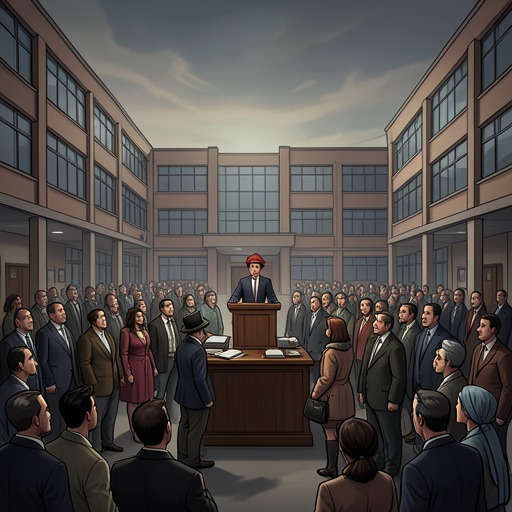
Devereaux’s academic work places him inside the institution whose habits he mocks. He once published a series of deadpan newspaper satires under the pseudonym Lucky Hank, presenting episodes of university life as evidence of academic lunacy. The pieces drew complaints from administrators and colleagues, who accused him of lacking high seriousness and weakening public support for higher education. Devereaux understands the charge but sees no need to make the absurdities more outrageous than they already are. His humor depends on the gap between official solemnity and the untidy reality beneath it.
Storytelling is also the means by which he judges other people’s accounts. After a personnel committee meeting ends with Gracie DuBois injuring him with a spiral notebook, Teddy Barnes recounts the meeting in a way Devereaux considers dramatically inadequate. Devereaux mentally rearranges Teddy’s version, attending to character, emphasis, and the experience of being present. That instinct is more than professional vanity: he believes a story fails if it cannot convey what an event felt like to the person living through it. At the same time, his own first-person narration is openly selective. He jokes, interprets, and revises, sometimes acknowledging that his explanations do not add up to a complete account.
Teaching reveals the limits of his detachment. In a class where Solange attacks Leo, Devereaux does not intervene as the students expect. He recognizes that his attention has been pulled back to an earlier encounter in his mother’s basement, where he burned his hand on a hot-water pipe and became preoccupied with what might lie in the boxes stored there. Rather than address the immediate dispute, he withholds discussion and waits for the class to produce a specific topic. The episode joins his intellectual habits to his evasions: analysis gives him a way to name a problem, but not necessarily to act on it.
Marriage, Friendship, and Academic Conflict
Devereaux’s intimate relationships expose needs that his jokes often obscure. He loves Lily Devereaux, but for much of the narrative he worries about the state of their marriage and imagines her turning to someone else. Later, he describes his affection for her as strong and believes she has grown fonder of him, though she resists reducing love to a percentage. He cannot identify exactly what he did to pass what he suspects was a test during her absence. His uncertainty is significant: renewed closeness does not give him a formula for securing her affection, and he comes to regard that lack of access as appropriate rather than as a problem to solve.
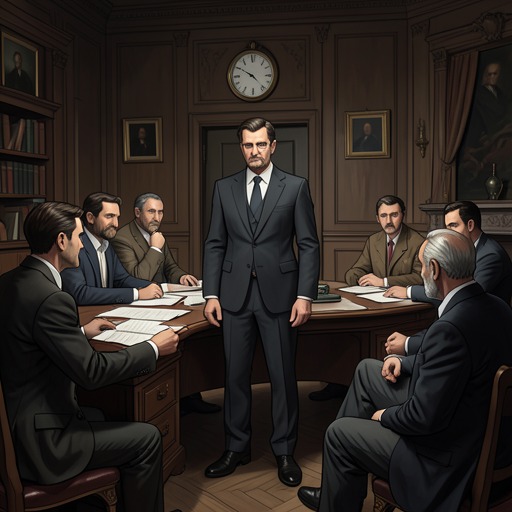
His colleagues and friends offer competing interpretations of his conduct. When he imagines an intervention, he can predict the different complaints each person might bring: Teddy Barnes would question his love for Lily; his mother would object to the cleverness he has become; Billy Quigley and Meg Quigley would each criticize him in their own terms; Finny and Paul Rourke would challenge his principles; and Dickie Pope would call him too idealistic. The imagined gathering reveals a man who is simultaneously known by many people and unable to summarize what, precisely, they think is wrong with him. He calls himself a vague source of collective irritation, turning the possibility of serious concern into another comic observation.
His dealings with Paul Rourke and Herbert Schonberg sharpen the conflict between self-protection and professional responsibility. When they visit, Devereaux understands that they want something from him and takes satisfaction in their leaving without it. He describes himself as still elusive and at large, a phrase that makes resistance sound like a successful escape. Yet the wider university dispute ultimately leaves him confronting the possibility that the people who see him as out of control may have grounds for concern. His satirical independence has consequences inside a department where he is not merely an observer but its chair.
Crisis, Choice, and Renewed Writing
After a departmental vote, Devereaux hides in the crawl space above the Modern Languages Building. The contrast between his professional appearance—tweed coat, tie, and scuffed loafers—and his predicament makes the episode comic, but his own assessment is grave. Nearly fifty years old, he recognizes that his colleagues’ judgment of him as a loose cannon can no longer be dismissed as alarmism. The university crisis has turned his familiar role as commentator into a direct personal predicament: he is a department chair whose conduct has become part of the institution’s turmoil.
The crawl-space episode also gives him an unexpected encounter with Russell, his son-in-law. Russell finds him in the parking lot and reacts to his condition with a mixture of alarm and humor. Their exchange gives Devereaux a small point of connection outside the department’s arguments. Elsewhere, Charles Purty offers Devereaux a fake nose, glasses, and mustache without accepting payment. Such practical, eccentric gestures sit beside the elaborate professional disputes and help show the ordinary network of people around him, even when he imagines himself as a man slipping free of their claims.
A separate crisis brings Devereaux face to face with mortality and desire. After a doctor raises concern about an asymmetry in his prostate, he admits that he does not want to die, even as he recognizes that part of him would be thrilled by the news of a serious illness. He likewise does not want Lily to leave, but finds himself moved by the possibility of a new love entering her life. The contradiction does not resolve into a stable position; it exposes how little he understands his own wishes. In a later confrontation, Jacob Rose asks him what he wants. Devereaux answers that he wants to urinate. The blunt answer cuts through the grand emotional question without making it disappear: physical need is immediate, but it is also the route through which a larger crisis becomes legible.
The medical explanation for his urinary trouble does not satisfy Devereaux’s sense of meaning. He interprets a sound he hears while urinating as evidence that he has passed a stone, while his physician, Phil Watson, rejects that literal diagnosis. Watson allows that Devereaux’s decision to refuse a deanship and relinquish tenure may be understood as a symbolic equivalent, but maintains that symbolism and physical fact are distinct. Devereaux’s response to the crisis is therefore both practical and interpretive: he leaves the university rather than accept a higher post, while continuing to search for a story that can make the choice intelligible.
Grief, Change, and Narrative Significance
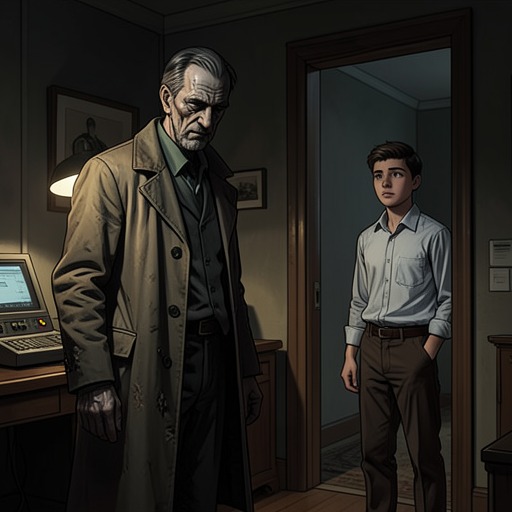
Devereaux’s father returns to Railton with his mother and dies in mid-July, quietly seated in his favorite reading chair with a book open. His mother initially assumes he is asleep. The death affects Devereaux more than he expected, despite the distance between father and son and the scarcity of their conversations. He remembers their visit to an old midway, when his father admitted fearing that he might once have wronged Dickens, as their closest approach to intimacy. In retrospect, Devereaux sees his father’s intellectual sophistication as a means of keeping disturbing truths at a distance. His father could feel deeply, but a lifetime of controlling and interpreting feeling had loosened its connection to the circumstances that gave it meaning.
The father’s death alters Devereaux’s understanding of both inheritance and authorship. He is now the last surviving William Henry Devereaux, but describes himself as his own man at last. The claim is not a clean severance: his father’s life and work become material for an essay that Devereaux has begun writing, and the essay is the part of a forthcoming collection that his agent considers his strongest work. The collection, The Goose Slayer, will gather his university satires, while the essay about his father departs from their usual comic register. That difference matters. Devereaux’s return to writing does not simply restore the satirist; it makes room for a form of attention that cannot be reduced to a joke.
His final self-assessment is cautiously peaceful rather than triumphant. He remains married to Lily Devereaux, is no longer plagued by fantasies of her making love to his friends, and believes their affection has strengthened. His father’s death has clarified how much intellectual cleverness can distance a person from what is most personally at stake, while leaving him with no claim to complete understanding. Devereaux’s narrative role rests on that tension: he is an agile interpreter of other people and institutions, but the decisive changes in his life arrive when interpretation fails to provide control. Writing again, grieving his father, and leaving his university position do not settle every question. They give him a less defensive way to live with questions that cannot be answered by wit alone.