William Henry Devereaux, Sr.
Straight ManWilliam Henry Devereaux, Sr. is an eminent literary critic, an emotionally remote father, and a man whose carefully composed intellectual authority eventually gives way to grief. His story is framed by two burials: as a young father he digs a grave for his son’s first dog, Red; decades later, his son imagines him watching as he buries another beloved animal. Between those scenes, a career built on literary distinction repeatedly places thought and reputation between Devereaux and the people closest to him, until a late admission of guilt offers an imperfect moment of intimacy.
Identity and Background
Devereaux is an ambitious academic who moves between universities in the era when New Criticism is already becoming old-fashioned. He accepts distinguished visiting professorships, usually lasting a year or two, and his appointments give him light teaching responsibilities while institutions provide time and support for scholarship. His wife, also an English professor, is hired as part of the arrangement and carries a full teaching load. The family lives in a succession of university-owned or campus-adjacent houses; by the time his son is nine, their current home is the fourth.
His professional gifts include an ability to appear self-sufficient. A photograph of the young Devereaux suggests a man who needs little help, even though his wife read, discussed, and edited his first book of criticism. Her contribution receives only brief acknowledgment in its fine print, alongside institutional support and grants. The book establishes his reputation, and his later career brings further scholarly publications and broad recognition. In later years he is sometimes credited as the Father of American Literary Theory; a literary memoir about twentieth-century writers also reaches the shortlist for a major award. The polished public image, however, does not capture the son’s more intimate memory of his father: a man in ruined loafers, holding a borrowed shovel beside a dog’s grave.
Family Life and the First Dog
Devereaux’s son remembers an exasperating childhood, a description on which both parents agree even after their divorce during his junior high years. The child is lonely and wants a dog. His mother makes one conditional promise: if he can stop slamming the screen door, she will consider it. The door’s spring makes its repeated impact audible throughout the house, so the request becomes a daily test of the boy’s efforts to change his behavior.
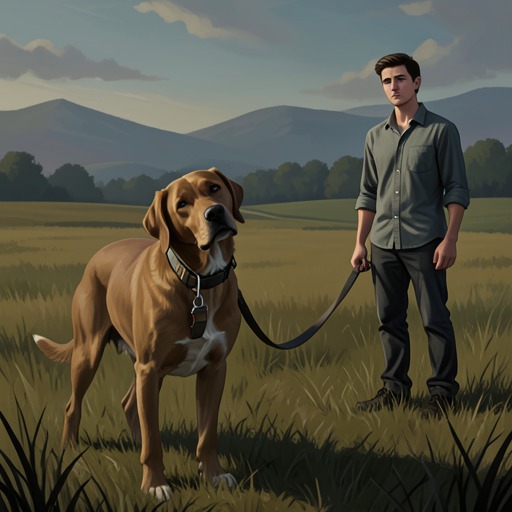
At the end of a week in which the boy manages to avoid slamming the door about half the time, Devereaux goes out one Saturday morning without explaining where he is going. He returns with a dog in the car. The child has pictured puppies or a young, lively companion, but the dog is an elderly, rust-colored Irish setter, carefully groomed and so quiet that it seems almost like a portrait. It had belonged to a retired university professor who had recently entered a nursing home. The choice suits a household subject to a university no-pets rule, but it is far from the pet the boy had imagined. He names the dog Red. The dog dies almost immediately after arriving, and Devereaux digs the grave himself. The scene becomes an unusually concrete memory of shared family life: unlike much of his father’s career, the work of digging does not originate on a printed page.
The dog story later circulates through the newspaper, prompting readers to ask for more about Devereaux. His wife objects that the account portrays him unfairly, while readers respond sympathetically to the father’s effort to please a stubborn child. Their different readings reflect the family’s competing versions of him: celebrated scholar, disappointing husband, or father whose strained attempt at kindness becomes clearest in a single, difficult afternoon.
Career, Distance, and the Columbia Crisis
After Red’s burial, Devereaux accepts a full professorship at Columbia University and leaves the itinerant pattern of his son’s childhood. The university offers him a subsidized apartment within walking distance, a salary unusually high for the late 1960s, a prestigious chair, and limited classroom duties. He edits a scholarly magazine, directs a library collection, and has a research assistant handle many tasks, including grading the undergraduate course he teaches each year. His public role is largely to continue producing scholarship and to acknowledge the institution that supports it.
Yet at the start of his first September term, Devereaux discovers that he cannot deliver a familiar lecture. In front of his students, his mind goes blank and he cannot produce a relevant word. He leaves for the hallway, where the lecture returns to him, and writes its opening sentences on a paper towel as a precaution. When he returns to the classroom, even the letters on the page seem scrambled; he cannot make sense of them and cancels the class, asking the students to return on Thursday. The episode overturns the confidence attached to his academic success: his difficulty is not lack of preparation, but a sudden failure of speech and comprehension.
Years later, he recounts the episode to his son as a crisis of the soul, apparently hoping to place the younger man’s own troubles in a broader human context. But the story keeps slipping back toward Devereaux’s salary, reputation, and eventual triumph. He tells of overcoming the crisis and giving a forceful lecture on Dickens’s Bleak House, yet his return to professional command does not make him more perceptive about the conversation he is having. The son recognizes that his father is often speaking to himself even when he appears to be speaking with someone else.
Return to Railton and a Late Admission
When Devereaux returns to Railton, Charles Purty has been courting the narrator’s mother for a long time. Seeing the reunited couple together finally makes Purty understand that his hopes are misplaced. Devereaux does little to help him, consistent with the son’s recollection that the most substantial physical work he had ever seen his father do was digging Red’s grave. Purty also reports that Devereaux cries repeatedly, a disclosure that initially seems difficult for the son to reconcile with his father’s controlled, reasonable manner.
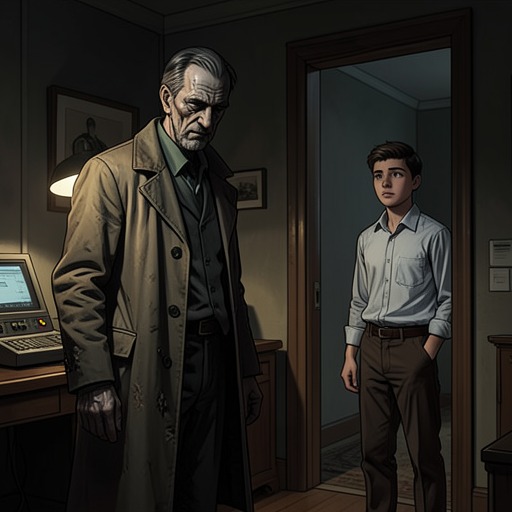
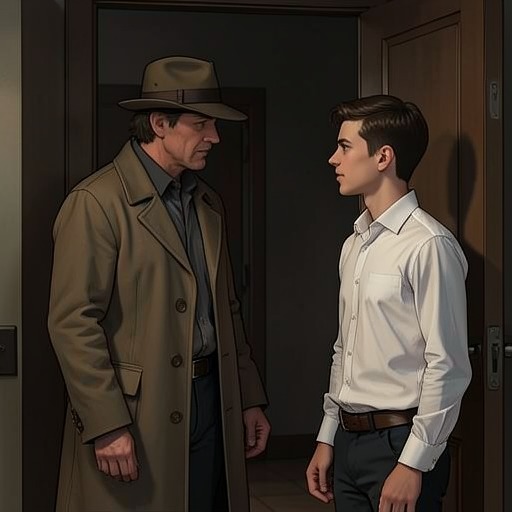
The reunion after nearly a decade is awkward. Devereaux is visibly aged, and father and son greet each other with a handshake before falling into silence. Their meeting takes place at the family home, where Devereaux dozes in his wife’s reading chair. The son sees the distance between the father he remembers and the older man before him, but neither knows how to bridge it. The formal exchange of names does not create an easy conversation; their shared history has left them with more silence than familiarity.
At the old midway, Devereaux tries to offer his experience at Columbia as reassurance. His account wanders from the crisis itself into recollections of his high salary and scholarly distinction. Then he says that he has recently begun rereading Dickens, a writer whose work he had long criticized as mawkish and often appalling. He now senses a power in the novels that his former judgments missed and feels that he may have sinned against the author. The son is struck by the confession: his father has located his guilt in his treatment of Dickens, rather than in the injuries or absences within his family. As he speaks, Devereaux begins to cry and cannot finish what he was trying to say. For the son, this becomes their closest approach to intimacy—not a reconciliation worked out in conversation, but a moment when his father’s emotional reserve falters.
Death, Inheritance, and the Final Echo
Devereaux dies quietly in mid-July, seated upright in his favorite reading chair and dressed as if for a faculty meeting. He is wearing a tweed jacket, corduroy slacks, and an oxford shirt, and is reading Dickens’s Our Mutual Friend. His wife thinks he is napping and avoids disturbing him. The composed scholarly image remains, but the book in his hands recalls the admission that had brought him closest to his son.
The death affects the son more powerfully than he expected. He concludes that Devereaux’s intellectual sophistication had helped keep disturbing personal truths and fears at a distance. His father could feel deeply, but those feelings seemed to arise without a clear connection to the relationships around him. His wife, meanwhile, appears released from an obligation she had maintained despite their separation, and turns to his papers. She discovers two hundred manuscript pages of a novel written nearly twenty-five years earlier. The son has already seen the manuscript after colleagues in his English department passed it to him, and his refusal to read it again disappoints her. Their different responses to the discovery show how much of Devereaux’s life remains attached to his writing, even after his death.
Later, after the son returns home from the hospital with Lily and Angelo, Occam dies and the son buries him near the woods. He imagines Devereaux watching from the back deck, with the two men separated by roughly fifty yards. The son’s blistered hands and damaged clothes recall the old burial of Red, and he understands that the parallel would have mattered to his father, who might have seen it as proof of a son who resembles him after all. The imagined exchange remains wry rather than reconciliatory: the son notes that he did not have to borrow a shovel. Devereaux’s legacy thus persists not as a simple lesson or repaired relationship, but as a resemblance the son recognizes only while repeating one of his father’s rare acts of practical care.