Lanyon witnesses the transformation
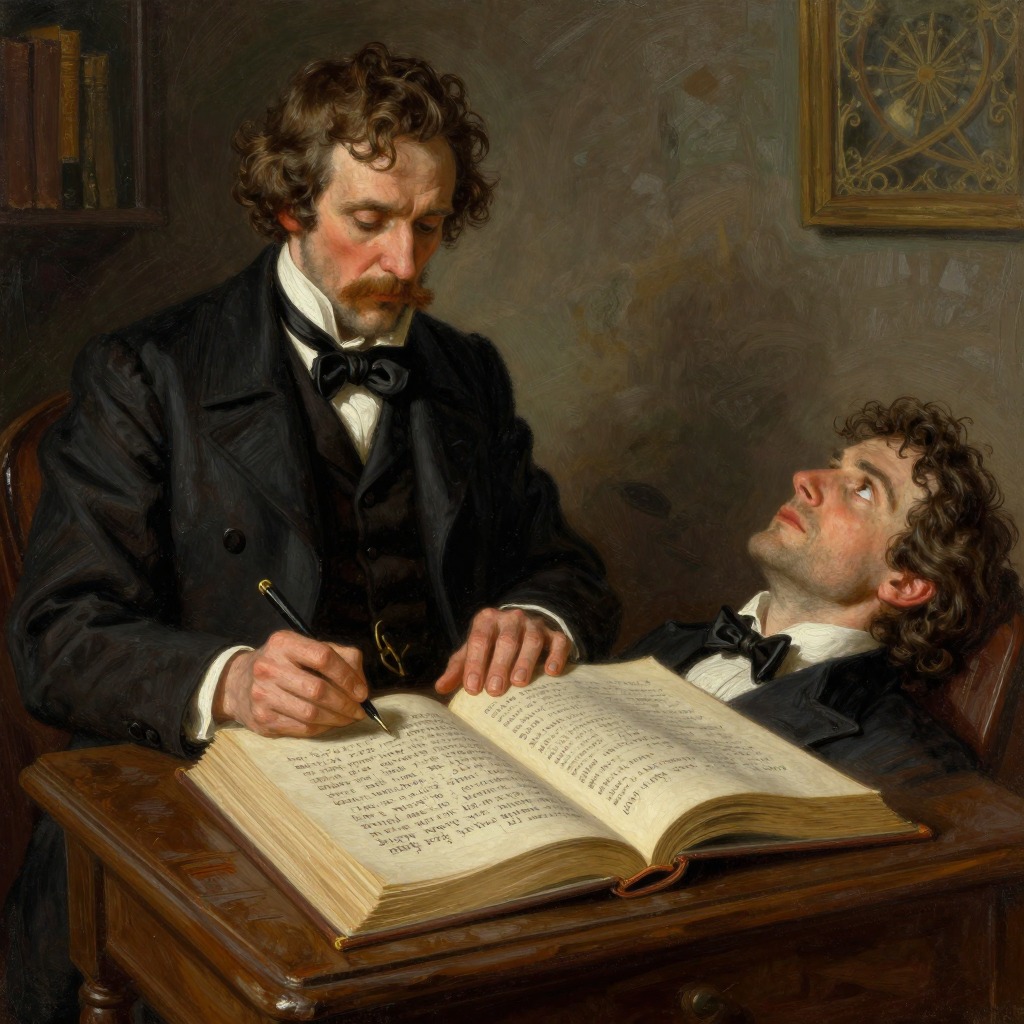
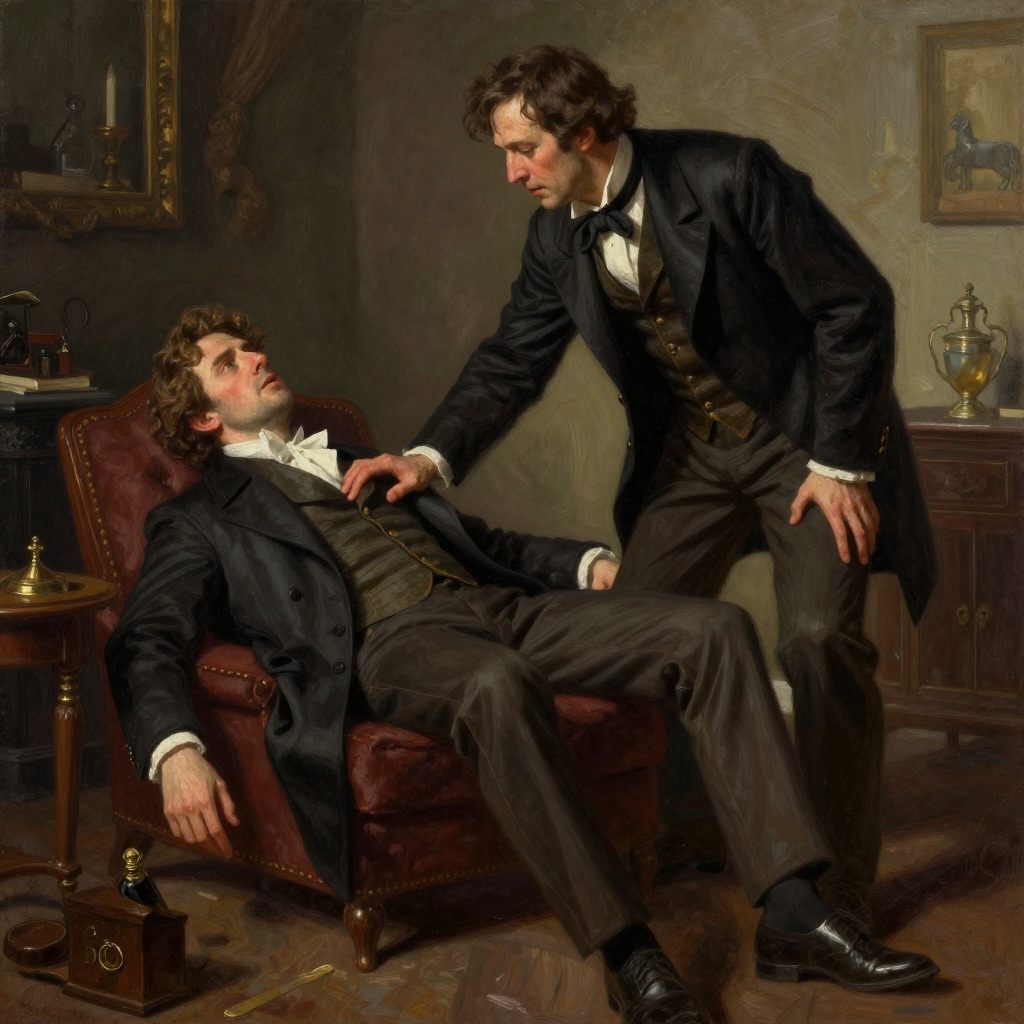
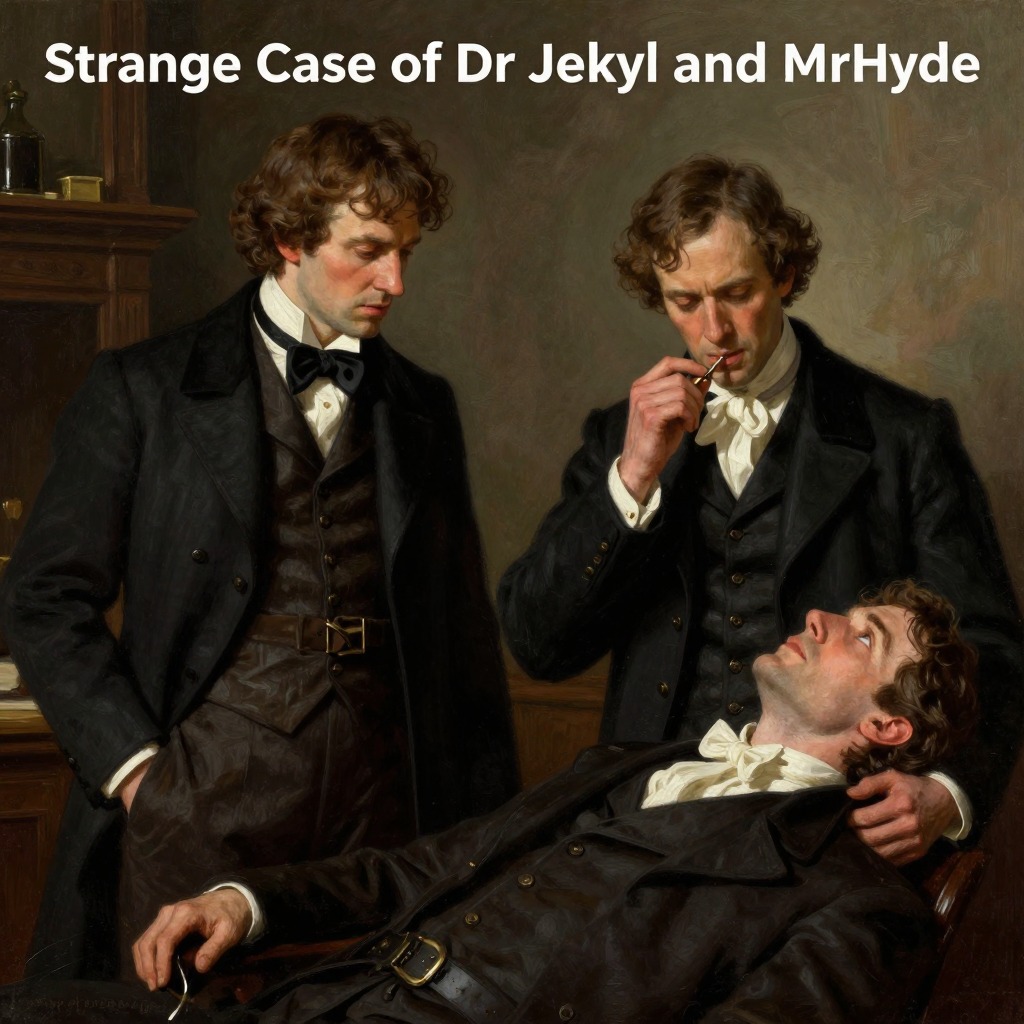
Strange Case of Dr Jekyll and Mr HydeDr. Hastie Lanyon, a hearty and rational man of science, becomes the sole external witness to the physical transformation that lies at the heart of the Jekyll-Hyde mystery. The event, which takes place in Lanyon's own consulting room in Cavendish Square on the night of January 9th, is the story's climactic revelation of the supernatural truth. It is a scene of such profound horror that it destroys Lanyon's health and sanity, leaving him a doomed man who dies within a fortnight, his worldview shattered by a prodigy that staggers belief itself.
The Summons and the Preparation
The event is set in motion by a desperate, registered letter from Henry Jekyll, an old school companion from whom Lanyon had become estranged over scientific disagreements. The letter, dated December 10th, makes an urgent and bizarre appeal: Lanyon must postpone all engagements, drive immediately to Jekyll's house, force open the cabinet door with the help of a waiting locksmith, and retrieve a specific drawer from a glazed press. This drawer, containing some powders, a phial, and a paper book, is to be brought back to Cavendish Square. At midnight, Lanyon is to admit a man who will present himself in Jekyll's name and hand over the drawer. The letter is frantic, warning that failure could result in Jekyll's death or the shipwreck of his reason. Lanyon, though convinced his colleague is insane, feels bound by the gravity of the appeal and carries out the instructions to the letter, even loading an old revolver for self-defense against the unknown.
The Visitor and the Potion
At the stroke of midnight, a small man arrives at Lanyon's door, crouching against the pillars and casting a searching backward glance at a policeman. Lanyon is immediately struck by the visitor's shocking expression, a combination of great muscular activity and apparent debility, and by an odd, subjective disturbance—a marked sinking of the pulse—that he initially attributes to personal distaste. The man is grotesquely dressed in clothes far too large for him, the trousers hanging and rolled up, the coat waist below his haunches. Despite his ludicrous appearance, the visitor is on fire with somber excitement, demanding the drawer with an impatience that borders on hysteria. Once the drawer is produced, he measures out a few minims of a blood-red tincture and adds one of the white crystalline salts. The mixture effervesces, changes from reddish to dark purple, and then fades to a watery green. Before drinking, the visitor offers Lanyon a choice: let him leave in peace, or stay and witness a prodigy that will stagger the unbelief of Satan. Lanyon, his curiosity overriding his caution, chooses to see the end.
The Transformation and Its Aftermath
The visitor puts the glass to his lips and drinks. A cry follows; he reels, staggers, and clutches the table, his face blackening and his features seeming to melt and alter. Lanyon, springing to his feet and leaping back against the wall, screams "O God!" again and again as, before his eyes, the creature transforms. Where the small, detestable man had stood, there now appears Henry Jekyll—pale, shaken, and groping with his hands like a man restored from death. Lanyon is utterly destroyed by what he has seen. He cannot bring his mind to set the full account on paper, stating only that his life is shaken to its roots, that sleep has left him, and that the deadliest terror sits by him at all hours. He knows his days are numbered. The creature who crept into his house that night was, on Jekyll's own confession, Edward Hyde, the murderer of Sir Danvers Carew. Lanyon dies within a fortnight, leaving behind a sealed narrative to be opened only upon Jekyll's death or disappearance.