Lanyon's sealed envelope
Strange Case of Dr Jekyll and Mr HydeLanyon's sealed envelope is the physical vessel for the most direct eyewitness testimony of the supernatural events at the heart of the novel. It is a document that bridges the gap between the rational world of the characters and the impossible truth they must confront, and its delayed opening structures the final act of the mystery.
Origin and Delivery
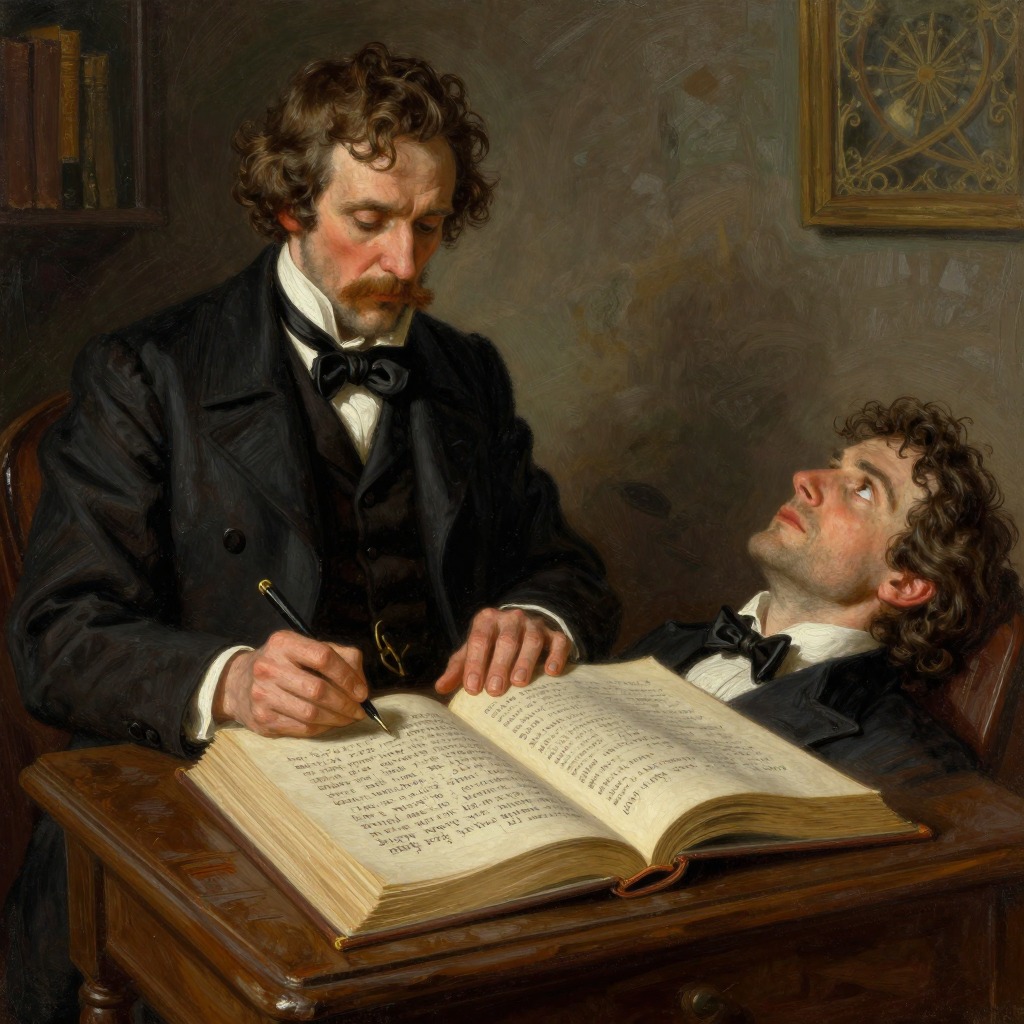
The envelope originates from Dr. Hastie Lanyon in the final days of his life. After witnessing the transformation of Edward Hyde into Henry Jekyll, Lanyon is shattered both physically and mentally. He writes an account of what he saw and seals it in an envelope, which he addresses to Mr. Utterson. The envelope is emphatically superscribed: "PRIVATE: for the hands of G. J. Utterson ALONE, and in case of his predecease to be destroyed unread." This instruction underscores the gravity and secrecy of its contents. Lanyon delivers the envelope to Utterson shortly before his death, which occurs less than a fortnight after he takes to his bed.
Contents and Conditions
Inside the outer envelope, Utterson finds another enclosure, likewise sealed, and marked upon the cover as "not to be opened till the death or disappearance of Dr. Henry Jekyll." This second seal creates a deliberate narrative postponement. Utterson, who has already been troubled by Jekyll's strange will with its similar disappearance clause, is struck by the recurrence of the idea of disappearance and the name of Henry Jekyll bracketed together. He is consumed by curiosity but bound by professional honour and faith to his dead friend, so he places the packet in the inmost corner of his private safe, where it remains unopened for the duration of the story's main events.
Role in the Final Revelation
The envelope is finally retrieved during the climactic night when Poole and Utterson break into the cabinet. After they find the body of Edward Hyde, Utterson discovers a note from Jekyll directing him to read Lanyon's narrative. Poole then hands Utterson "a considerable packet sealed in several places," which is the inner envelope from Lanyon. Utterson puts it in his pocket and resolves to read it at home in quiet, planning to return before midnight to summon the police. The envelope thus contains the first complete explanation of the mystery, which Utterson reads alongside Jekyll's own confession.
Narrative Significance
Lanyon's sealed envelope functions as a structural device that controls the release of information. It ensures that the most shocking revelation—the physical transformation of Hyde into Jekyll—is withheld from the reader until the very end, after the suspense of the last night has been resolved. The envelope also represents the failure of the rational, scientific worldview that Lanyon embodied; his testimony is the product of an experience that destroyed his faith in material reality. By sealing his account and imposing conditions on its opening, Lanyon ensures that the truth will only be known after the danger has passed, preserving the mystery until the final pages.