the by-street
Strange Case of Dr Jekyll and Mr HydeThe by-street is a small, quiet thoroughfare in a busy quarter of London that serves as the physical and symbolic gateway to the hidden world of Dr. Jekyll and Mr. Hyde. It is the site of the mysterious door through which Hyde enters and exits, the location of the child trampling incident that first brings Hyde to public attention, and the place where Utterson and Enfield witness Jekyll's sudden terror at the window. The street's contrast between respectable commerce and sinister neglect mirrors the duality at the heart of the novel.
Location and Appearance
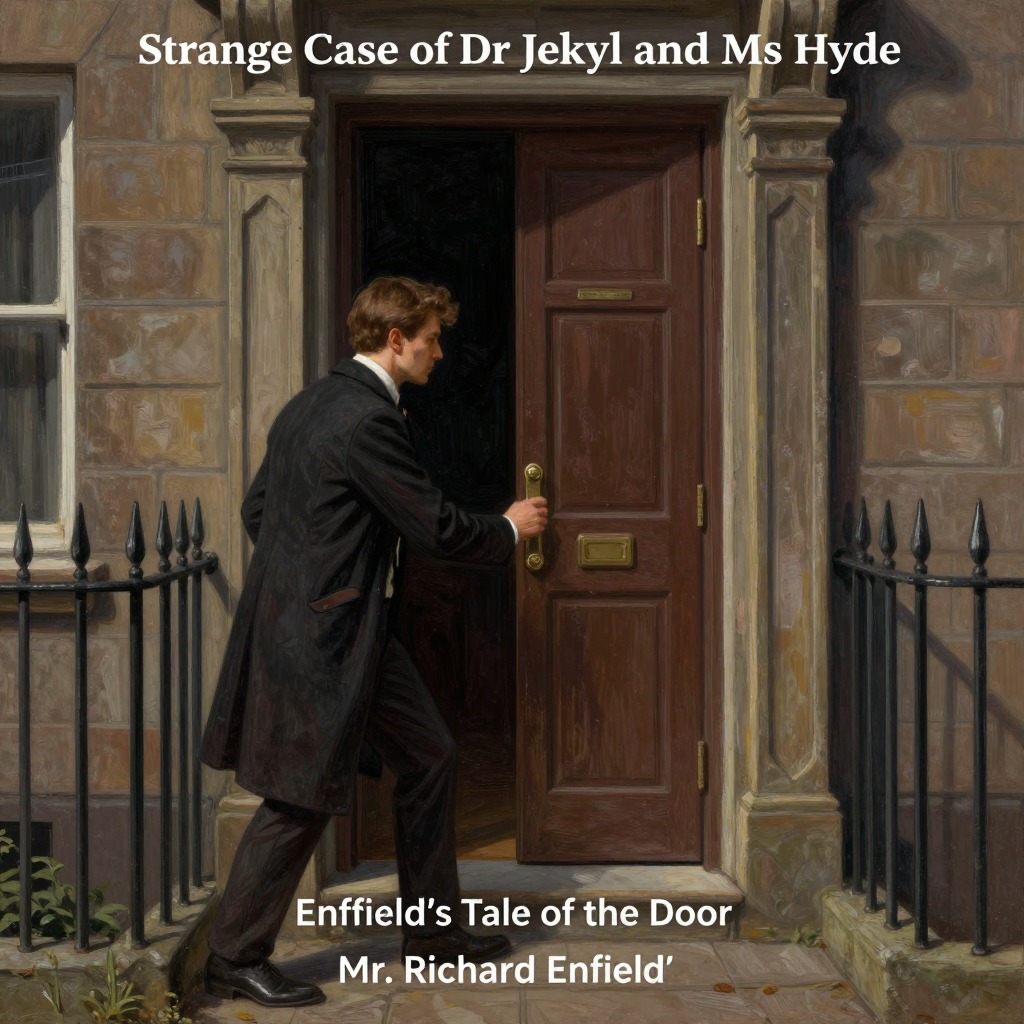
The by-street lies in a busy quarter of London, a small and quiet lane that nevertheless drives a thriving trade on weekdays. Its inhabitants are all doing well, and the shop fronts stand along the thoroughfare with an air of invitation, like rows of smiling saleswomen. Even on Sunday, when it is comparatively empty, the street shines out in contrast to its dingy neighbourhood, like a fire in a forest, with freshly painted shutters, well-polished brasses, and a general cleanliness and gaiety of note that instantly catches and pleases the eye of the passenger. Two doors from one corner, on the left hand going east, the line is broken by the entry of a court; and just at that point a certain sinister block of building thrusts forward its gable on the street. It is two storeys high, shows no window, nothing but a door on the lower storey and a blind forehead of discoloured wall on the upper, and bears in every feature the marks of prolonged and sordid negligence. The door, equipped with neither bell nor knocker, is blistered and distained. Tramps slouch into the recess and strike matches on the panels; children keep shop upon the steps; the schoolboy has tried his knife on the mouldings; and for close on a generation, no one has appeared to drive away these random visitors or to repair their ravages.
Key Events
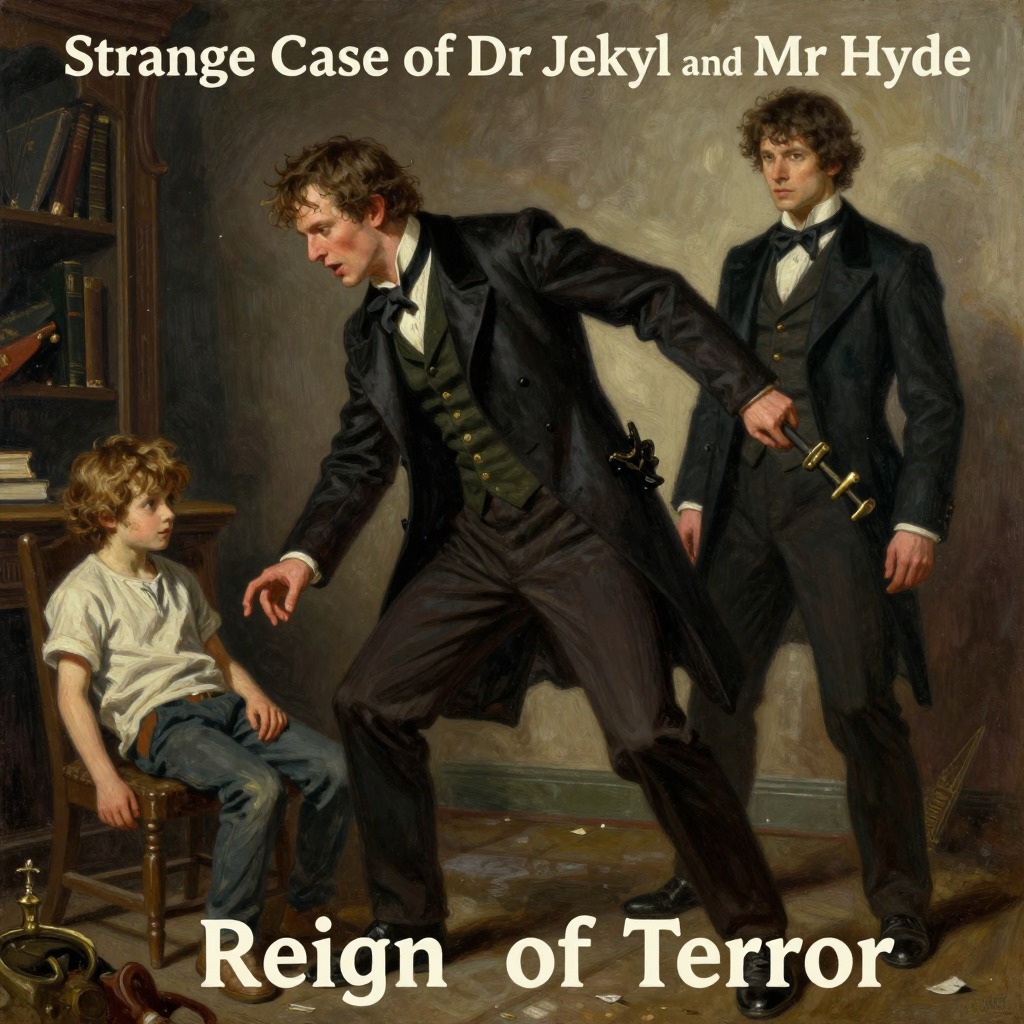
The by-street is the setting for the child trampling incident that first introduces Mr. Hyde to the reader. Mr. Enfield, walking home at about three o'clock of a black winter morning, sees a little man stumping along eastward and a girl of maybe eight or ten running as hard as she is able down a cross street; the two run into one another at the corner, and the man tramples calmly over the child's body and leaves her screaming on the ground. Enfield collars the man and brings him back to where a group has gathered about the screaming child, and the man—Hyde—eventually produces a cheque drawn on the account of a well-known and respected gentleman to pay off the family. The by-street door is the place to which Hyde carries Enfield and the others to get the money; he whips out a key, goes in, and presently comes back with ten pounds in gold and a cheque for the balance. From that time forward, Mr. Utterson begins to haunt the door in the by-street of shops, in the morning before office hours, at noon when business is plenty and time scarce, at night under the face of the fogged city moon, by all lights and at all hours of solitude or concourse. It is here that Utterson finally confronts Hyde, stepping out and touching him on the shoulder as he passes, and here that Hyde gives Utterson his address in Soho before disappearing into the house. The by-street also appears in the incident at the window, when Utterson and Enfield, on their usual Sunday walk, stop to gaze at the door and then step into the court to look at the windows, where they see Dr. Jekyll sitting close beside the middle window, taking the air with an infinite sadness of mien, like some disconsolate prisoner. The smile is struck out of his face and succeeded by an expression of such abject terror and despair that it freezes the very blood of the two gentlemen below, and they turn and leave the court without a word.
Narrative Significance
The by-street functions as a liminal space between the respectable world of Dr. Jekyll and the hidden, criminal world of Mr. Hyde. Its door is the physical threshold between the two identities, and the street itself becomes a site of surveillance and revelation. Utterson's patient haunting of the by-street—his decision to become "Mr. Seek"—demonstrates his determination to uncover the truth about his friend's mysterious connection to Hyde. The street's contrast between the prosperous, inviting shops and the sinister, neglected building with its blistered door mirrors the novel's central theme of duality: the respectable surface of Victorian society concealing a hidden, monstrous reality. The by-street is also the place where the two worlds most visibly intersect, as Hyde uses the door to move between his Soho residence and Jekyll's house, and where the mystery of their connection first becomes visible to the outside world through Enfield's story and Utterson's investigation.