the cheque drawn by Henry Jekyll
Strange Case of Dr Jekyll and Mr HydeThe cheque drawn by Henry Jekyll appears in the novel's first chapter as the material evidence that connects the respectable doctor to the detestable Mr. Hyde. It is a cheque for close upon a hundred pounds, drawn on Coutts's bank, payable to bearer, and signed with a name "at least very well known and often printed." Mr. Richard Enfield, who witnessed the incident that led to the cheque, describes the signature as "good for more than that if it was only genuine," and later verifies its authenticity at the bank. The cheque thus functions as the first tangible proof that Jekyll, a man celebrated for his propriety and charitable works, is financially and personally linked to Hyde, a man Enfield calls "a really damnable man."
The Circumstances of the Cheque's Creation
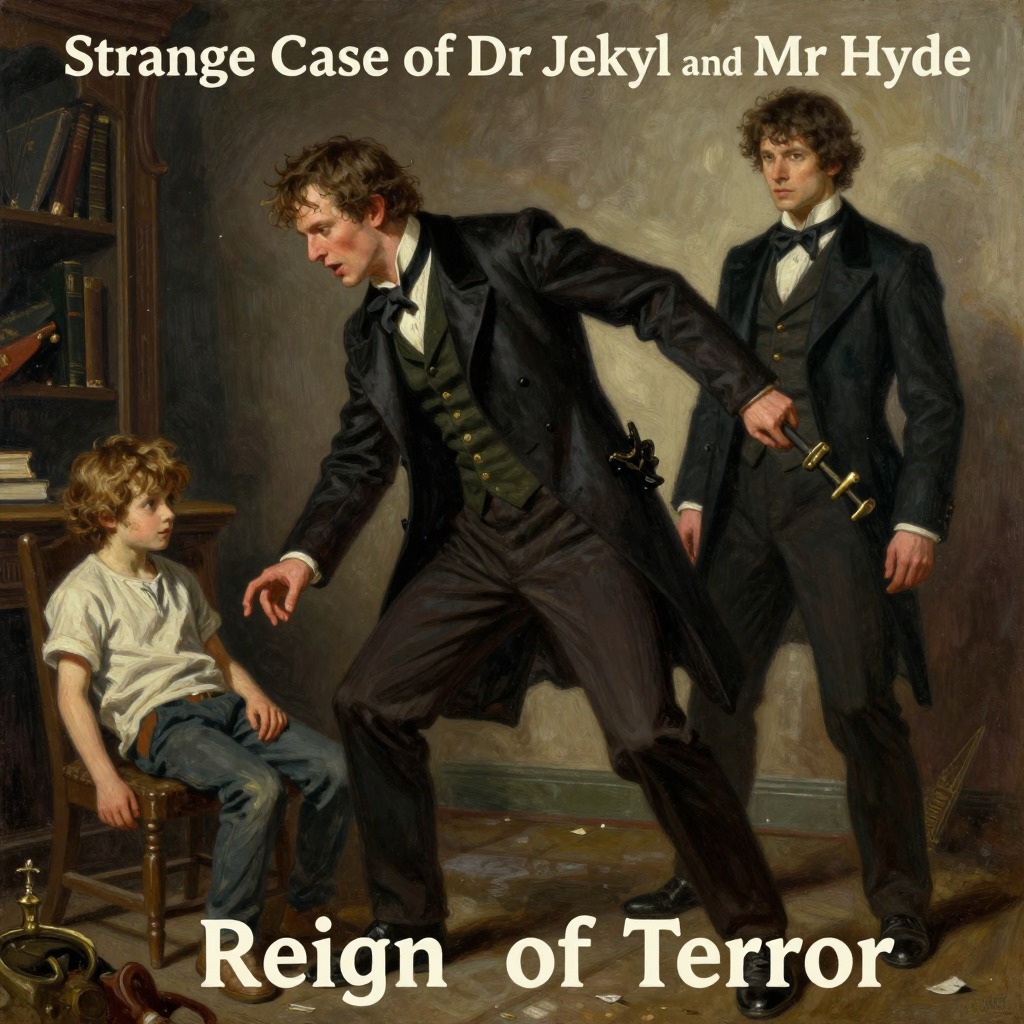
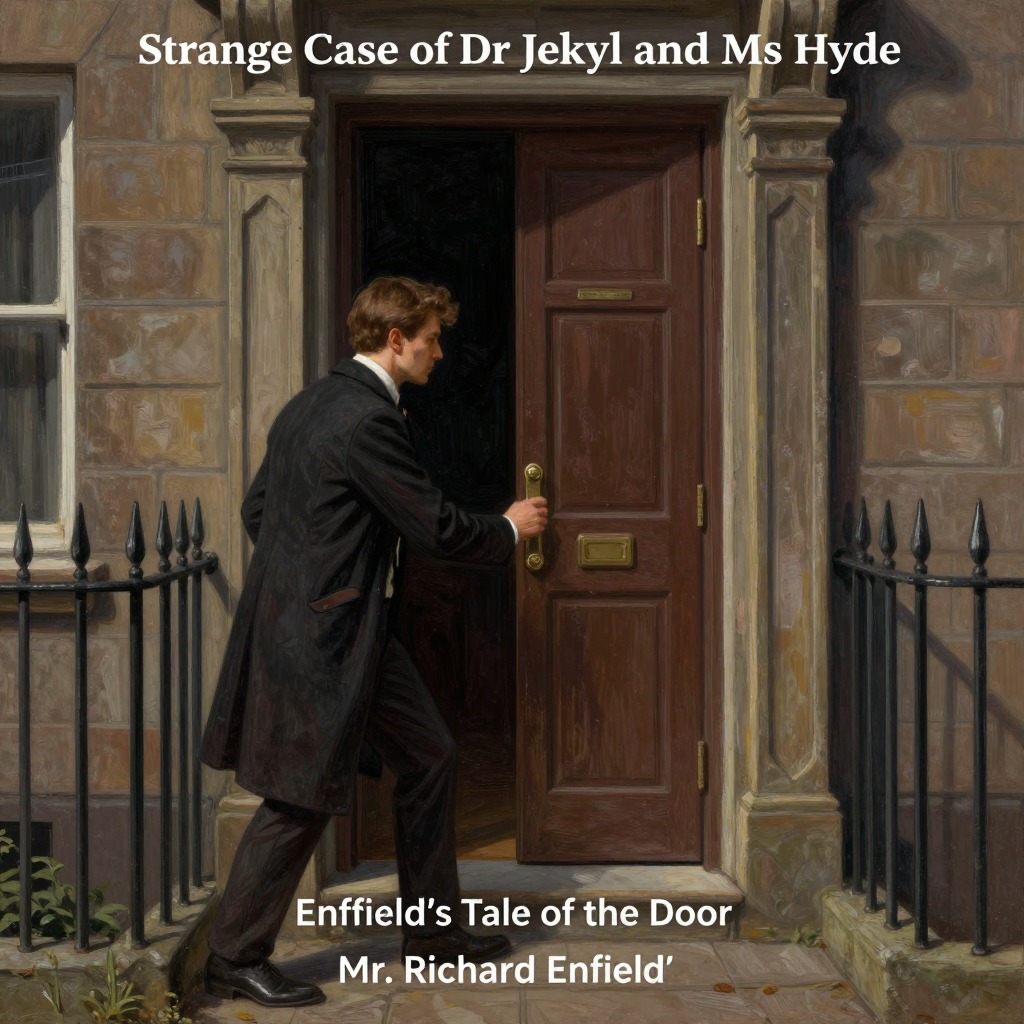
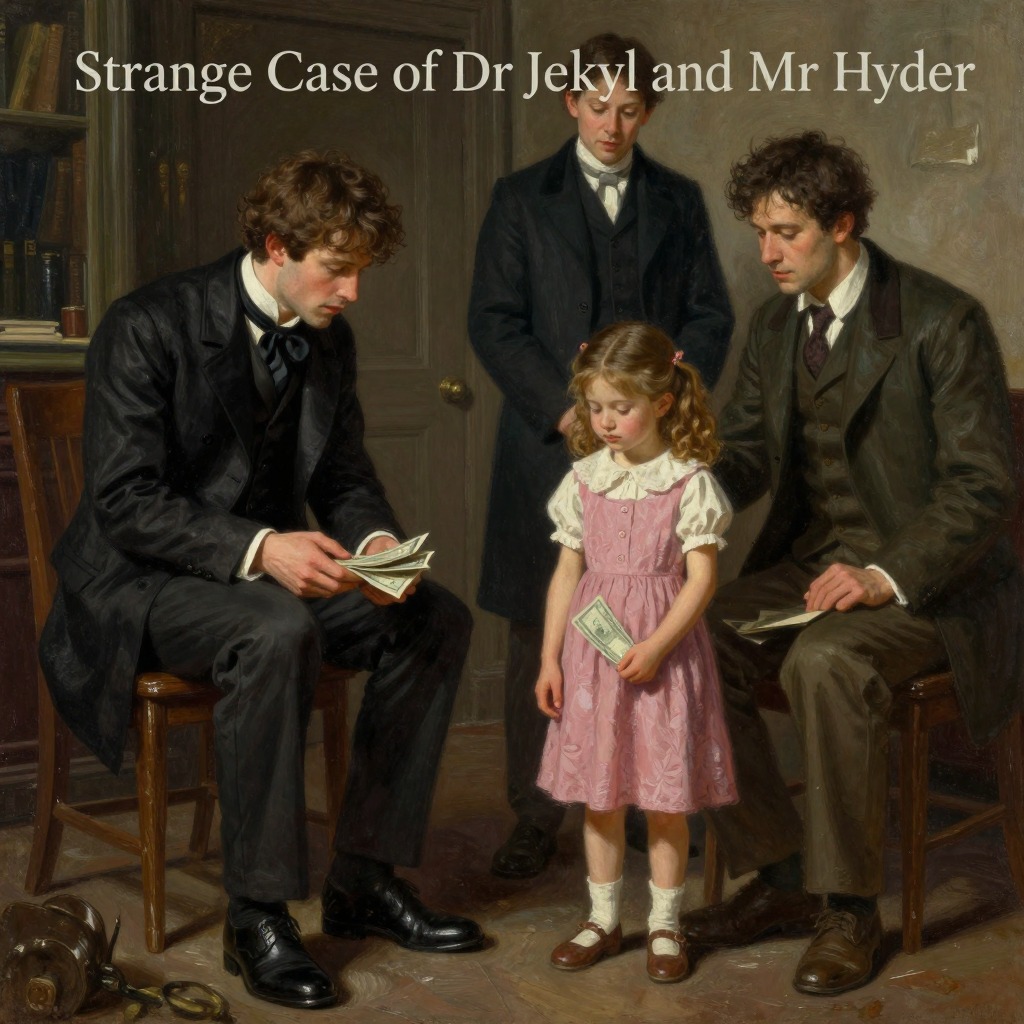
The cheque was produced in the aftermath of a disturbing incident in which Hyde trampled a young girl in the street. Enfield, the child's family, and a doctor confronted Hyde, who offered to pay compensation to avoid a scandal. When Enfield demanded the money, Hyde led them to the door of a sinister building—later revealed to be a back entrance to Jekyll's property—where he disappeared inside and returned with ten pounds in gold and the cheque for the balance. The cheque was drawn on Coutts's bank, a prestigious institution, and signed with a name Enfield cannot bring himself to utter, though he implies it is Jekyll's. The production of the cheque in the middle of the night from a dilapidated door, and the fact that it was accepted by the bank the next day, deepens the mystery of Hyde's connection to Jekyll.
The Cheque as Evidence of a Hidden Relationship
When Enfield recounts the story to Mr. Utterson, the lawyer immediately recognizes the significance of the cheque. Utterson, who knows Jekyll's will and has long been troubled by its provisions in favor of Hyde, realizes that the cheque confirms his worst suspicions: Jekyll is not merely a benefactor to Hyde but is somehow complicit in his actions. Utterson's reaction—a muttered "Tut-tut" and a deep sigh—signals his dismay. The cheque, along with the key Hyde uses to enter Jekyll's property, establishes that Hyde has access to Jekyll's resources and that Jekyll is willing to pay for Hyde's misdeeds. Enfield himself speculates that the cheque represents "black mail," an honest man paying for the indiscretions of his youth, though he admits this explanation is incomplete.
The Cheque's Role in the Narrative
The cheque drawn by Henry Jekyll is a crucial piece of evidence that sets the plot in motion. It is the first concrete object that forces Utterson to confront the possibility that Jekyll is entangled with a man of Hyde's character. The cheque's authenticity, confirmed by the bank, proves that Jekyll is not merely a victim of Hyde's manipulation but an active participant in covering up Hyde's crimes. This object thus serves as a narrative hinge, turning Utterson's vague unease into a focused investigation and foreshadowing the deeper, more horrifying truth of Jekyll's dual identity. The cheque, like the will and the key, is a material sign of the bond between Jekyll and Hyde, a bond that Utterson will spend the rest of the novel trying to understand.