the child of Hell
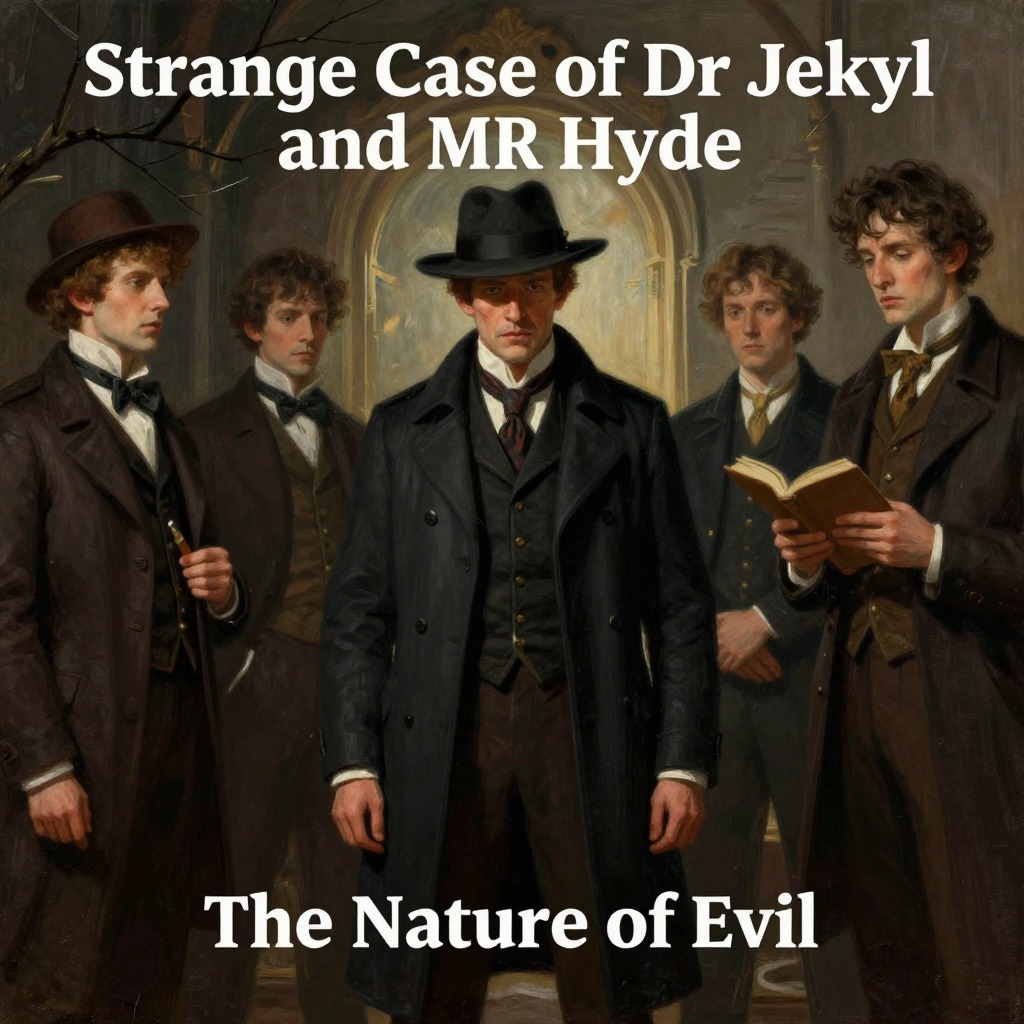
Strange Case of Dr Jekyll and Mr HydeThe child of Hell is a phrase that appears in Henry Jekyll's written confession, the final document that unravels the mystery of his double life. Jekyll uses the term to describe Edward Hyde, the being that he himself brought into existence through a chemical experiment. The expression is not merely a dramatic epithet; it crystallizes Jekyll's ultimate judgment on Hyde's nature and his own responsibility for creating a creature of pure evil.
Origin and Context of the Phrase
The phrase occurs in the tenth chapter of the narrative, "Henry Jekyll's Full Statement of the Case," as Jekyll recounts the night he sent Hyde to fetch the transformative drug from Dr. Lanyon. Jekyll writes: "He, I say—I cannot say, I. That child of Hell had nothing human; nothing lived in him but fear and hatred." The moment is pivotal: Jekyll is describing Hyde's state of mind during the hours before Lanyon's experiment, when Hyde, trapped in his own body and hunted for the murder of Sir Danvers Carew, roamed London in a frenzy of terror and rage. Jekyll's refusal to say "I" marks a radical dissociation—he no longer identifies with Hyde, even though Hyde is a part of himself.
Meaning and Thematic Significance
The phrase "child of Hell" carries several layers of meaning. First, it asserts Hyde's complete inhumanity: Jekyll states that Hyde "had nothing human" in him, reducing him to a being driven solely by base passions. Second, it implies a diabolical origin, aligning Hyde with the demonic and the infernal. Third, the word "child" suggests both creation and dependency—Hyde is Jekyll's offspring, brought forth by his own scientific ambition and moral weakness. The phrase thus encapsulates the central theme of the novel: the duality of human nature and the horror that arises when one side of that duality is allowed to dominate. Jekyll's use of the term also reflects his own moral awakening; he now sees Hyde not as a separate entity but as the product of his own choices, a "child" he cannot disown.
Relationship to Jekyll's Self-Understanding
Jekyll's deployment of the phrase "child of Hell" marks a crucial shift in his self-awareness. Earlier in his confession, he describes Hyde with a mixture of fascination and detachment, referring to him as "my double" or "my second self." But as the narrative progresses and Hyde's actions become increasingly monstrous, Jekyll's language grows more condemnatory. By the time he writes the confession, he has fully internalized the horror of what he has done. The phrase is not just a description of Hyde; it is an indictment of Jekyll himself. He recognizes that Hyde is not an external demon but an integral part of his own psyche, a "child" that he has nurtured and released into the world. This recognition leads to Jekyll's final despair: he cannot separate himself from Hyde, and the only escape is death.
Narrative and Symbolic Function
Within the structure of the novel, the phrase "child of Hell" serves as a culminating symbol of the Gothic horror that pervades the story. It echoes earlier descriptions of Hyde as "Satan's signature" and "the slime of the pit," reinforcing the diabolical imagery that surrounds him. The phrase also functions as a moral verdict: Jekyll, in his final moments, passes judgment on his own creation. By calling Hyde a "child of Hell," he acknowledges that the evil he has unleashed is not merely a scientific anomaly but a spiritual catastrophe. The phrase thus contributes to the novel's exploration of sin, guilt, and the impossibility of escaping one's own nature.