the kitchen poker
Strange Case of Dr Jekyll and Mr HydeThe kitchen poker appears only in the final chapter of the novel, during the night when Mr. Utterson and Poole resolve to break into the locked cabinet where the mysterious occupant has been hiding. It is a rudimentary but weighty instrument, taken from the kitchen hearth and pressed into service as a tool of assault. When Poole proposes the plan, he tells the lawyer, "There is an axe in the theatre; and you might take the kitchen poker for yourself." Utterson accepts the offer without hesitation, taking the poker into his hand and balancing it, aware that he and the butler are about to place themselves in a position of some peril. The poker thus becomes an emblem of the decisive, violent action that the mystery has demanded from the beginning but that the characters have until now avoided.
The Weapon of Forcible Entry
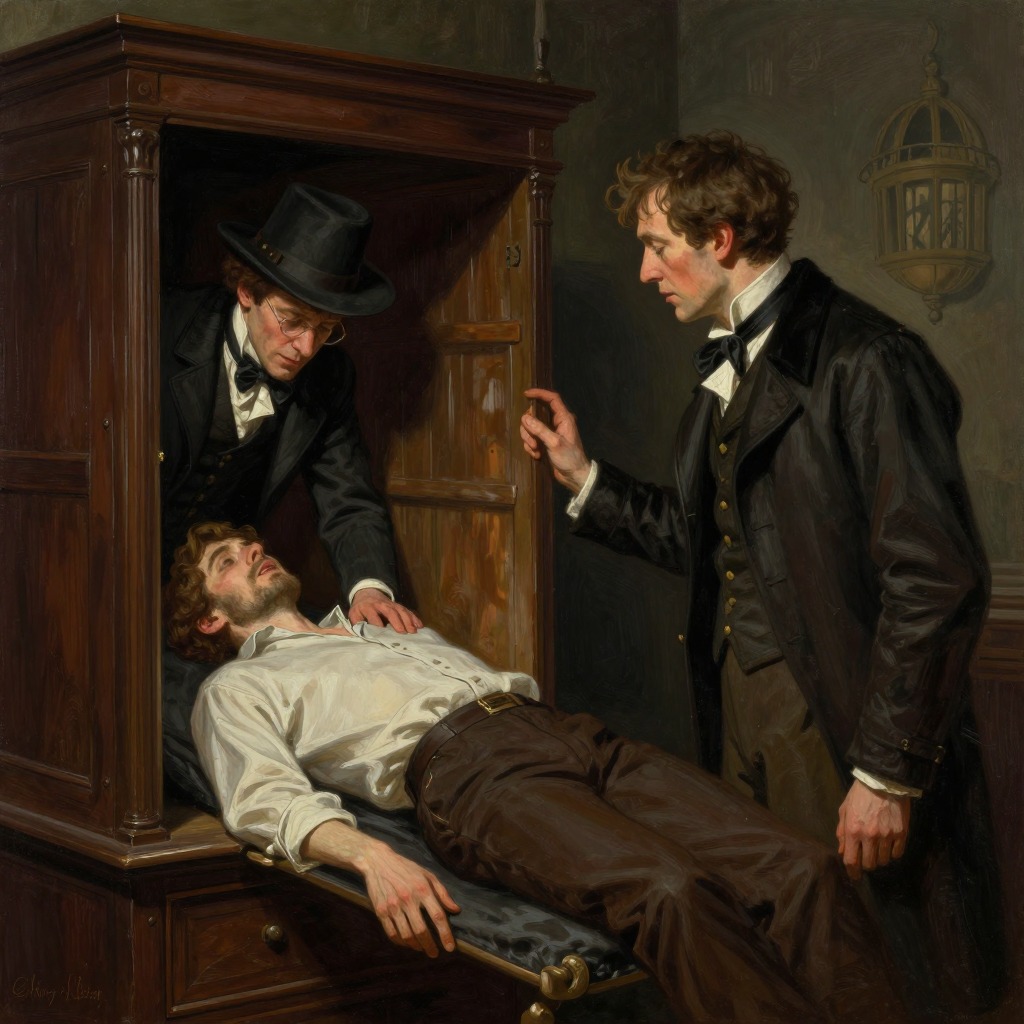
As Utterson and Poole move through the dark yard toward the laboratory building, the lawyer carries the poker under his arm. The wind, blowing in gusts through the deep well of the courtyard, tosses the light of their candle to and fro as they make their way into the shelter of the surgical theatre. There they sit down silently to wait, listening to the footfall moving to and fro along the cabinet floor above them. When the ten minutes allotted for Bradshaw and the knife-boy to take their posts at the laboratory door have elapsed, Poole disinters the axe from under a stack of packing straw, and the candle is set upon the nearest table to light them to the attack. The poker, though never actually swung in the narrative, is part of this two-pronged assault: the axe is the primary breaching tool, while the poker remains in Utterson's hand as a secondary weapon, a sign that the lawyer is prepared for whatever violence may be required. The scene's tension is heightened by the contrast between the poker's domestic origin—a tool for tending a fire—and its new, grim purpose as an instrument of forced entry.
Symbolic Significance
The kitchen poker, as a thing taken from its ordinary context and turned to an extraordinary use, exemplifies the novel's broader pattern of objects that become charged with hidden meaning. Like the heavy cane that becomes a murder weapon, the key that grants access to secret passages, and the cheval-glass that has witnessed transformations, the poker is a mundane object that, in the moment of crisis, reveals its potential for violence. Its presence in Utterson's hand marks the point at which the lawyer abandons his characteristic caution and legalistic approach to the mystery, committing himself instead to direct, physical action. The poker thus serves as a concrete symbol of the rupture between the orderly, respectable world of the law and the chaotic, monstrous reality that has been concealed within Jekyll's house. It is a tool of the hearth, the domestic center of Victorian life, turned against the very secrets that the house has been hiding.