the lane
Strange Case of Dr Jekyll and Mr HydeThe lane is a narrow, moonlit London street that becomes the site of the story's most pivotal and shocking act of violence: the murder of Sir Danvers Carew by Edward Hyde. This single event, occurring nearly a year after the initial trampling of a child, transforms the narrative from a private mystery of character and influence into a public scandal, a police manhunt, and the catalyst that forces the hidden truth of Henry Jekyll's double life toward its catastrophic end. The lane is not merely a setting but a stage where the monstrous reality of Hyde, previously glimpsed only in anecdote and inference, is made brutally, incontrovertibly visible.
The Scene of the Crime
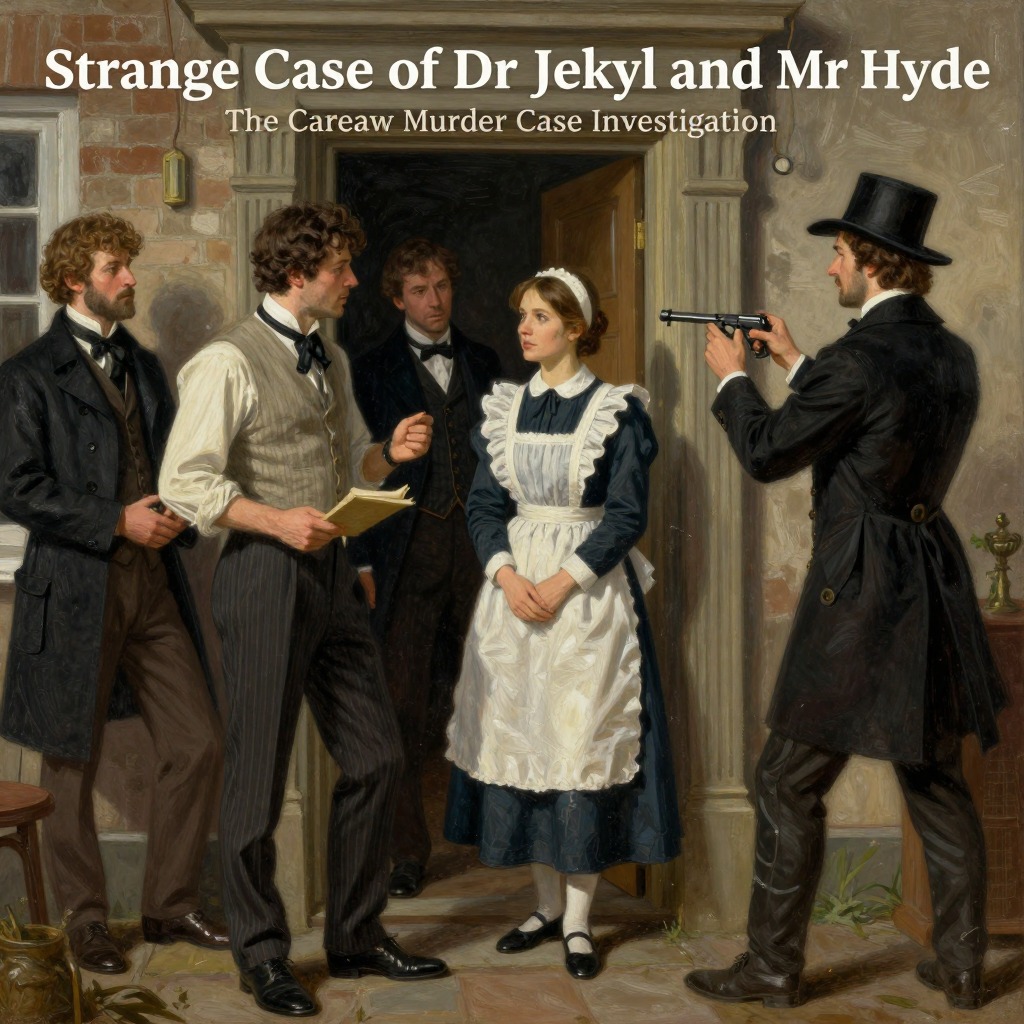
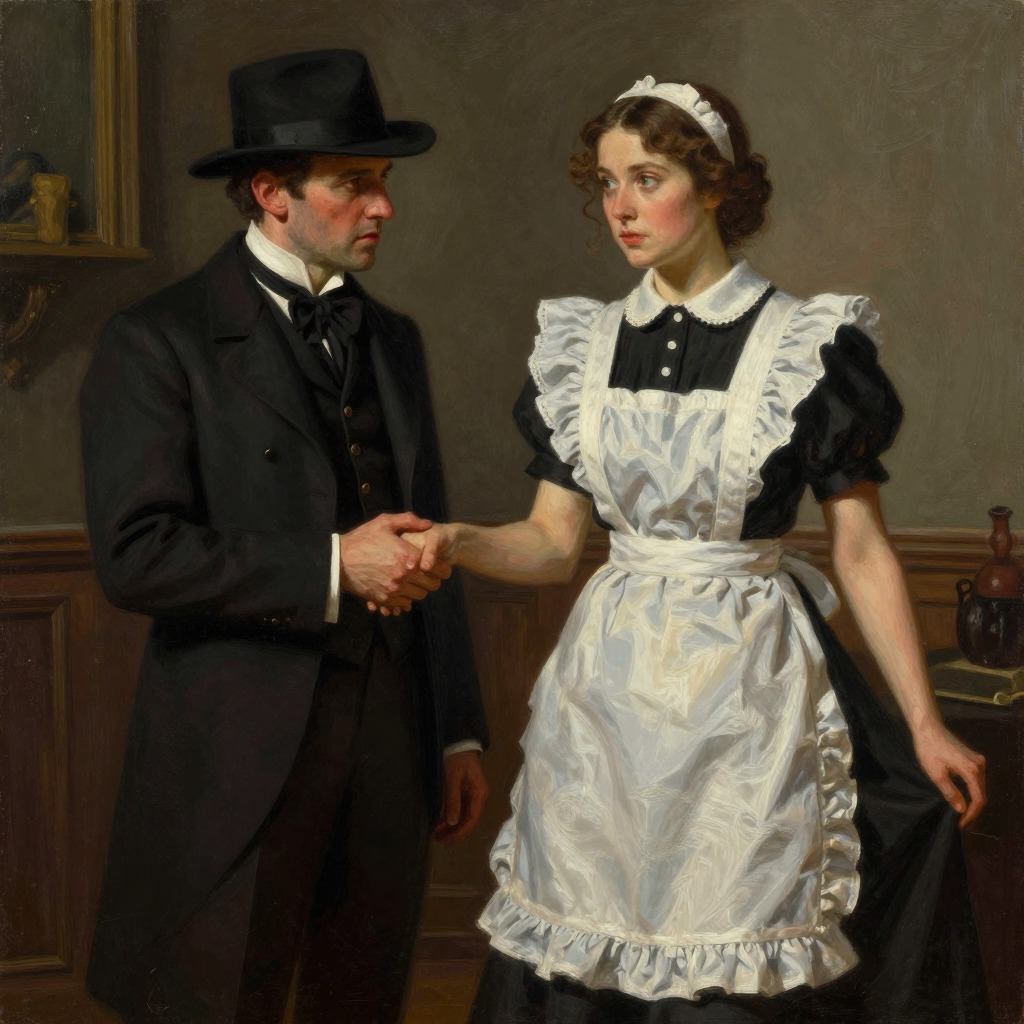
The murder takes place on a clear, cloudless night in October, 18—, in a lane not far from the river, brilliantly lit by the full moon. A maid-servant, living alone in a house overlooking the lane, sits down on her box under the window and falls into a romantic reverie, feeling more at peace with all men than she had ever felt before. Into this tranquil scene, two figures draw near: an aged, beautiful gentleman with white hair, and a very small gentleman advancing to meet him. The older man, Sir Danvers Carew, bows and accosts the smaller with a pretty manner of politeness, apparently inquiring his way. The maid, watching, is pleased by the old-world kindness on Carew's face. Her eye then wanders to the other man, and she is surprised to recognize Mr. Hyde, who had once visited her master and for whom she had conceived a dislike. Hyde carries a heavy cane, with which he is trifling, but he answers never a word, listening with ill-contained impatience.
The Murder and Its Aftermath
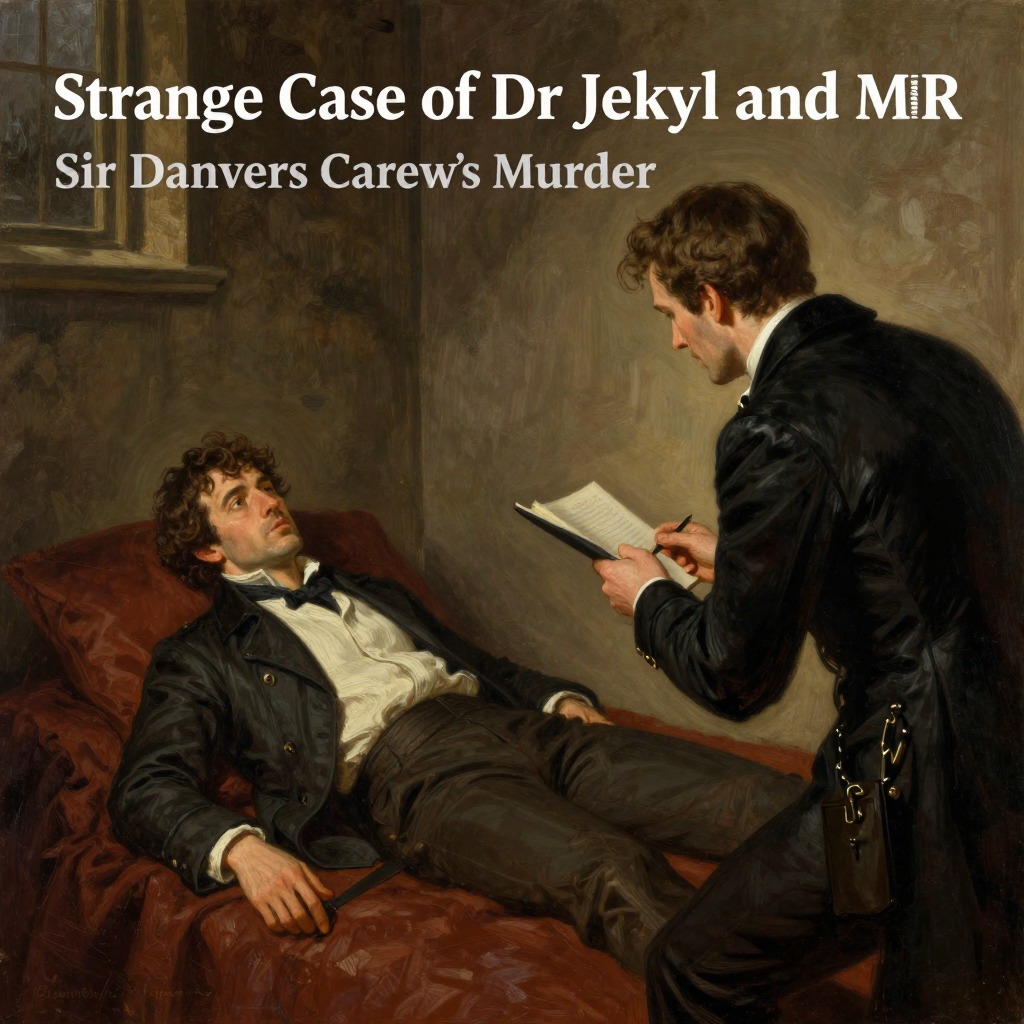
Suddenly, Hyde breaks out in a great flame of anger, stamping his foot, brandishing the cane, and carrying on like a madman. When Carew takes a step back, surprised and a trifle hurt, Hyde breaks all bounds, clubs him to the earth, and then, with ape-like fury, tramples his victim underfoot, hailing down a storm of blows that audibly shatters bones and makes the body jump upon the roadway. The maid faints at the horror. She comes to herself at two o'clock and calls for the police, but the murderer is long gone. The victim lies in the middle of the lane, incredibly mangled. The heavy cane, made of some rare, tough, and heavy wood, has broken in the middle under the stress of the insensate cruelty; one splintered half has rolled into the neighboring gutter, the other carried away by the murderer. A purse and gold watch are found on the victim, but no cards or papers, except a sealed and stamped envelope bearing the name and address of Mr. Utterson.
Consequences and Revelation
The lane, as a crime scene, is the point where the story's central secret begins to unravel. The broken cane is recognized by Mr. Utterson as one he himself had presented many years before to Henry Jekyll, directly linking the doctor to the murderer. The victim is identified as Sir Danvers Carew, a client of Utterson's and a man of high public standing, making the crime a public sensation. The lane thus serves as the physical location where the abstract horror of Hyde—previously a figure of rumor, blackmail, and personal disgust—becomes a concrete, legally actionable reality. It is the place where Hyde's existence is no longer a private shame for Jekyll but a public menace, forcing the doctor into a desperate seclusion and setting in motion the final chain of events that leads to the discovery of the body in the cabinet and the reading of Jekyll's full confession.