the slime of the pit
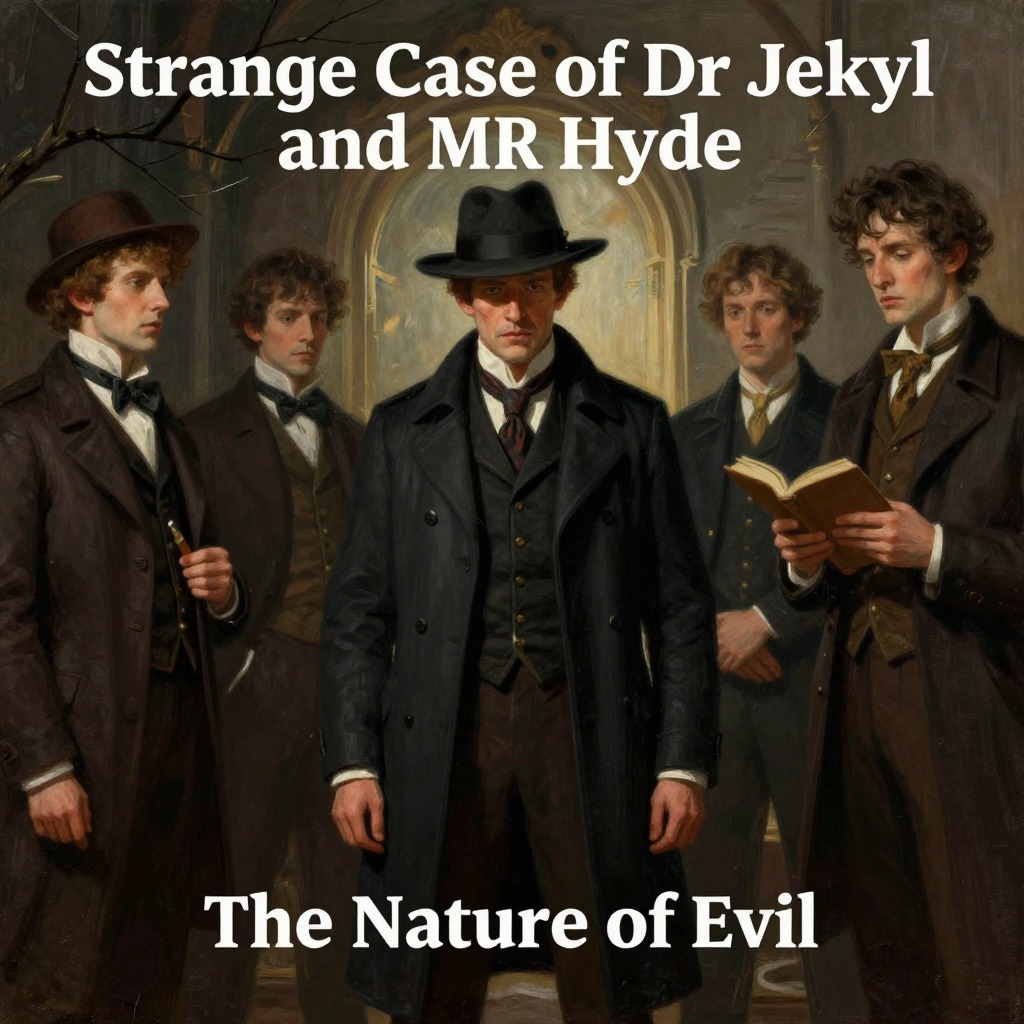
Strange Case of Dr Jekyll and Mr HydeThe slime of the pit is a phrase that appears in Henry Jekyll's full statement of his case, serving as one of the most vivid and disturbing metaphors in the narrative. It encapsulates Jekyll's ultimate horror at the nature of Edward Hyde, the being he has brought into existence through his scientific experiments. The expression is not merely a description of Hyde's moral depravity but a profound meditation on the ontological status of evil itself, suggesting something that is both formless and yet capable of thought and action.
Origin and Context
The phrase occurs near the end of Jekyll's written confession, as he attempts to convey the full extent of his terror and revulsion towards Hyde. Jekyll has already described Hyde as "hellish" and "inorganic," but the "slime of the pit" takes this further by evoking the primordial, shapeless matter of damnation. The "pit" is a traditional biblical image for hell or the abyss, while "slime" suggests something viscous, lowly, and without fixed form. Jekyll uses this image to articulate the shocking realization that this amorphous substance "seemed to utter cries and voices" and that "the amorphous dust gesticulated and sinned." The horror lies in the fact that what is dead and has no shape should usurp the offices of life.
Thematic Significance
The metaphor of the slime of the pit is central to the novel's exploration of the duality of human nature and the consequences of attempting to separate good from evil. Jekyll's initial project was to liberate his better self from the burden of his darker impulses, but he discovers that the evil he has unleashed is not merely a separate identity but a parasitic, almost elemental force. The slime of the pit represents evil stripped of any redeeming human qualities—it is pure, undiluted malignancy that exists only to gratify itself. Jekyll's horror is compounded by the fact that this slime is "knit to him closer than a wife, closer than an eye," lying caged in his flesh, where he hears it mutter and feels it struggle to be born. The image thus conveys the inescapable intimacy of evil, which is not an external enemy but a part of the self that cannot be excised.
Connection to Hyde's Nature
The slime of the pit metaphor directly connects to the physical and moral descriptions of Hyde throughout the novel. From his first appearance, Hyde is described as having a "haunting sense of unexpressed deformity" and a "displeasing smile." He is "pale and dwarfish," giving an impression of deformity without any nameable malformation. Jekyll's own account confirms that Hyde is "pure evil," and that his face bears "the stamp of lower elements" in Jekyll's soul. The slime of the pit thus becomes the ultimate characterization of Hyde's essence: it is not a person but a force, not a man but a condition. This is why Jekyll can say that Hyde is "something not only hellish but inorganic," and why the sight of Hyde in the mirror fills him with a terror that transcends mere fear of death.
Narrative Role and Evaluation
As a literary device, the slime of the pit functions as the climax of Jekyll's self-revelation. It is the point at which his scientific detachment collapses into raw, existential dread. The phrase also serves to unify the novel's various strands of horror: the physical deformity of Hyde, the moral corruption of Jekyll, and the metaphysical implications of their shared existence. By invoking the slime of the pit, Stevenson moves beyond the merely sensational to suggest a universe in which evil is not a choice but a substance, not an action but a state of being. This aligns with the novel's broader critique of Victorian hypocrisy and the attempt to compartmentalize the self, showing that the repressed will always return, and that when it does, it may take a form that is more terrible than anything the conscious mind can imagine.