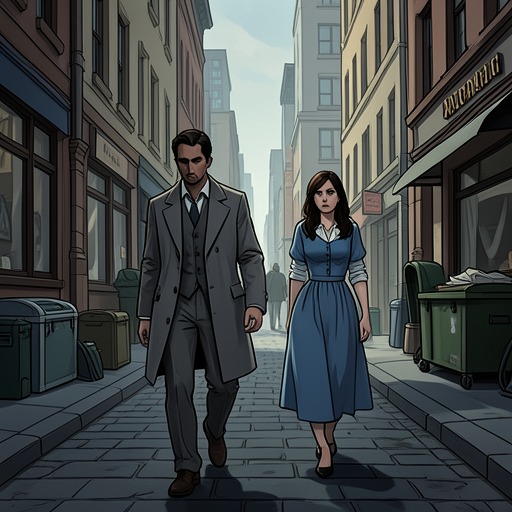
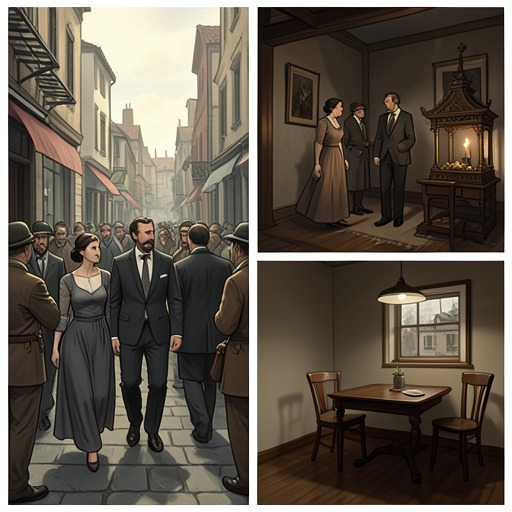
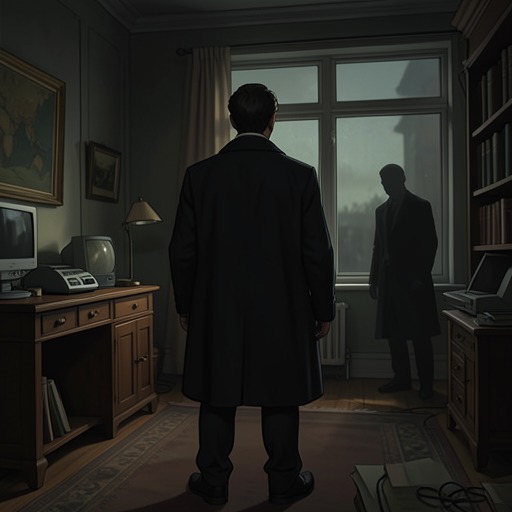
Hideo Harada
Strangers (Taichi Yamada Edition)Hideo Harada is a divorced television-script writer whose return to Asakusa, his birthplace, opens a path back toward the parents he lost at twelve. His story joins the prosaic pressures of work, separation, and bodily illness to encounters in which his parents address him as their child. That tension is decisive: Hideo’s account presents the reunion as emotionally compelling, even as his failing health and concealment of Kei make its cost difficult to ignore.
Identity and Background
After his divorce, Hideo made his home in the apartment he had previously used as an office. Writing scripts for television dramas kept him there through most of his waking hours, alone. A woman who had visited for companionship gradually stopped coming while he was absorbed in the divorce proceedings. Hideo did not describe her absence as a fresh injury; emotionally spent by the divorce, he welcomed a period without human entanglements, including physical ones.
That chosen solitude gives his later movement toward Asakusa a particular force. He had not been there for quite possibly more than a decade when the place-name, encountered at a subway entrance, stopped him. He recognized it as the place where he was born and decided on the spot to go. The return begins not with a settled plan to revisit family, but with a sudden pull toward a location that carries his earliest identity.
Asakusa and Parental Recognition
In Asakusa, Hideo confronts the disorienting possibility of meeting his parents as parents again. Before that encounter, he thinks of all he wants to tell them about the years since he was twelve: what he has experienced, felt, and endured. His anticipation combines familiarity with estrangement. These are the people from whom he has been separated since childhood, yet speaking with them as their son feels, in his own account, like a first meeting.
The recognition is made concrete through names and gestures. When Hideo says he does not know the woman’s name, she is astonished that he would ask his own parents such a question. She identifies the family surname as Harada and treats his uncertainty as the consequence of the heat. Hideo experiences the exchange as a blow before managing to laugh along; he cannot turn to face her. The scene makes a simple family assumption— that a child knows his parents—feel uncanny precisely because Hideo has been away from that relationship for so long.
His father’s voice then calls him Hideo from behind. Hideo freezes before turning around, and his father asks why he is standing still. The brief address carries what the longer explanation cannot: the name belongs to a son recognized by his father. The narration gives the moment both bodily hesitation and ordinary familiarity, allowing recognition to arrive without dissolving the unease around it.
Relationships, Secrecy, and Self-Explanation
Hideo’s account of himself is shaped by a history of loss. In explaining his behavior to others, he says that he lost his parents when he was twelve and went through difficult years afterward, though he also emphasizes that he made good and has much to be proud of. The statement gives his adulthood a double emphasis: the childhood bereavement remains defining, but it does not erase his sense of achievement.
When his parents ask why he believes they might kill him, Hideo recounts what his producer and Mamiya have said about his health and describes the wasted figure he saw in the mirror. He does not tell them about Kei. Instead, he fabricates an account that leaves her out, reasoning that someone who seemed to separate him from his parents might face retaliation from unknown powers among the dead. He is not certain that silence can protect her, but believes his parents appear to accept his explanation. His deep bow afterward, palms on the floor, marks the physical weight of that omission and the apology with which he closes his story.
A separate account from Mamiya further complicates Hideo’s relations with Kei and the ordinary world around him. Mamiya recalls seeing Hideo leave the building with a woman who looked strikingly healthy beside his own earlier appearance. The building manager identified the woman as resembling the former resident of apartment 305, Kei. The comparison links Hideo’s private association with Kei to a sighting witnessed by others, without resolving what the encounter means.
Illness and Consequences
Hideo’s physical decline becomes impossible to treat as merely an impression. He spends twenty-two days at Tokyo National Hospital in Komazawa, exceedingly frail, with half his hair turned gray and his eyesight damaged. Intravenous feeding gradually helps, but discharge does not mean restoration: his belt still needs to be tightened two notches, his shirt collar hangs loose, and his complexion remains sallow. Visitors attempt to reassure him by saying he has the aura of a mystic, a description that cannot undo the visible evidence of illness.
The condition also interrupts his work. Hideo is plainly unable to write for a television series, and his producer agrees without fuss to approach a younger writer about taking over from the second episode. The director who visits him suggests that the replacement may even be better suited to the material. In this way, Hideo’s bodily crisis reaches beyond private suffering: it displaces him from a professional obligation while leaving the account of his experience in his own hands.
Narrative Role and Significance
Hideo’s first-person account places readers close to his hesitation, self-consciousness, and attempts at concealment, but proximity does not make every encounter easy to classify. The parents’ recognition is conveyed through familiar family speech; the consequences of contact are registered in a body that grows frail and damaged. The narrative therefore lets everyday details—the subway directions, a surname, a call from behind, a hospital belt—stand beside the uncanny without providing a simple resolution between them.
His movement from a solitary post-divorce home to Asakusa also changes the shape of his isolation. The return gives him a relationship in which he can speak as the child he was at twelve, and a listener for the years he has carried since. Yet he withholds Kei from that very audience, and his recovery in hospital remains incomplete. Hideo’s significance lies in this unresolved conjunction: the longing for parental recognition offers emotional refuge, while the story’s persistent evidence of illness prevents that refuge from appearing cost-free or secure.